





 English
  Francês
  Alemão
  Italiano
  Japonês
  Norueguês
  Portuguese
  Spanish
  4 min of reading



Chinese Space Program, Led by Its Military, Has Been Banned from the International Space Station, Mainly Due to Objections from the United States
China has once again committed to completing its space station in orbit by the end of the year and says it is planning more than 40 launches by 2022, which would bring it nearly to the same level as the United States. China’s lunar exploration program includes the construction of a scientific exploration base at the south pole of the Moon in the next decade. Once completed, China will be the only country to have its own space station, as Russia’s International Space Station (ISS) is a collaborative project among several countries.
Read Also
- China, Projected to Have the Largest GDP in the World by 2030, Changes Rule After Nearly 30 Years and Allows Foreign Automakers in the Country with a Plan to Produce 30 Million Vehicles by 2025; Decision Will Affect the Entire Global Automotive Industry
- China is Accumulating More Than Half of the World’s Food, Becoming Responsible for Rising Prices and Global Inflation Surge
- China Tested a Hypersonic Missile with Nuclear Capability Capable of Circling the Earth, Leaving the United States Astounded by the Chinese Glide Vehicle
- The World’s Largest Wind Turbine Will Be Chinese: Wind Turbines That China Plans to Use in the Construction of Its Most Ambitious Wind Farm Are More Powerful than GE’s Haliade-X
The launches will include two crewed missions aboard Shenzhou, two Tianzhou cargo ships, and two additional orbital lab modules, according to the official Chinese news agency, Xinhua, on Thursday (01/06), citing a recent announcement from the China Aerospace Science and Technology Corporation, known as CASC.
The two scientific modules, nicknamed Mengtian and Wentian, will join the Tianhe core module, which currently hosts a crew of three on a six-month mission, the longest in the country’s history.
-
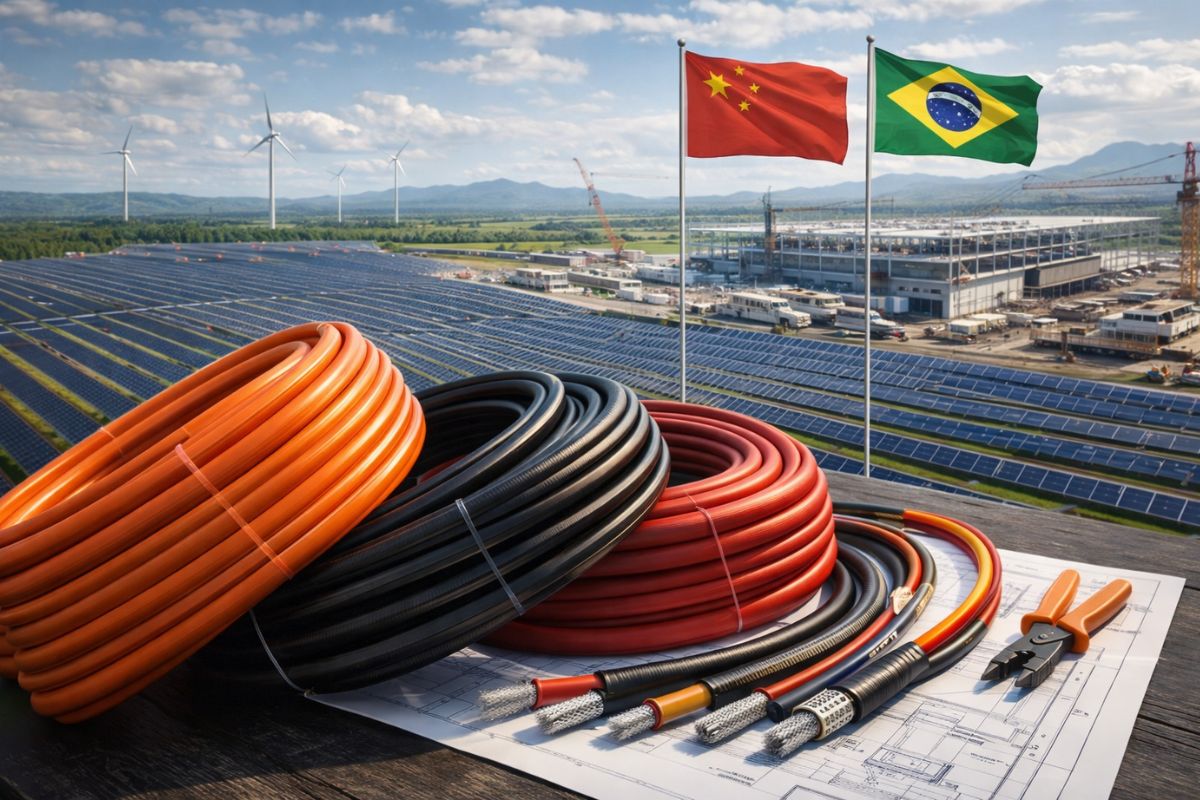
Chinese giant worth nearly R$ 4 billion that manufactures cables for electric cars, solar energy, and robotics wants to open a factory in SC.
-
Many employers do not know, but the law guarantees domestic workers a 25% increase in salary during trips, 50% for overtime, 20% for night shifts, and 17 additional benefits that can lead to labor lawsuits if not paid.

-
Gasoline prices soar and the question arises: is ethanol more advantageous? The 70% rule reveals the limit with gasoline.

-
The government has made a decision and is starting a test with more ethanol in gasoline, anticipating a mixture of up to 35%, diesel with 25% biodiesel, and a study to assess the impacts on engines.


The launch schedule shows how the traditionally cautious Chinese program is ramping up its mission cadence in its eagerness to take a leadership role in space exploration.
The United States expects to make roughly the same number of launches this year, having slowed down in 2021 due to the coronavirus pandemic. Supply chains of crucial elements, such as computer chips, were disrupted, and liquid oxygen, used as rocket fuel, had to be diverted to hospitals to save patients.
One of the most anticipated, scheduled for March, will be the Space Launch System – a rocket about 1,010 meters (332 feet) tall that will serve for future lunar missions.
The Chinese space program, led by its military, has been banned from the International Space Station, mainly due to objections from the United States.
China Will Not Undertake the Construction of the Base Alone and Announces Russia as a Partner in the Project
China will not undertake the construction of the base alone: “We will work with Russia to build the bases of the lunar exploration station, which will establish a solid foundation for investigating lunar resources and the environment,” said the vice director of CNSA to local media in a recent interview. Building a base at the south pole of the Moon would have the advantage that the solar panels providing power to the station would enjoy more hours of sunlight than elsewhere on the satellite.
After signing a cooperation agreement with Russia last March, the chief designer of the lunar exploration program, Wu Weiren, stated that “if the lunar research station project can be successfully implemented, China will not be far from achieving a manned landing on the Moon.”
Currently, part of the Chang’e 4 mission is on the lunar surface. The Yutu 2 rover, which is currently operational, reached the Moon aboard the uncrewed Chang’e-4 lander in 2019, becoming the first spacecraft to land on the far side of the satellite.
Chinese experts predicted shortly after the launch of Chang’e-4 that there would be “surprising discoveries” on the other side of the Moon, in which “deeply hidden information” could be revealed.
The Chang’e program (named after a goddess who, according to Chinese legends, lives on the Moon) began with the launch of its first probe in 2007. The ultimate goal of this program is a manned mission to the Moon.
China Broadcasts Live New Year’s View from the New Space Station
China welcomed the New Year with a live broadcast from cameras outside the new Tianhe space station module. In a new video from the China National Space Administration, streamed live on New Year’s Day (January 1), you can now see the beauty of Earth below the Tianhe module in China’s Tiangong space station. China Central Television started the broadcast, and you can also watch it above, featuring three hours of live footage from the module.
In the footage, during which Tianhe orbits the Earth twice, the camera feeds rotate through different panoramic cameras that were set up by astronauts during spacewalks.
The various views show the hatch of the Tianhe docking hub for extravehicular activities, the station’s solar panels, and the Shenzhou 13 spacecraft docked, as well as clouds, oceans, and landforms on our planet below.
During the live broadcast, astronauts aboard the space station also made some appearances, even conversing with university students in Beijing from the station, according to China’s state media provider Xinhua.









Seja o primeiro a reagir!