





 Portuguese
  English
  Spanish
  3 min of reading


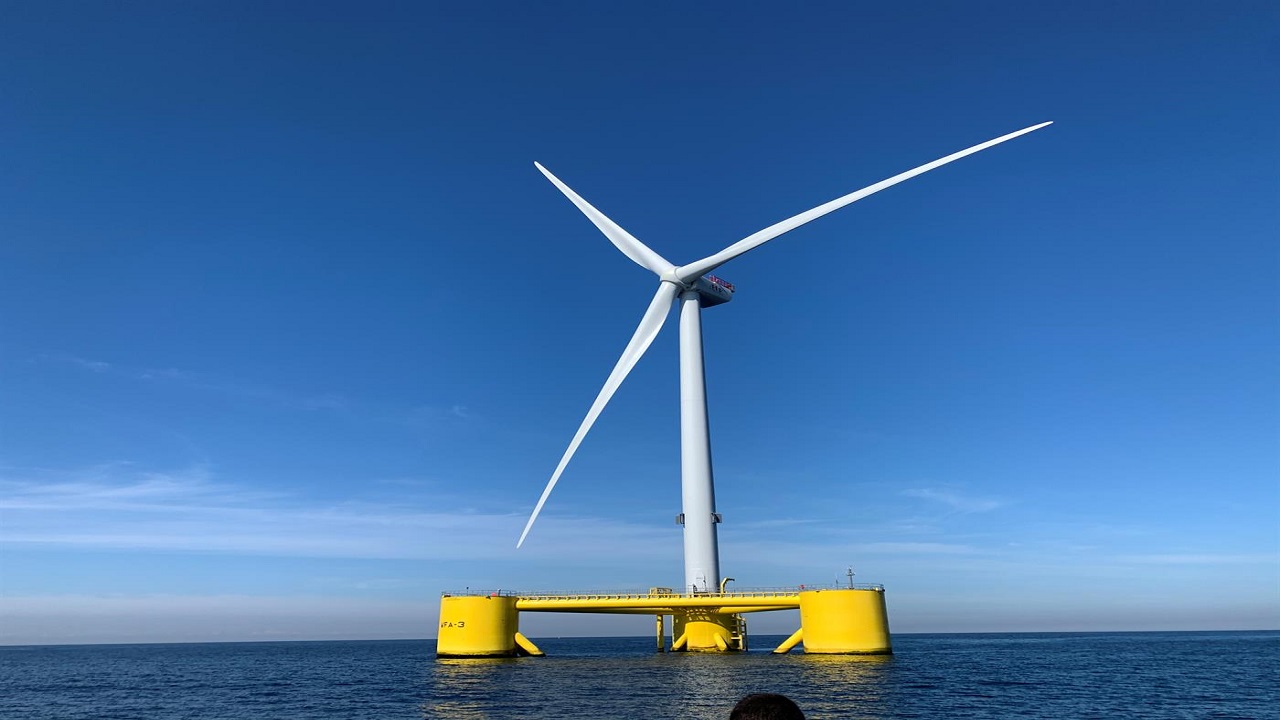
China Studies The Viability Of Developing The World’s Largest Offshore Wind Farm. The Plant Will Feature 43.3 GW And Begin Operations By Mid-2025.
A city in Southern China is developing what appears to be the world’s largest offshore wind power plant. Chaozhou, in Guangdong province, plans to begin working on the offshore wind farm project, which will have a capacity of 43.3 GW, before 2025, according to a copy of the city’s five-year plan published on the site bjx.com, linked to the sector. The offshore wind farm will be developed between 75 km and 185 km off the city’s coast, in the Taiwan Strait.
China Proposes 712.7 Billion BRL Project For The Production Of 50 GW Of Wind Energy
The area has unique topographic features that mean the wind will be strong enough to operate turbines for 3,800 to 4,300 hours per year, or 43% to 49% of the time, a very high utilization rate. The plan does not state how much the project will cost.
China set a record by adding 16.9 GW of offshore wind power capacity in the last year and now has the largest fleet of offshore wind turbines in the world.
-
Renewable energy advances over protected areas in Brazil, and a survey by the Energy Transition Observatory reveals silent impacts that challenge environmental conservation and pressure sensitive traditional territories.

-
Rio Grande do Sul accelerates energy transition: State invests in renewable technologies and consolidates decarbonization strategies and pathways to attract billions in new industrial investments.

-
With 160,000 m² of collectors, an area larger than 20 football fields, Silkeborg, in Denmark, hosts a solar thermal plant that heats 19,500 homes and could become the largest solar heating plant in the world.

-
A study reveals the expansion of renewable energy procurement in Brazil and shows how companies are taking advantage of opportunities to reduce expenses, ensure energy efficiency, and strengthen strategic environmental commitments.


Chinese utilities and governments continue to seek ambitious renewable energy construction plans as costs fall compared to the high price of natural gas and coal, and as Xi Jinping, the president of the Asian giant, keeps the country on track to zero out carbon emissions by 2060.
At the beginning of this year, a city in the nearby province of Fujian proposed a 1 trillion yuan project, the equivalent of 712.7 billion BRL, which would include 50 GW of offshore wind energy. Norway had 38 GW of installed capacity last year, according to data.
Chinese Government Speaks On Offshore Wind Farm With 43.3 GW
The offshore wind farm could be completed in just three years, which would surpass the 16.9 GW due to a 2.5 GW difference. China has the largest offshore wind turbine power plant in the world. Just a few days ago, China’s president, Xi Jinping, stated in a speech that the country’s shift to zero emissions would be composed of energy security.
Based on China’s energy donations and resources, initiatives will be developed to achieve maximum carbon emissions in a well-planned and gradual manner, according to the principle of obtaining the new before discarding the old.
In this way, Jinping suggests that fossil fuels will not abruptly die in the hands of renewable energy at the expense of energy security. However, China’s wind energy prospects are ambitious.
Goldwind, one of China’s wind turbine manufacturers, is making advanced agreements to develop a offshore wind turbine factory in Brazil to serve the domestic market. The company has also completed the production of a wind turbine that has the largest rotor diameter in the world, capable of generating 63.5 GWh per year and serving 30,000 homes.
China Unveils The World’s Largest Offshore Wind Turbine
China brought its latest technology in the offshore wind power generation sector to operation a few weeks ago. This is a wind turbine with a power of 13.6 MW, making it the most powerful in the Asia-Pacific region.
The turbine’s blade has a diameter of 252 meters, making it the largest in the world. The new technology can generate up to 63.5 million kWh per year, supplying 30,000 residences, as mentioned earlier.









Seja o primeiro a reagir!