





 Portuguese
  English
  Spanish
  4 min of reading
  0 comments


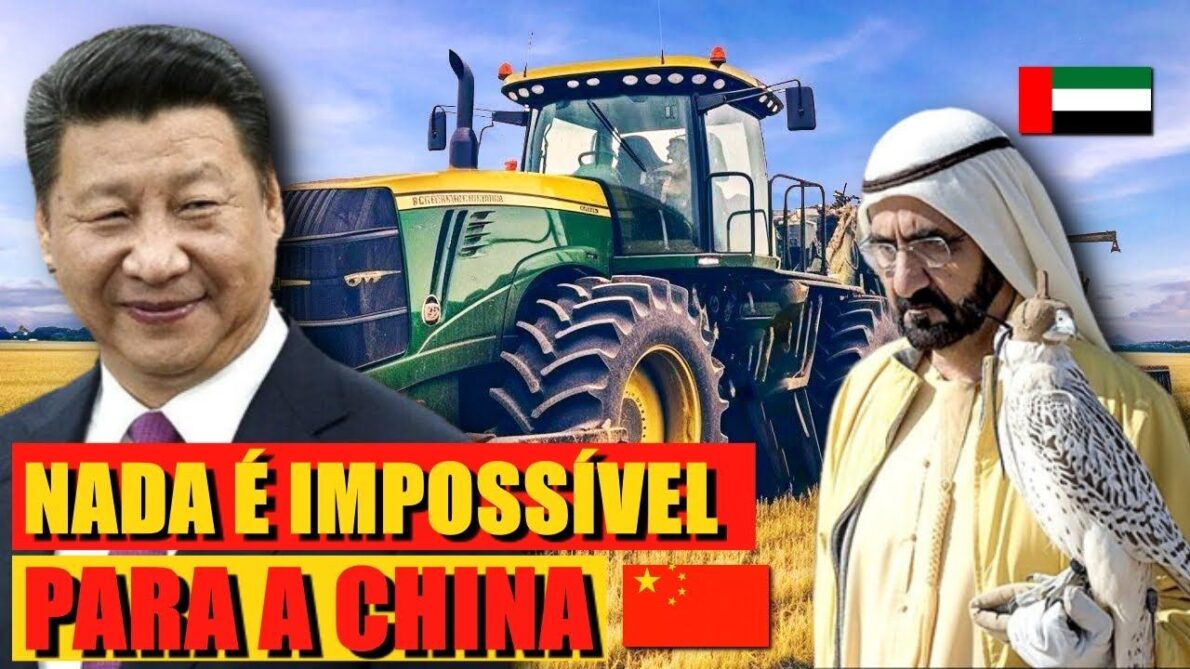
China Revolutionizes Innovation in Agriculture by Cultivating Rice in the Desert, Leaving Dubai Experts Impressed.
You won’t believe what China has accomplished! Imagine being lost in an arid desert, dying of thirst and hunger, and suddenly encountering a vast and beautiful rice field. Sounds impossible, right? But China made this a reality by planting 8,200 hectares of rice in the desert, breaking all paradigms of innovation in agriculture.
In 2018, when China announced its plans to cultivate 8,200 hectares of rice in the desert, many thought it was an absurd idea. After all, rice is traditionally associated with environments that have an abundance of water, and the desert is the opposite: dry, with temperatures soaring to 76°C, strong winds, and sandstorms. How could it be possible to grow rice in such conditions?
Rice requires temperatures between 30°C and 32°C, fertile soil, and plenty of water. Additionally, the seedlings have specific requirements for soil acidity and salinity. Growing rice in the desert seemed like a true miracle.
-
They said no to 26 million dollars and would do it all over again: mother and daughter from Kentucky reject a million-dollar offer from a mysterious company that wants to build the largest data center in the state on more than 2,000 acres of rural land.

-
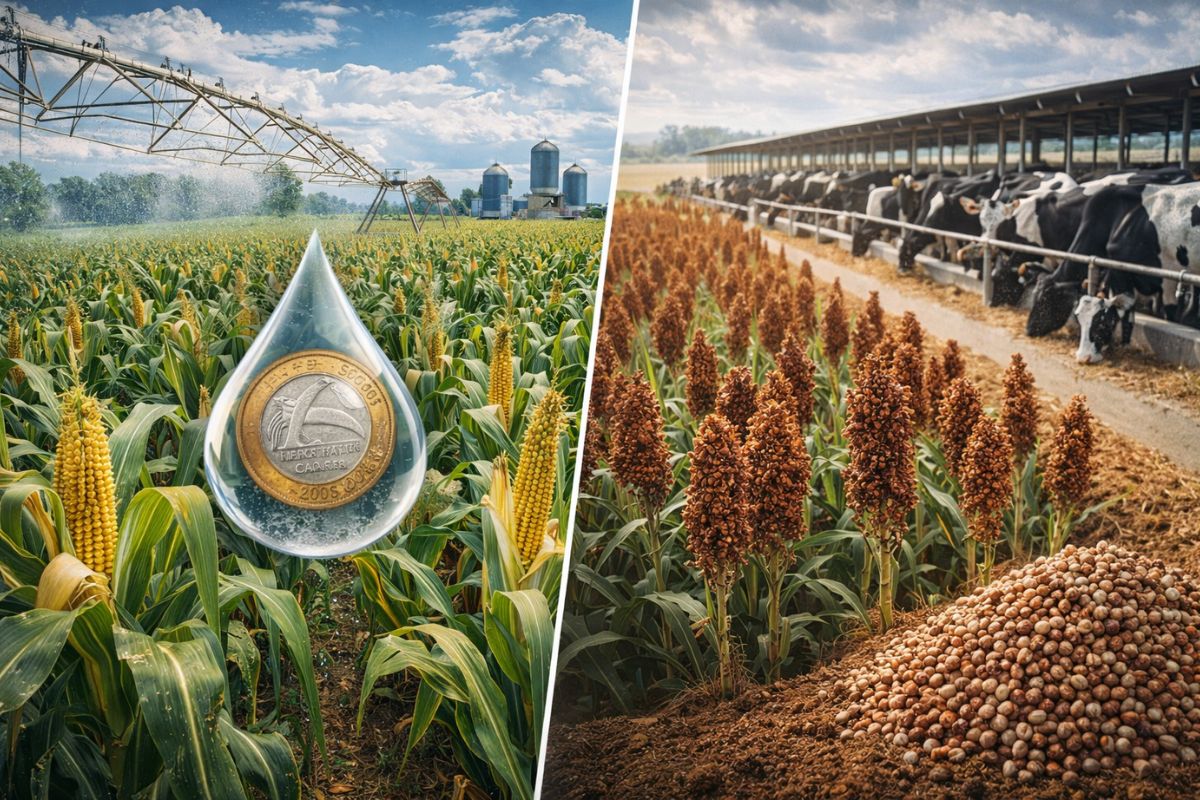
While corn requires rain and is expensive, sorghum produces almost the same volume per hectare at a cost up to 80% lower and uses less water, and it is revolutionizing dairy farming in the Triângulo Mineiro, where producers save hundreds of reais per hectare.
-
A rural producer from Urubici cries as he shows 50 tons of plums thrown on the ground because no one wanted to buy them, and in desperation, he records a video asking anyone to come to the property to pick the fruits before they rot.
-
Unable to pass through Hormuz, Brazil activated a plan B that uses Turkey as a gateway to the Middle East: the route through Gibraltar and the Mediterranean is longer and more expensive but ensures that chicken, beef, and corn continue to reach Arab markets.


FREE COURSES: Have you ever thought about creating games? Instituto Oi Futuro offers free courses in programming and game development
The Genius in China of Yuan Longping, the “Father of Hybrid Rice”
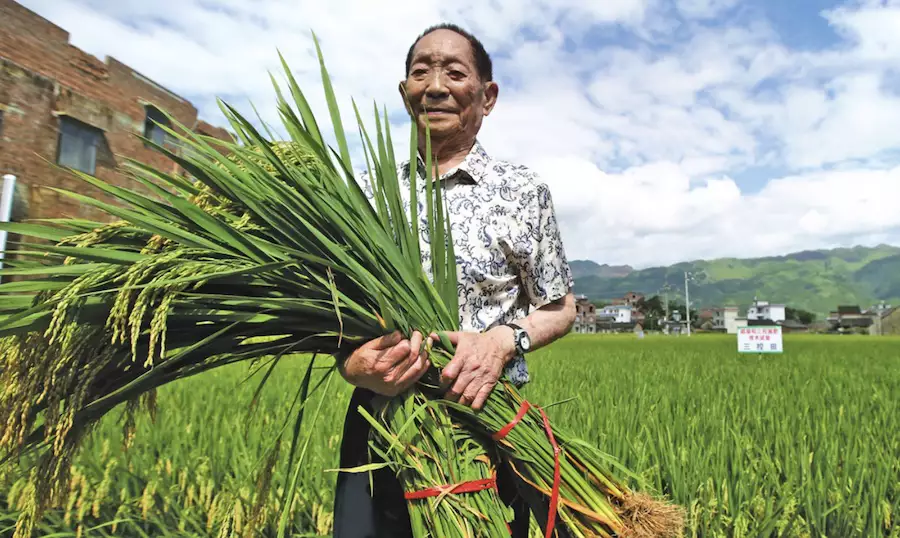
To tackle this monumental challenge, China relied on the brilliance of Yuan Longping, a renowned agricultural scientist known as the “Father of Hybrid Rice.” Since the 1970s, Yuan dedicated his life to developing more resilient and productive rice varieties.
He and his team worked on developing “sea rice,” a variety capable of growing in saline and alkaline soils, common in desert regions. This rice is unique, resistant to salinity, alkalinity, diseases, and pests, and has high productivity.
Transforming the Kubuqi Desert into an Agricultural Oasis
After extensive research, Yuan Longping chose the Kubuqi Desert in the autonomous region of Inner Mongolia as the testing ground. This desert is known for its arid climate, little rainfall, and significant temperature variations between day and night.
Starting with just 80 hectares, the team employed innovative techniques to transform the desert soil into fertile land. They built channels to bring water from the Yellow River and applied ecological methods that save water and preserve soil nutrients. Gradually, they expanded the cultivated area to 300 hectares, then 1,000 hectares, until reaching the impressive 8,200 hectares.
Surprising the World and Inspiring Other Countries
The results were spectacular. Rice production in the desert not only met local food needs but also caught the attention of countries like Dubai, Egypt, and Saudi Arabia. In 2017, Yuan Longping’s team successfully conducted rice cultivation experiments in the desert of Dubai, facing challenges such as extreme temperatures and freshwater scarcity.
To find the ideal variety for Dubai’s climate, over 80 types of rice were tested. After five months, some varieties produced a harvest of over 500 kg per mu (Chinese area unit). This left the scientific community in Dubai deeply impressed.
The Expansion of Innovation in Agriculture Worldwide
Besides Dubai, Saudi Arabia plans to collaborate with China to plant 10 billion trees in its deserts, using desalination and irrigation technologies to convert arid areas into agricultural land. Egypt, with 95% of its territory being desert, is also committed to transforming its landscapes by introducing water from the Nile River into previously barren areas.
Sustainable Development and Combating Desertification
China hasn’t stopped there. In recent years, it has applied photovoltaic control technologies to develop sectors such as the cultivation of medicinal plants, transforming dunes into pastures, and even aqua farming in the desert. In Gansu, an ambitious project aimed to create fish farms in desert areas, despite initial challenges and investments of US$ 720 million.
Although they faced obstacles such as high temperatures and a lack of experience, China persisted. After consulting with foreign experts, they discovered that rainbow trout, native to North America, was suitable for desert conditions. Through perseverance, they transformed the desert into a thriving aquaculture base, benefiting local communities and contributing to food security.
Why Does China Invest So Much in Innovation in Desert Agriculture?
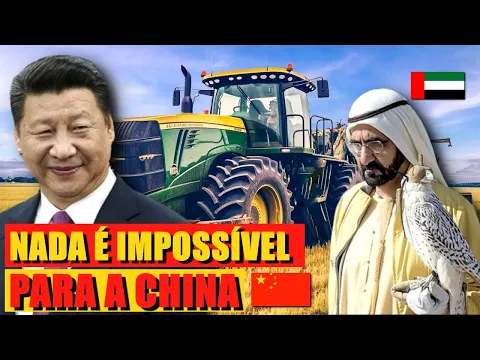

With a population of 1.4 billion people and a daily consumption of 700,000 tons of grains, China aims to ensure food self-sufficiency. Overfishing and environmental pollution have reduced fish stocks, and aquaculture in the desert offers a sustainable alternative.
The transformation of deserts into fertile land not only meets internal needs but also positions China as a global leader in agricultural innovation.
And you, do you believe that these innovations from China could be the key to combating hunger and desertification worldwide? Share your thoughts in the comments!
NEW FUEL IN BRAZIL: Future Fuel is Approved: Changes to Ethanol Blend in Gasoline and Goals for Aviation






Seja o primeiro a reagir!