





 Portuguese
  English
  Spanish
  3 min of reading
  5 comments


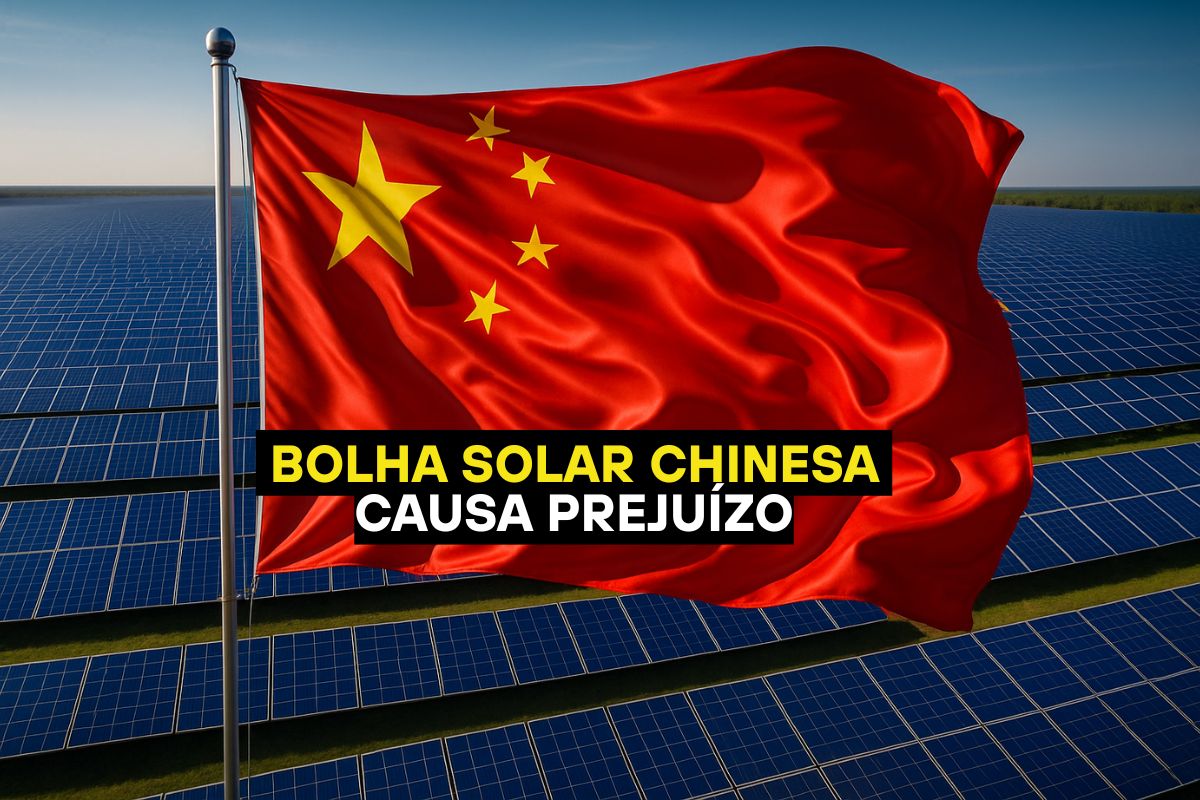


Production Exceeds Double the Global Demand and Generates Losses of US$ 60 Billion in the Sector.
The China has consolidated its position as a global leader in solar energy, but this advancement has come alongside an unprecedented crisis. In 2024, the country produced 588 gigawatts (GW) of solar panels, more than double the global demand of 451 GW, according to data cited by Terra. This imbalance caused a sharp drop in prices and estimated losses of US$ 60 billion for the industry.
The situation transformed a sector considered strategic into an economic and social problem.
With factories operating at full speed and stocks overflowing, companies began selling below production costs, racing to reduce losses and free up space.
-
Renewable energy advances over protected areas in Brazil, and a survey by the Energy Transition Observatory reveals silent impacts that challenge environmental conservation and pressure sensitive traditional territories.

-
Rio Grande do Sul accelerates energy transition: State invests in renewable technologies and consolidates decarbonization strategies and pathways to attract billions in new industrial investments.

-
With 160,000 m² of collectors, an area larger than 20 football fields, Silkeborg, in Denmark, hosts a solar thermal plant that heats 19,500 homes and could become the largest solar heating plant in the world.

-
A study reveals the expansion of renewable energy procurement in Brazil and shows how companies are taking advantage of opportunities to reduce expenses, ensure energy efficiency, and strengthen strategic environmental commitments.


The Impact has been devastating: staff cuts, devaluation of raw materials, and increasing pressure on Beijing to intervene.
The Chinese Solar Energy Bubble
Between 2020 and 2023, the Chinese government redirected resources from the real estate sector to what it called “three new growth industries”: solar panels, electric vehicles, and batteries.
The industrial policy accelerated investments and multiplied production capacity.
The result was an explosion of factories and equipment, leading the country to produce in just one year nearly 90% of the solar cells consumed worldwide.
This overwhelming dominance, however, ended up creating a surplus that the global market cannot absorb.
Prices Plummet and Record Losses
The immediate consequence of overproduction was the drastic devaluation of solar-grade polysilicon, the main input for panels. The price fell to around 50 yuan (R$ 37) per kilogram, a level that does not cover extraction and refining costs.
According to Terra, the pressure to sell below cost led companies to report accumulated losses exceeding US$ 60 billion.
Beijing admits that a shock plan will be necessary to rebalance the sector and avoid a wave of mass bankruptcies.
Social Impact: 87 Thousand Silent Layoffs
The collapse affected not only the numbers but also thousands of workers.
The five largest photovoltaic companies in the country reduced their workforce by 31%, which represents 87 thousand jobs cut silently.
These layoffs reflect the difficulty of sustaining a sector inflated by industrial policy and fierce internal competition.
Beijing now faces the dilemma of containing social impacts without giving up on an industry deemed vital for its global leadership in energy transition.
Beijing’s Dilemma: Restart or Decelerate?
The Chinese government is studying regulation mechanisms and forced mergers to reduce the number of players in the market and stabilize prices. At the same time, it seeks to preserve the country’s image as the main driver of clean energy worldwide.
This “restart” of the industry, according to analysts, could redefine the geopolitics of solar energy.
While Western competitors struggle to survive, China maintains technological and productive advantages, but risks paying a heavy price for moving too fast.
Do you believe that China will be able to reorganize this sector without losing global leadership? Or could the overproduction open space for Western competitors?
Leave your opinion in the comments, we want to hear from those who closely follow this market.








Azar de quem não consegue competir.
Ô estagiário… Desde quando que 588 é mais que o dobro de 451??
Muito pelo contrário o excesso de produção possivelmente prejudicará também os concorrentes externos