





 Portuguese
  English
  Spanish
  4 min of reading
  0 comments


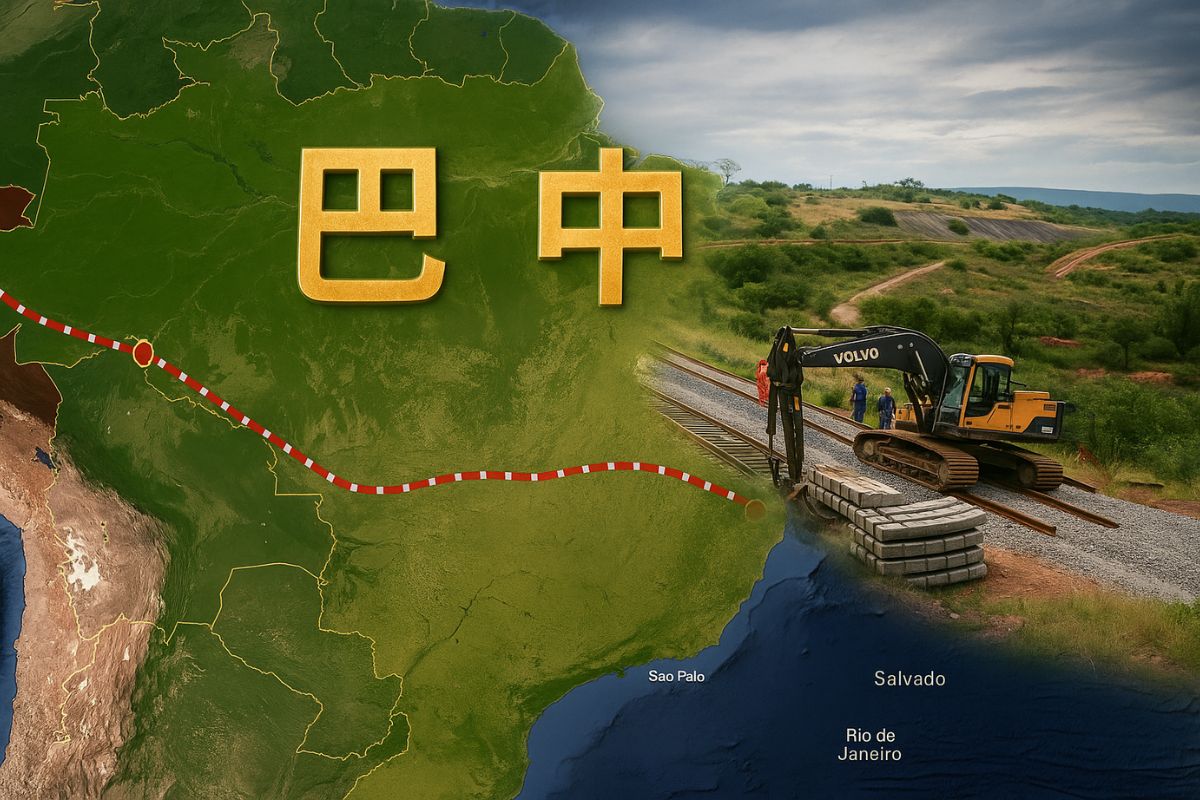
The West-East Integration Railway (FIOL) Emerges As A Transformational Project For National Logistics, With Strong Interest From Chinese State-Owned Enterprises That See In The Project A Way To Ensure The Flow Of Brazilian Minerals And Grains To Asia.
One of Brazil’s most ambitious infrastructure projects, the West-East Integration Railway (FIOL) promises to redefine the logistical map of the country. Designed to connect the productive interior to the coast, the new railway is seen as a solution to historical bottlenecks and a key piece in boosting the competitiveness of agribusiness and mining in the global scenario.
With more than 1,500 kilometers in length, the project has attracted the attention of international giants, especially Chinese state-owned enterprises. Companies such as China Railway Engineering Corporation (CREC) have already expressed strong interest and are even participating in segments of the construction, eyeing the potential of a logistics corridor that can drastically shorten the export route of the Brazilian harvest to Asian markets.
What Is FIOL, The New Railway That Will Connect The Interior Of Brazil To The Sea?
The West-East Integration Railway is a railway corridor designed to cross the country, connecting the future Porto Sul, in Ilhéus (BA), to the municipality of Figueirópolis (TO). With a total planned length of 1,527 km, the project is divided into three major sections to facilitate its construction and concession.
-
A forgotten cord on the floor of a basement in Vienna leads a plumber to a box containing 30 kilograms of gold with Mozart’s face, hidden before World War II. The treasure, worth 2.3 million euros, was just centimeters away from a worker who ignored the sign a day earlier.
-
Made from recycled plastic, plastic wood is gaining space in the construction industry because it does not rot, resists moisture, and reduces maintenance costs over the years.

-
A couple buys an old chalet, breaks the kitchen floor for renovation, and finds over a thousand coins of gold and silver hidden since the English Civil War over 4 centuries ago.
-
Rigid bags with their days numbered: new trend prioritizes comfort in 2026.

FIOL 1 (Ilhéus/BA – Caetité/BA): with 537 km, this section is vital for transporting iron ore from Bahia Mineração (Bamin). The works were already 80% complete when Bamin secured the sub-concession in an auction, with an expected investment of R$ 3.3 billion to complete it.
FIOL 2 (Caetité/BA – Barreiras/BA): this intermediate segment, with approximately 485 km, is crucial for connecting the mining area to the agricultural hub of Western Bahia. The works are underway.
FIOL 3 (Barreiras/BA – Figueirópolis/TO): with 505 km and an estimated investment of R$ 6 billion, this final section will connect the new railway to the North-South Railway, integrating the national logistics network and adding a capacity of more than 8 million tons of cargo per year.
The goal of FIOL is clear: to drastically reduce transportation costs, which today mainly depend on the road modal, and to increase the efficiency of domestic production outflow.
China’s Interest: Why Do Chinese State-Owned Enterprises Want To Invest Billions In FIOL?
The involvement of China in the project is not merely speculative; it is concrete. The giant China Railway Engineering Corporation (CREC), one of the largest construction conglomerates in the world, is already participating, through its subsidiary CREC-10, in the construction of the FIOL 1 section.
CREC-10, along with the Brazilian company Tiisa, forms the consortium contracted by Bamin to execute a R$ 1.1 billion contract to complete the section.
The Chinese interest is strategic and multifaceted. The main goal is to ensure and facilitate access to Brazilian commodities, such as iron ore and soy, which are essential for the Chinese economy.
By investing in both the railway and its destination port, Porto Sul, Chinese companies adopt a strategy of vertical control over the logistics corridor, ensuring efficiency and preferential access from the product’s origin to its export.
How The Railway Will Lower Freight Costs And Boost Exports
For Brazilian agribusiness, FIOL represents a revolution. Currently, high logistical costs reduce the competitiveness of national products. The new railway has the potential to reduce transportation costs by up to 30% for soybean and corn production areas in Western Bahia and southern Tocantins.
The transport capacity of FIOL is massive. Just the first section is expected to move more than 18 million tons of cargo per year at the beginning of its operation, with projections to exceed 50 million tons by 2035.
The railway will create a new export axis for the growing agricultural production of Matopiba (Maranhão, Tocantins, Piauí, and Bahia), alleviating congestion at the ports of the South and Southeast and strengthening the economy of the Northeast.
Porto Sul: The Missing Link For The New Railway To Function
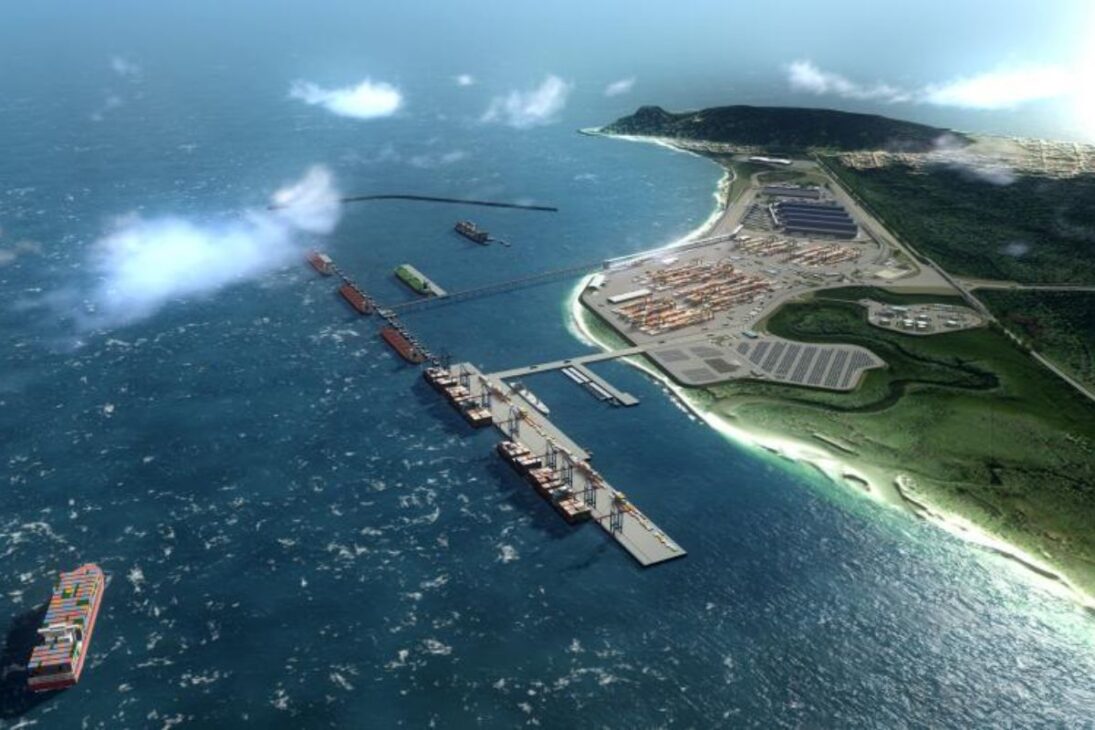
The success of FIOL depends directly on the construction of Porto Sul, a deep-water port complex in Ilhéus (BA). Without the port, the railway has nowhere to offload its cargo.
This interdependence is so critical that a Chinese consortium, led by CREC-10 and the Chinese Fund for Investment in Latin America (Clai-Fund), has already committed to invest, build, and operate Porto Sul, in partnership with the government of Bahia and Bamin.
The estimated investment for the port is R$ 2.6 billion. This strategy of investing in both the railway and the port mitigates risks for the investor, who gains control over the two most important links in the chain.
However, it also creates a vulnerability: any significant delay at the port, which is scheduled for delivery in 2027 along with FIOL 1, could compromise the entire railway project.
Route To Asia: FIOL As A Key Piece Of The Bioceanic Railway
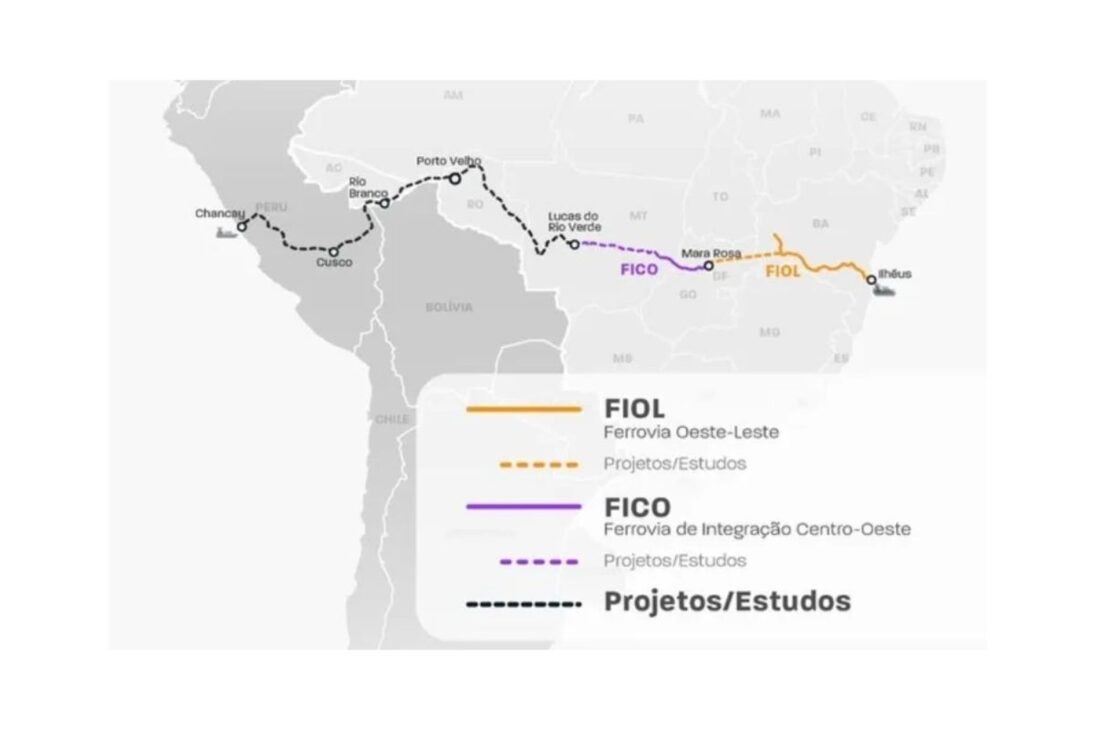
The Chinese interest in FIOL goes beyond offloading through the Atlantic. The new railway is seen as the initial segment of the ambitious Bioceanic Railway, a project aimed at connecting Brazil to Peru, creating a direct route to the Pacific Ocean.
This transcontinental route, of great interest to China, would reduce the export routes of Brazilian commodities to Asia by about 10,000 kilometers.
By connecting with the North-South Railway and the Central-West Integration Railway (FICO), FIOL becomes the Atlantic anchor of a corridor that could reshape South American trade and strengthen economic and geopolitical ties between Brazil and China.






Seja o primeiro a reagir!