





 Portuguese
  English
  Spanish
  4 min of reading
  0 comments


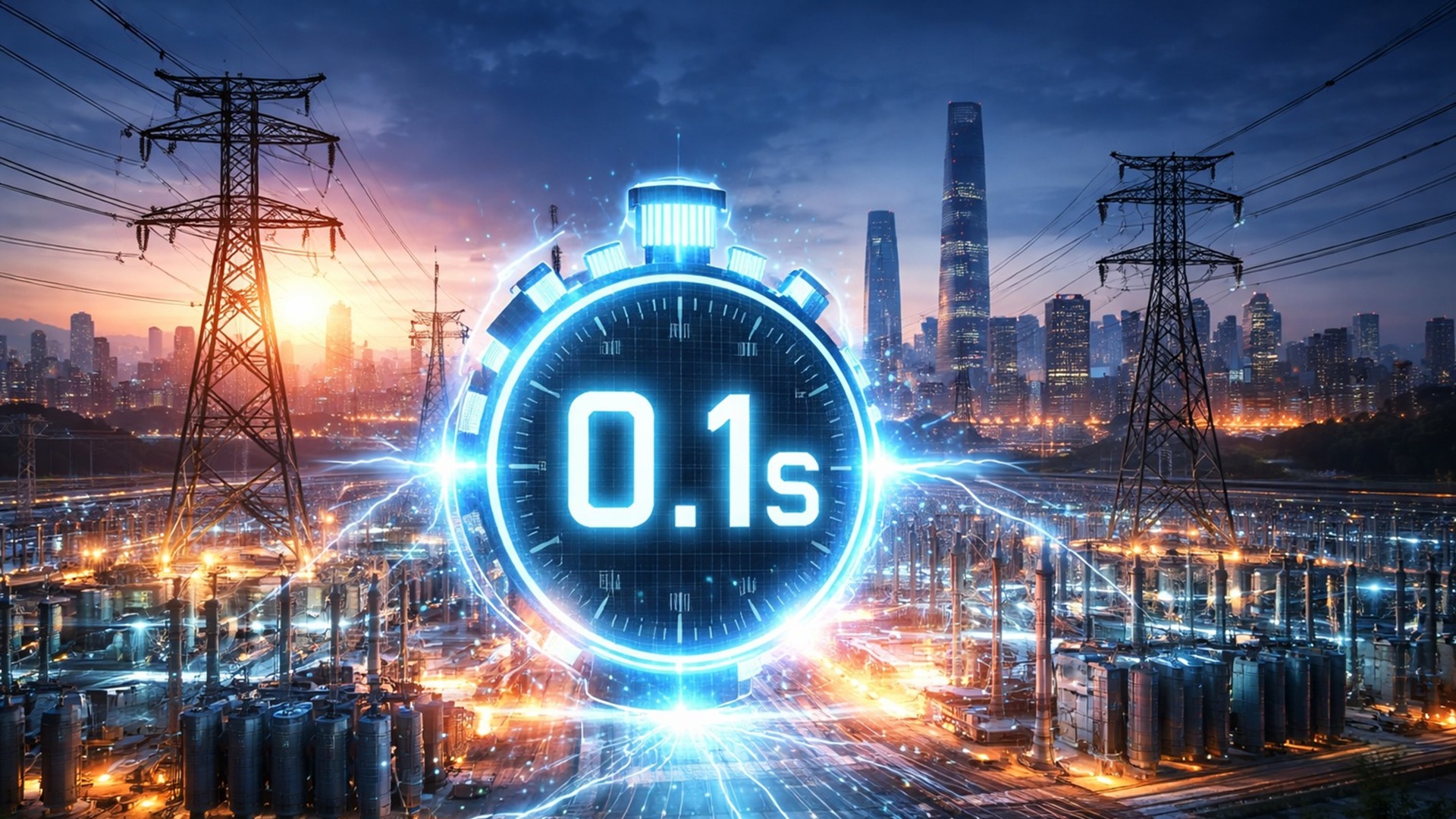
After More Than A Decade Of Cooperation Between State Universities, State-Owned Enterprises In The Electricity Sector, And Automation Companies, China Developed A System Capable Of Identifying Failures, Isolating Sections Of The Grid, And Restoring Power In Just 0.1 Second, In The Face Of Blackouts That In Other Countries Can Last Hours
A Long-Term Collaboration In China Reduced The Response Time To Power Grid Failures To 0.1 Second, After More Than Ten Years Of Joint Research, Strengthening The Resilience Of The World’s Largest Power System In The Face Of The Expansion Of Intermittent Sources And The Accelerated Growth Of Demand.
Ultra-Rapid Response And Context Of The Electric Grid
The Chinese Initiative Achieved The Mark Of 0.1 Second To Isolate Failures And Restore Power Supply. In Other Countries, Blackouts Resulting From Network Failures Can Take Hours To Resolve, Given The Centralized Nature Of Electricity Supply.
As Electricity Supports Heating, Cooling, And Transportation, The Need For Infrastructure Capable Of Supporting This Transition Grows. Energy Comes From Hydroelectric, Solar, Nuclear, Thermal, And Wind Sources, Distributed Across Interconnected Regional And National Grids.
-
The Himalayas continue to grow to this day, with tectonic plates advancing 5 cm per year, mountains rising up to 10 mm annually, and the 2015 earthquake that killed 9,000 people may have increased the risk of an even larger seismic mega-event.

-
At an altitude of 400 km by astronauts from the International Space Station, Paris transforms at night into a golden mesh so precise that it reveals the outline of the Seine River, avenues, and entire neighborhoods like a luminous map drawn over the Earth.

-
iPhone 17 reaches historic low price with 256 GB, 120 Hz display, and drops to R$ 5,703 on Shopee, featuring A19 chip, dual 48 MP cameras, battery life of up to 30 hours, and advanced AI features.

-
Trip to Mars getting closer: Pulsar Fusion, from the UK, advances with plasma ignition in fusion engine and could drastically reduce space travel time, making crewed missions faster, safer, and economically viable.

The Centralization Of The System Increases Risks When A Failure Occurs. Resulting Blackouts Can Be Prolonged, Requiring More Efficient Recovery Mechanisms, Especially With The Greater Participation Of Intermittent Sources Such As Solar And Wind.
Technological Evolution And Previous Systems
The New Advancement Follows A Previous Proactive Initiative By The State Distribution Company, Which Used Artificial Intelligence To Restore Supply In 3 Seconds. This Solution Was Implemented In 2022, But Became Insufficient Given The Changes In The Composition Of The Grid.
As The Electric System Transformed Over The Years, China Needed To Develop An Even More Resilient Recovery Mechanism. The Goal Was To Drastically Reduce Response Time, Enhancing The Capacity To Handle Rapid And Complex Fluctuations.
The Ongoing Work Allowed For Achieving A Window Of One Hundred Milliseconds For Isolation And Restoration, Establishing A New Operational Benchmark For Large-Scale Grids, According To Reports From The South China Morning Post.
Institutional Collaboration And Project Scope
The Team Brought Together Researchers From Universities Such As Tianjin And Shandong, Along With State Grid Beijing Electric Power, NR Electric, And Beijing Sifang Automation.
Academic Institutions, Equipment Manufacturers, The National Power Grid, And Automation Companies Worked Together For More Than A Decade. The Sustained Collaboration Was Decisive In Transforming Research Into Large-Scale Practical Application.
The Technology Developed Allows For Isolating Failures And Resolving The Identification Of Microcurrents At Levels Of One Hundred Milliamperes. This Point Was A Relevant Technical Challenge For System Stability And High-Speed Recovery.
Integration Of Intermittent Sources And Restoration
By Quickly Identifying Microcurrent Failures, The System Balances Energy From Unpredictable Sources And Directs Electricity Across Various Grids. This Strengthens Protection And High-Speed Restoration, Reducing The Impact Of Interruptions.
The Increase In Solar And Wind Generation Raises The Risk Of Instabilities. In This Scenario, Grids Need Highly Efficient Recovery Systems, Capable Of Responding In Fractions Of A Second To Prevent Widespread Blackouts.
The Chinese Solution Was Designed To Operate In An Environment With Multiple Sources, Ensuring Coherent Responses Even Under Rapid Variations. The Result Is A More Resilient Grid, Prepared For Frequent Oscillations.
Demand Scale And Strategic Importance
Preventing A Major Blackout Or Restoring It Quickly Is A Common Goal For Power Grids. In China, The Importance Is Amplified By Scale: The Country Has The Largest Grid In The World And Generates Twice The Energy Of The United States.
By 2025, Projections Indicated That Total Electricity Consumption Would Exceed 10 Trillion Kilowatt-Hours, Surpassing The Combined Consumption Of The European Union, Russia, Japan, And India In 2024.
With Expanding Demand, China Is Rapidly Adding Multiple Sources. Interesting Engineering Has Been Following The Commissioning Of New Nuclear Plants, In Addition To The Implementation Of The Largest Solar And Wind Plants And A Major Hydroelectric Project In Tibet.
Export And Future Applications
The Technology Used In The Energy And Railway Transport Sectors Has Already Been Exported To 12 Countries. The Accumulated Experience Is Expected To Support The Construction Of Smarter Energy Equipment In The Future.
By Combining Academic Research, Industry, And Large-Scale Operation, China Consolidated An Ultra-Rapid Response System. The Result Reduces Systemic Risks And Expands The Network’s Ability To Adapt To The Growing Demands Of Global Electricity Consumption.
Source: News From China.









-

-

-

4 pessoas reagiram a isso.