





 English
  Francês
  Alemão
  Italiano
  Japonês
  Norueguês
  Portuguese
  Spanish
  5 min of reading
  0 comments


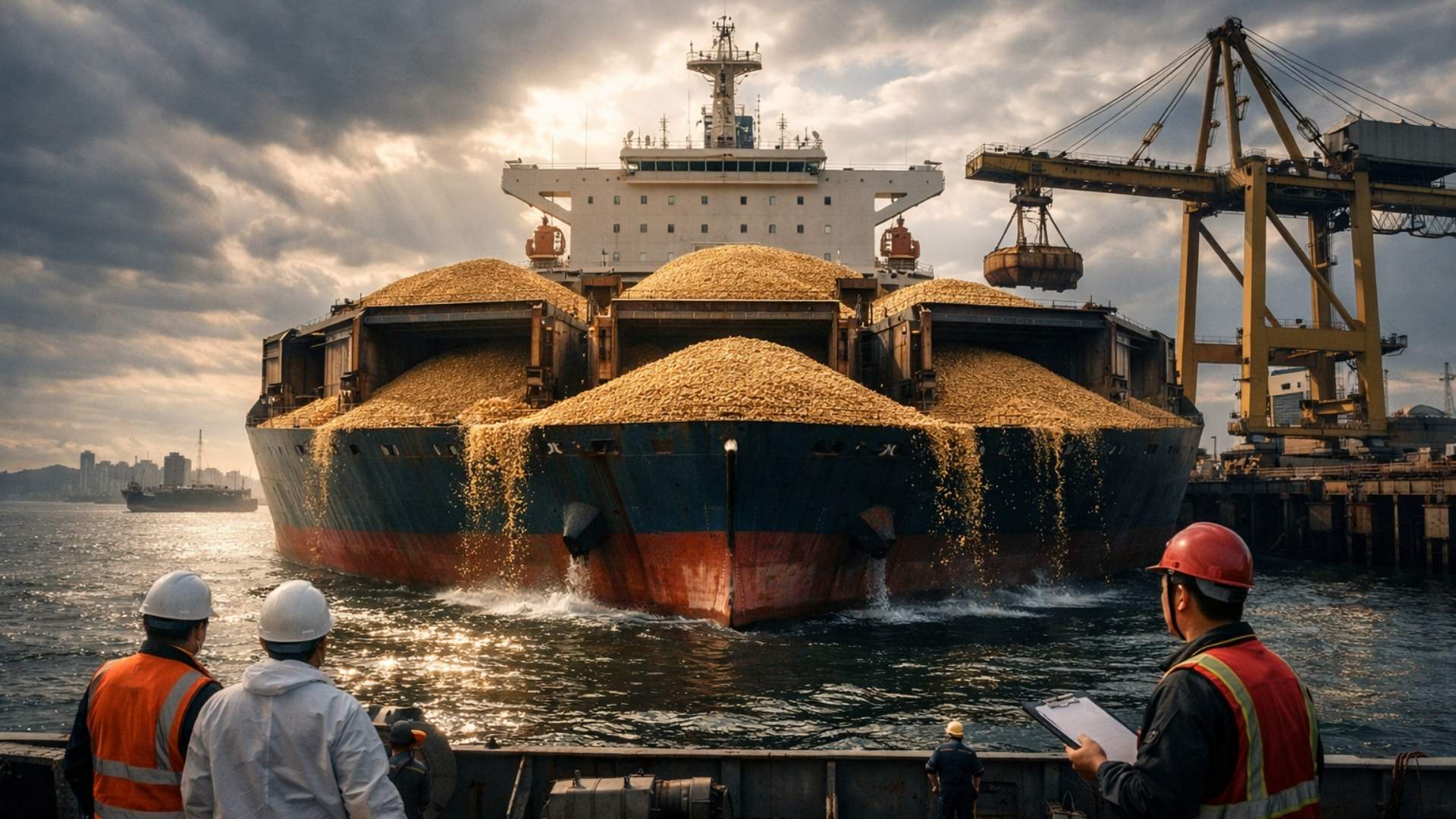
Sanitary impasse between Brazil and China pressures soybean exports, blocks ships, and exposes logistical costs during harvest. Open negotiation in Beijing may ease requirements on impurities, but the market is still awaiting a technical standard capable of avoiding new blockages.
China has opened the door to review the requirement of zero tolerance for impurities in Brazilian soybean shipments, reported this Thursday (26) by the Canal Rural portal, after weeks of holds, delays, and uncertainty in the trade of the main agricultural product between the two countries.
The change began to be discussed after complaints from Chinese buyers about the presence of weed seeds, chemically treated grains, and other phytosanitary issues identified in Brazilian shipments, amidst the harvest and peak export season.
The negotiation gained momentum with a mission from the Ministry of Agriculture visiting China.
-
The drought of the cerrado was considered an enemy of wheat, but Brazilian scientists turned the lack of rain into a competitive advantage by creating a grain with quality that is already attracting the attention of international mills around the world.
-
THE OWNER of Brazil: a farmer who came from laundries, created an ’empire’ and today runs a company valued at R$ 42 billion after tripling its value in less than a year and receiving a billion-dollar investment from the USA.

-
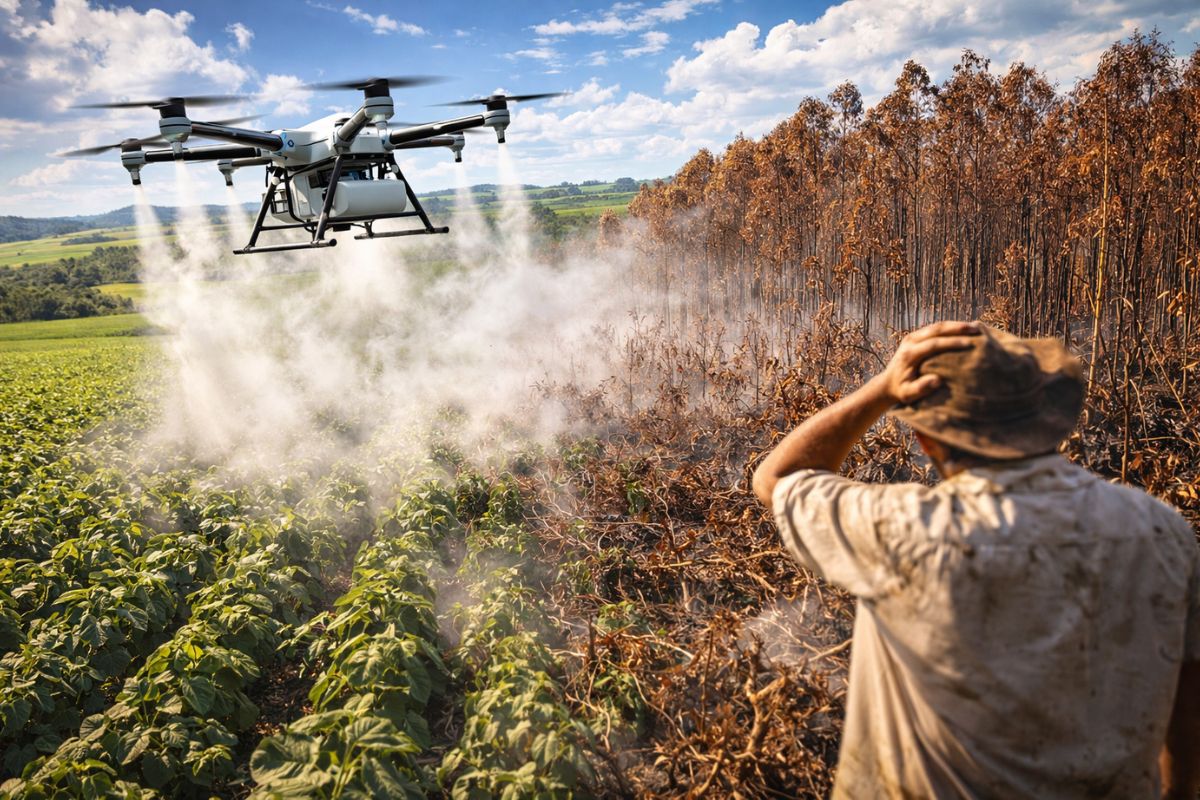
Drone with herbicide applied in pasture spreads mist, hits neighboring crop, destroys 40 thousand eucalyptus trees, devastates chayote plantation, and leaves a rural producer in Goiás facing million-dollar losses.
-
Forgotten region becomes a powerhouse in the heart of Brazil, transforming unproductive lands into fortune and making MATOPIBA the new billion-dollar agricultural empire that almost no one saw being born.

Secretaries Carlos Goulart, from Agricultural Defense, and Luis Rua, from Commerce and International Relations, arrived in the Asian country to discuss a new sanitary protocol and attempt to unlock the issuance of certificates required for the shipment of the grain.
According to the government, talks are ongoing throughout the week and aim to align Chinese requirements with Brazilian operational capacity, without interrupting the trade flow.
Brazilian soybean under sanitary pressure in China
The impasse has affected about 20 ships, according to reports from the sector and specialized media, and has hit trading companies, port terminals, and contracts already scheduled for March hard.
Vessels have been stuck in ports longer waiting for clearance, while exporters reported rising logistical costs and difficulties in meeting schedules during the peak shipping season.
China is the main destination for Brazilian soybeans and accounts for almost 80% of the national grain’s external purchases, which amplifies the impact of any sanitary restriction on the entire chain.
Impurities in soybeans and phytosanitary requirements
The central point of the crisis lies in the interpretation of phytosanitary requirements.
Trade sources reported that inspections have become stricter following repeated complaints from Chinese buyers and authorities.
Among the cited problems are the presence of live insects, weed seeds, and grains coated with products used in seed treatment, such as pesticides and fungicides.
As a result, the release of shipments has come to depend on additional checks and more rigorous reports before shipping.
Although part of the market has treated the episode as an embargo, the Brazilian government rejects this classification.
According to Minister Carlos Fávaro, there has been no formal suspension of soybean purchases by China.
He stated that what exists is a divergence over inspection and sanitary safety standards, which led Brazil to intensify inspections following the notifications received.
Along the same lines, the ministry reported that no internal rules have been relaxed in recent days, despite market reports of attempts to make the flow more flexible.
Retained ships increase costs and disrupt logistics
Still, the pressure on the sector has increased.
With ships waiting for certification and buyers being more cautious, companies have begun to reassess operations and offers.
Cargill even suspended shipments of Brazilian soybeans to China during the period of greatest uncertainty.
At the same time, trading companies and market agents began reporting increased freight costs and the risk of demurrage charges, the fee paid when a ship remains beyond the expected time for loading or unloading.
This effect spreads quickly because soybean exports operate with short windows and high volumes.
The impact is not limited to the companies’ cash flow.
When a shipment loses its schedule, all subsequent logistics tend to be affected, from storage to queues at ports, including the hiring of ships and the pace of crop outflow.
In March, just when Brazil accelerates shipments of the newly harvested grain, delays of this magnitude reduce trade predictability and create noise in a corridor that depends on scale and regularity to function.
Even so, the exporters’ association still projected robust shipments for the month, signaling that the flow has not been completely interrupted.
Flexibility of the rule may unlock exports
The most relevant signal came from a document from the Agricultural Defense Secretariat, reproduced by agribusiness media, stating that Chinese authorities agreed not to adopt the criterion of zero tolerance for weeds in Brazilian soybean shipments intended for domestic consumption and industrial processing.
The text adds that there is still no definitive percentage of tolerance, and that this parameter will continue to be discussed between the two governments.
In other words, there has been a relief in the absolute requirement, but not a conclusive technical solution.
This point is crucial because the Brazilian document itself acknowledges that it is not possible to guarantee the absolute absence of weed seeds in soybeans, given the characteristics of production and movement of the grain.
The negotiation, therefore, seeks to replace a requirement considered impractical with a measurable and bilaterally accepted standard.
As long as this index is not finalized, the certification of ships will depend on laboratory reports and compliance with other sanitary conditions, such as the absence of treated seeds and live insects.
What the impasse reveals about soybean quality
The crisis also reignites an old demand for quality control at the source.
The episode exposes the sensitivity of the Chinese market to any deviation from standards and increases the pressure for stricter cleaning of soybeans even at the stages of storage, classification, and shipment.
For Brazil, the discussion goes beyond the retained cargo in the short term.
It is about preserving trade predictability with the largest buyer of the product and avoiding that a technical problem becomes a recurring obstacle in the bilateral relationship.
For now, the scenario is one of open negotiation, without formal rupture, but with costs already imposed on the export chain.
The trend towards flexibility reduces immediate tension and may allow for a smoother resumption of shipments, as long as both sides finalize a technical parameter for the presence of impurities and manage to standardize inspections without new stoppages.
Until then, the sector is closely monitoring the conversations in Beijing as a central step to determine whether the episode will remain restricted to an operational shock of the harvest or if it will leave more lasting consequences for Brazilian soybeans in the Chinese market.






Seja o primeiro a reagir!