





 Portuguese
  English
  Spanish
  2 min of reading
  0 comments


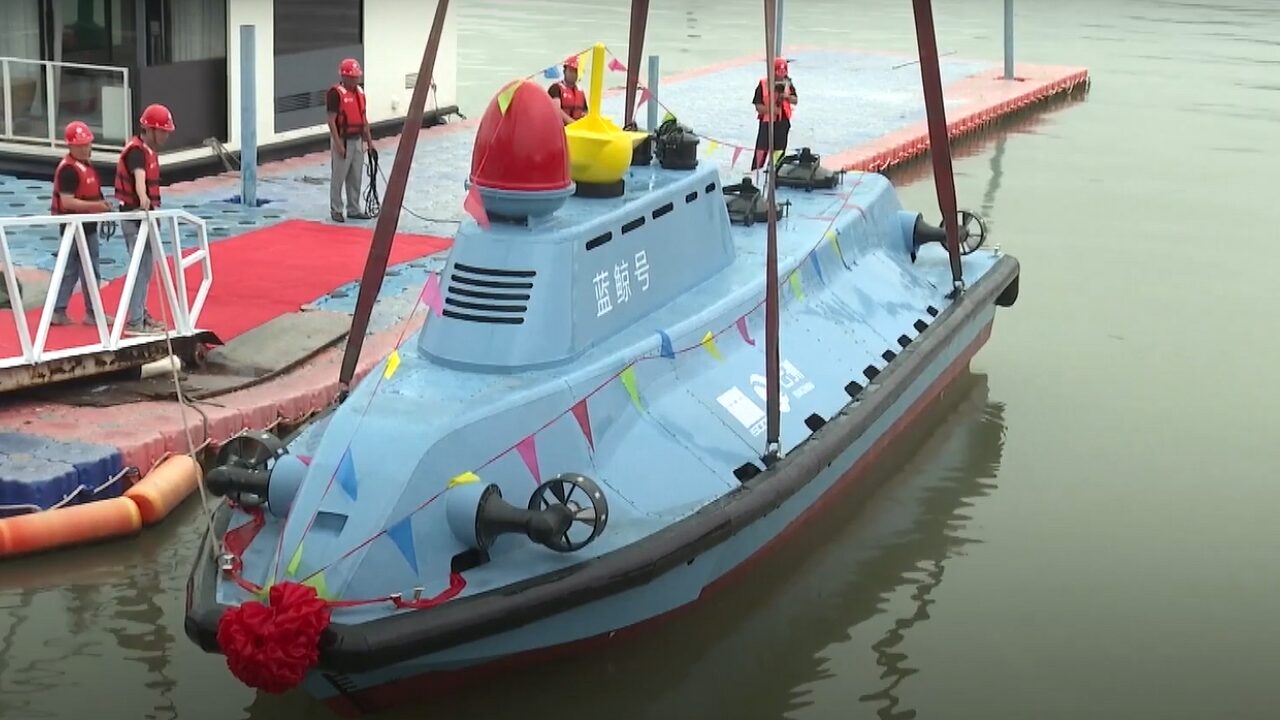
The Blue Whale, an unmanned submarine with artificial intelligence, maps the seabed with accuracy, collects climatic data, and operates submerged for 30 days; launched by China.
In a move that reinforces its leadership in advanced maritime technologies, China officially unveiled the Blue Whale, its first high-speed unmanned submarine.
Capable of operating submerged for up to 30 consecutive days and navigating in extreme weather conditions, the vehicle represents a technological leap in scientific and environmental missions.
The launch took place in the city of Zhuhai, in the southern part of the country, with information released by the international press and the state agency Xinhua.
-
Europe is trying to create an ammonia-powered marine engine without auxiliary fuel, which could unlock the race for giant emission-free ships. The technology aims to eliminate one of the biggest obstacles to clean maritime propulsion.

-
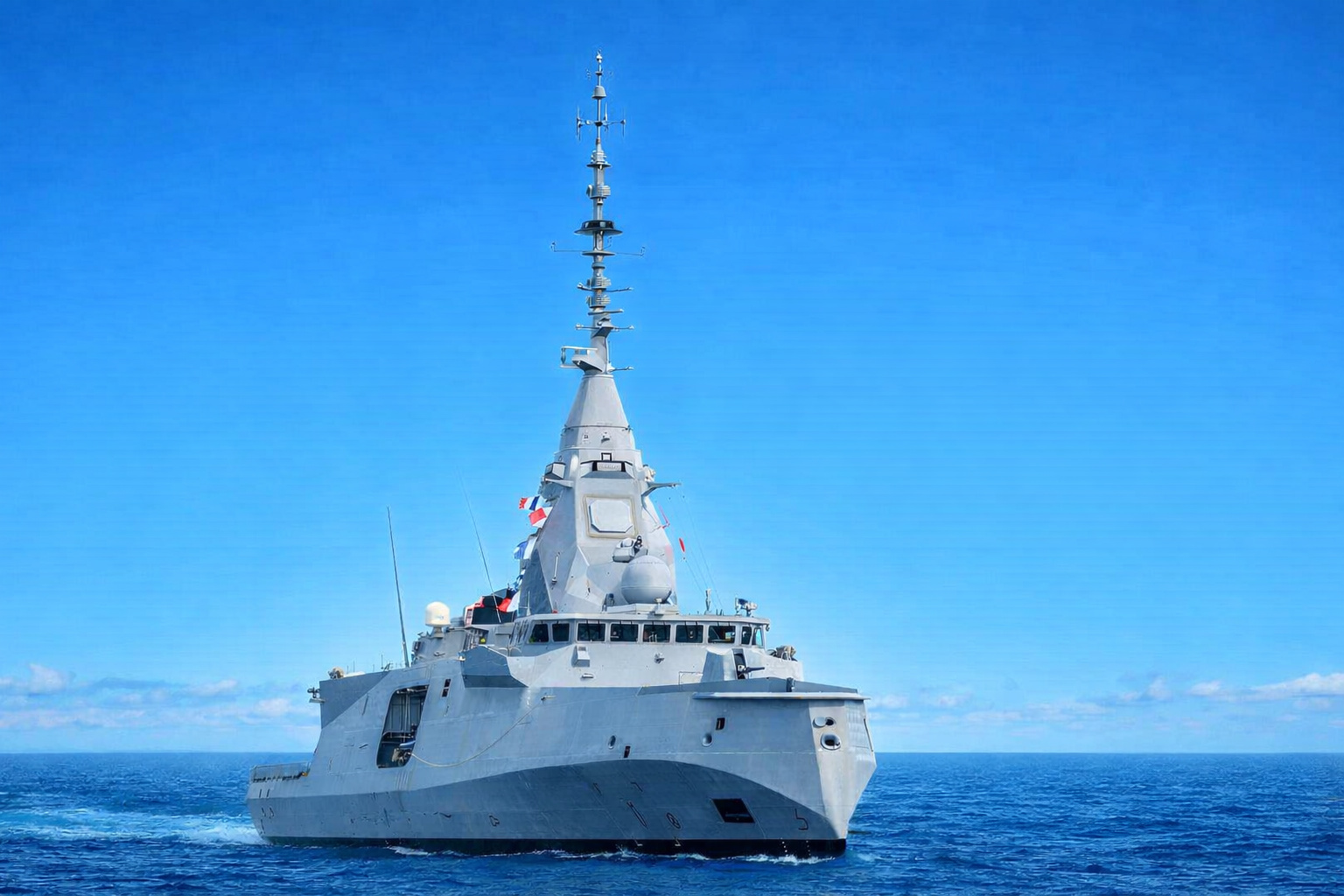
A 4,500-ton frigate with just over 100 crew members, state-of-the-art radar, and cruise missiles is being touted as the new standard of naval warfare in the 21st century.
-
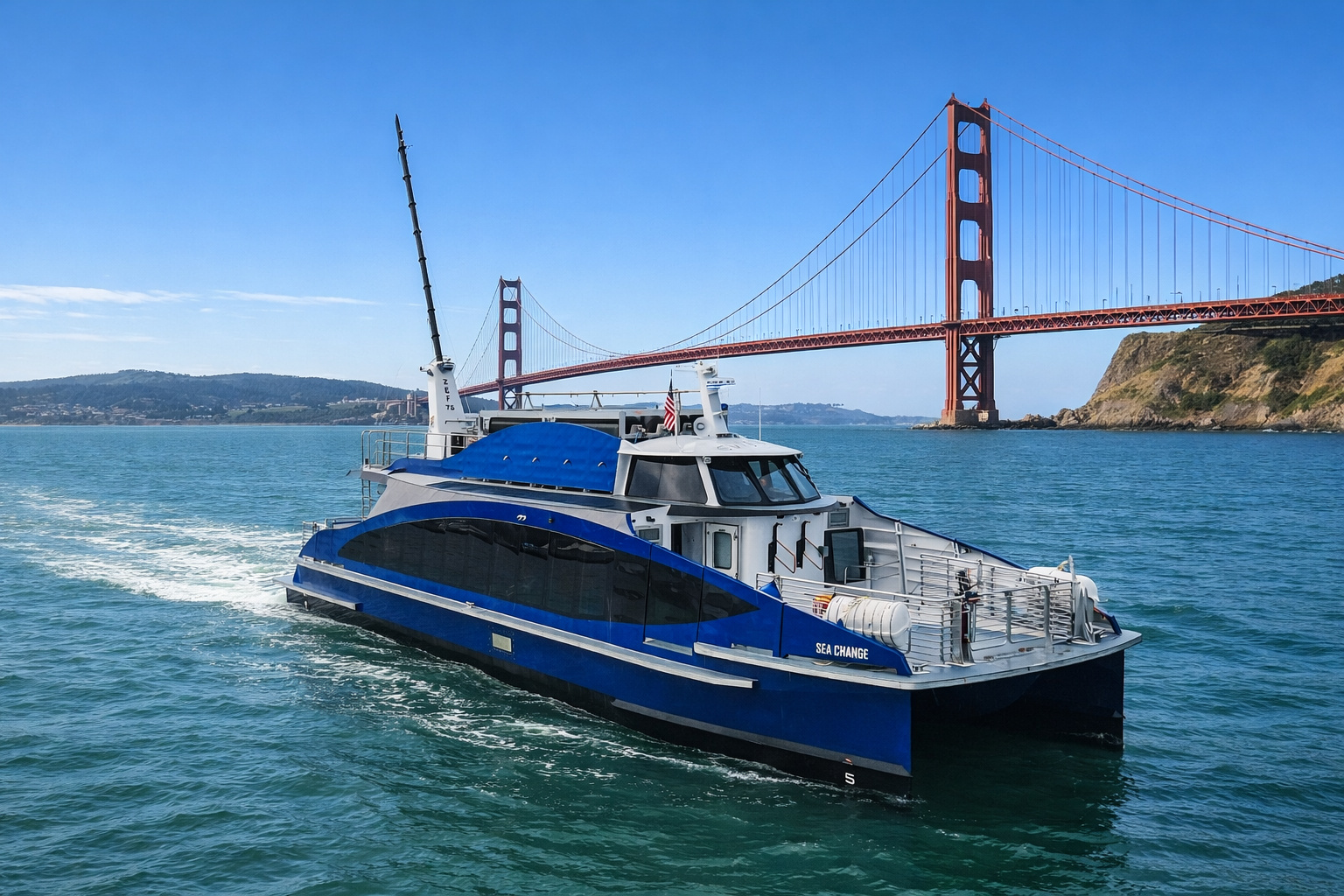
The first commercial hydrogen-powered ferry enters operation in the U.S., eliminates the use of diesel, uses fuel cells to generate clean energy on board, and transforms San Francisco Bay into a landmark of the new era of emission-free navigation.
-
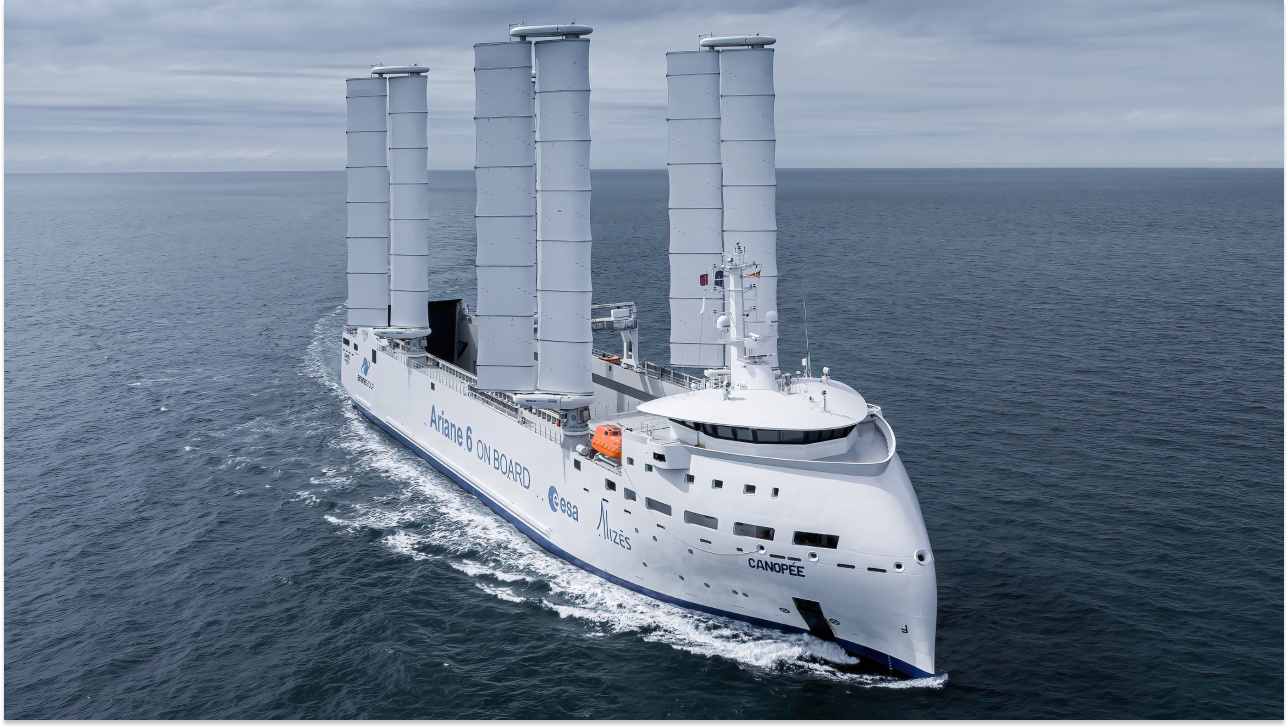
With a length of 121 meters and four rigid sails of 36 meters that automatically rotate to capture the wind, Canopée is the world’s first hybrid industrial cargo ship powered by wind, used to transport rockets and reduce fuel consumption by up to 30% on transoceanic routes.

Blue Whale Submarine: China Presents Unmanned Vehicle That Maps the Seabed in Record Time
Measuring 11 meters in length and weighing 12 tons, the Blue Whale was developed by the Chinese Academy of Sciences for civil applications, such as monitoring meteorological phenomena that can affect large coastal populations.
Its design includes an autonomous system based on artificial intelligence, allowing for real-time decision-making to avoid environmental risks and collect strategic data.
According to scientist Chen Dake, involved in the project, the submarine provides “strategic support for ocean exploration” and elevates the standard of global ocean research.
The key advantage of the Blue Whale lies in the integration of deep learning algorithms, which optimize the vessel’s performance in complex environments.
<p“The submarine is three times more efficient than manual systems,” explained Wu Guosong, chief engineer at Yunzhou.
This intelligent system allows the vehicle to schedule missions, chart routes, and switch operational strategies based on real-time environmental variables.
Equipped for Extreme Weather and Scientific Data Collection
The Blue Whale can reach speeds of 36 knots on the surface and quickly dive to depths of up to 60 meters, avoiding intense storms.
The hybrid propulsion system—combining water jets and magnetic fluid—ensures agility and control even in rough seas, while the acoustic coating reduces noise to the level of the marine environment.
During tests in the South China Sea, the submarine mapped 3,000 km² in just 15 days, surpassing the speed of traditional research vessels by five times.
Multifunctional Platform for Exploration and Monitoring
The structure of the Blue Whale can transport over 20 types of scientific equipment, including underwater radars, cameras, bioacoustic sensors, and water samplers.
A high-resolution sonar system enables detailed mapping of the seabed, and the underwater profiler can detect oil reserves, natural gas, and methane hydrates.
Additionally, the Blue Whale submarine can strategically position itself on the path of typhoons, launching rockets with atmospheric sensors to collect real-time meteorological data.









-

Uma pessoa reagiu a isso.