





 Portuguese
  English
  Spanish
  3 min of reading
  11 comments


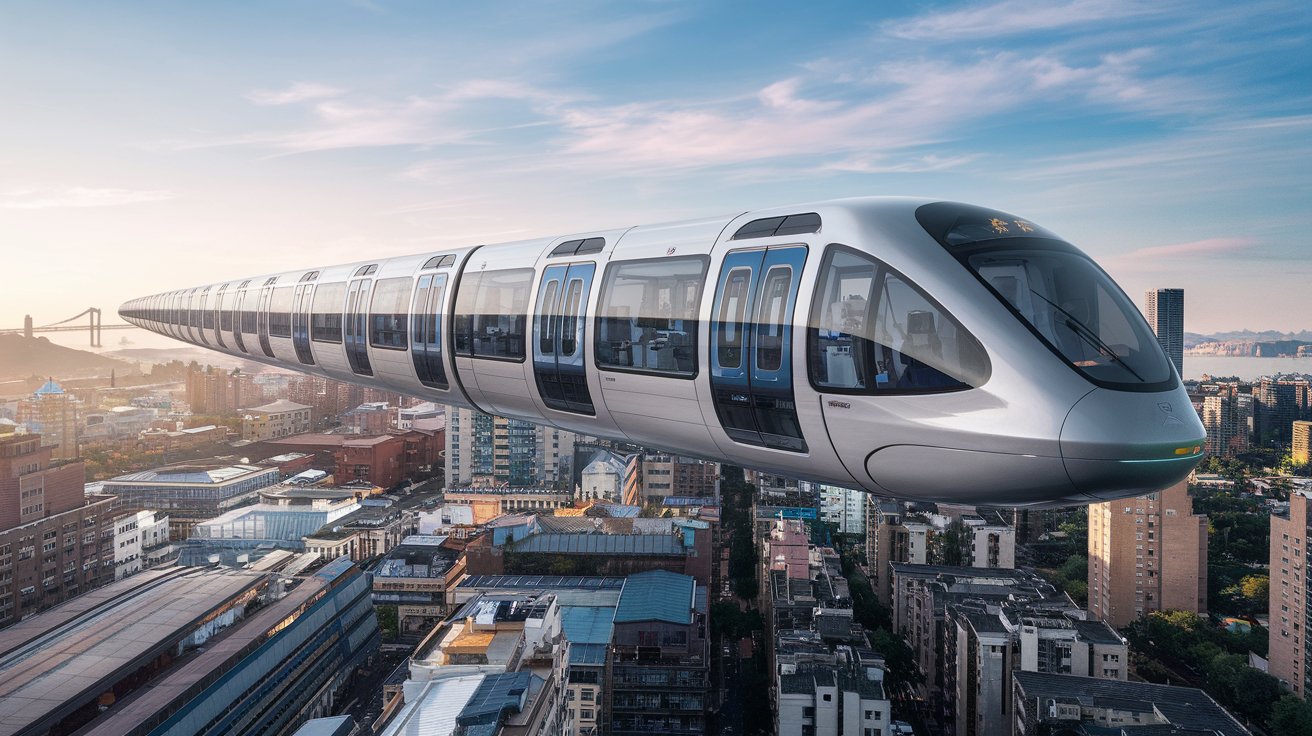


China Advances Urban Mobility and Announces Arrival of New Autonomous Aerial Train. Monorail Reaches Speeds of 60 km/h.
China is revolutionizing the urban mobility landscape with the installation of its first autonomous aerial train. This monorail train, while lacking real ‘flight’ capability, features a standout futuristic design. Suspended on a monorail, the innovation can reach speeds of up to 60 km/h, accommodating up to 200 passengers at a time.
Understand the Differentiator of Autonomous Aerial Trains for Urban Mobility
The construction of this monorail took only seven months, a timeline very similar to that required for conventional railway tracks. However, this train offers significant advantages: more space for pedestrians and vehicles, fewer accidents, more safety, and a cost comparable to that of a traditional railway system.
The project in China is not just a design innovation but represents a step towards more efficient, safe transportation and optimized use of urban space. This autonomous aerial train line was developed to be lightweight and quiet, and to consume less energy, predominantly using electricity, a sustainable choice that reduces environmental impact.
-
With a cost per shot close to zero, the DragonFire laser could change naval warfare in 2027 and provide British ships with nearly unlimited defense against drones.

-
A British startup creates tires that generate electricity in electric vehicles when passing over potholes, speed bumps, and cracks.

-
Scientists have created robots made with living cells that have their own nervous system, swim on their own, explore the environment, and self-organize without any genetic engineering, and now they want to do the same with human cells.

-
Students create a solar-powered ambulance that operates without a plug, without fuel, and still keeps medical equipment running in remote areas.

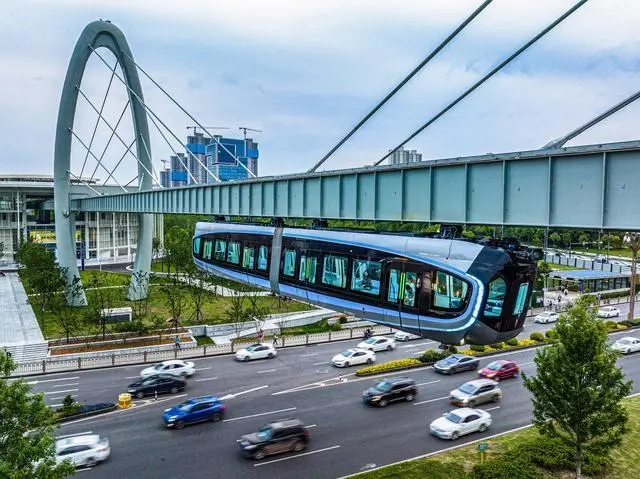
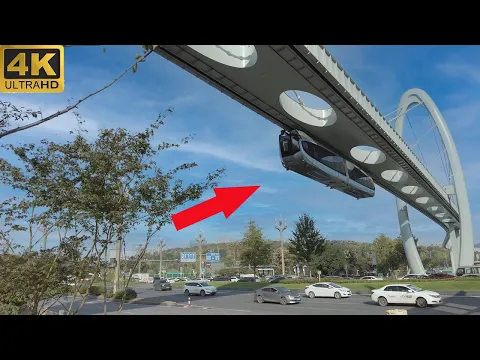
The city of Chongqing, China, is a pioneer in the use of this monorail system due to its challenging geography and high population density. For mountainous areas and complex terrain, where the construction of subways or underground systems can be extremely costly, the autonomous aerial train emerges as an ideal alternative. This innovation demonstrates China’s ability to transform its transport infrastructure, merging cutting-edge technology with sustainability.
Japan Also Advances in Urban Mobility with Implementation of New Technologies
Alongside China, Japan has also announced the construction of a megaproject featuring the fastest autonomous aerial passenger train in the world, a system that reaches speeds up to twice that of normal bullet trains and will cut travel time by half, eliminating a rather fundamental component: the wheels.
Using magnetic levitation technology, this new vehicle for urban mobility hovers 10 cm above the ground, eliminating friction generated by contact with the tracks. However, the megaproject has been deeply controversial, facing delays, rapid construction costs, and an intense debate over environmental concerns.
It is worth highlighting that Japan was the first country in the world to develop high-speed trains with the construction of the Tokaido Shinkansen line between Tokyo and Osaka in 1959. When the autonomous aerial train is completed, a trip that currently takes about 2.5 hours with conventional trains will now take 67 minutes.
At full speed, this magnetic levitation technology propels the bullet train to move at 500 km/h, although in a test it has reached the impressive speed of 603 km/h.

China Also Advances with Other Urban Mobility Initiatives
In addition to China’s monorail, another significant advancement in transportation is the Yang Wang U8 floating SUV, developed by Bide. This luxury electric SUV combines off-road capability with high technology, offering users a robust and innovative experience.
Equipped with four electric motors, the model accelerates from 0 to 100 km/h in under three seconds, providing high-level performance. Furthermore, the vehicle features a hydraulic system that allows height adjustments of up to 150 mm, providing versatility both on urban roads and challenging terrains.
An important differentiator of the model is its floating mode, activated automatically in emergency situations. This feature allows the SUV to float for up to 30 minutes at a speed of 3 km/h, ideal for crossing flooded areas or in case of inundations.









Brasil em rio de janeiro Magé ainda tem trem a manivela, vem falar de trem aéreo!
China se desenvolve rapidamente graças a um estado soberano onde a distribuição de renda é feita e a população usufrui dessa distribuição ao contrário do ocidente que concentra a renda as mãos de poucos o que dificulta esse tipo de atitude!! socialismo distribui renda por isso a China é desenvolvida!! Capitalismo concentra renda nas mãos de banqueiros, empresários grandes comerciantes etc etc que além de tudo assaltam o estado por isso o desenvolvimento por aqui é precário e cheio de miséria!!
Governos todos são ruins para população.
Mas amigo….! Antes de criticar pelo menos leia direito pra ter os argumentos certos… Nada do falou está escrito dessa forma. Está te faltando mais atenção do que você pede aos redatores.
Mas a matéria afirmar que monotrilho está há 10,5km de altura é algo muito estranho mesmo. Quem sabe em alguma condição específica (ainda assim duvido), e não em todo trajeto.
Redatores de ****, além do mais escrevem a matéria cheia de erros de português.