





 Portuguese
  English
  Spanish
  7 min of reading
  0 comments


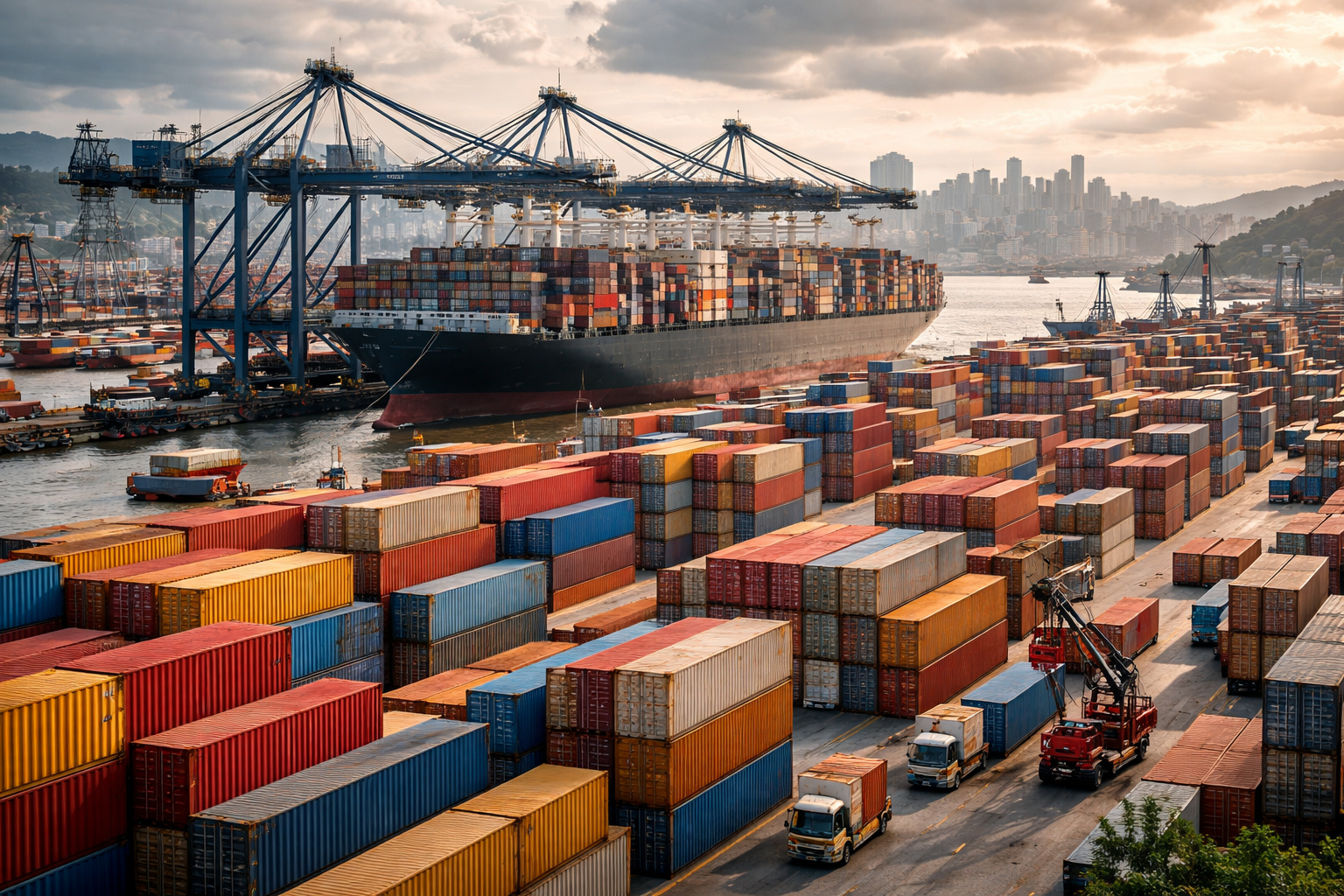
China surpasses the USA and becomes the main trading partner of São Paulo with around US$ 31 billion, consolidating a shift in the economic axis of the state.
China becomes the main trading partner of São Paulo: In 2025, official data from the Comex Stat system, from the Ministry of Development, Industry, Commerce and Services, showed a significant change in foreign trade of Brazil’s largest state. According to a survey published by Exame magazine based on these official numbers, China surpassed the United States and became the main trading partner of the state of São Paulo, reaching a turnover of US$ 30.7 billion, a value often rounded to around US$ 31 billion. In 2024, the official agency of the São Paulo government still recorded China as the second largest trading partner of the state, behind the USA, which reinforces the unprecedented nature of the turnaround observed in 2025.
This movement does not merely represent a change in positions in a trade ranking. It signals a structural change in the economic axis that underpins international relations of Brazil’s richest and most industrialized state, historically linked to the North American market. While trade with the United States remained relevant, with around US$ 27.3 billion in the same period, the faster growth of exchanges with China was decisive for this turnaround.
The advance consolidated, in the case of São Paulo, a trend that had been observed nationally for years. The Comex Stat itself is the official database used to track this type of evolution in Brazilian trade relations, gathering rankings, flows, and historical series of exports and imports by country and by state.
-
BRICS breaks the barrier of US$ 1 trillion in internal trade, accelerates the weight of the Global South, and pressures Brazil to react in the new economy.
-
Electrolux surprises, closes colossal factory and lays off 400 people in a mass dismissal that will have a direct effect later this year, following a cost review, with an impact of R$ 272.5 million and R$ 109 million in cash in Chile.
-
The Lula government is pursuing re-election and is therefore preparing a package with discounts of up to 80% on debts, subsidies for diesel, gas for 15 million, and energy, after reaching 51% disapproval six months before the election.

-
The chamber approves a project that transforms plots of up to 2,000 square meters into official rural properties, allowing thousands of small producers who were invisible to the government to now access credit, tax exemptions, and technical assistance.
Growth of over 24% with China explains the turnaround at the top of São Paulo’s trade
The decisive factor for the change was not a decline in relations with the United States, but rather the faster pace of growth in trade with China. In 2025, trade exchanges between São Paulo and the Asian country recorded an increase of approximately 24.2%, while trade with the United States grew by about 3.9%.
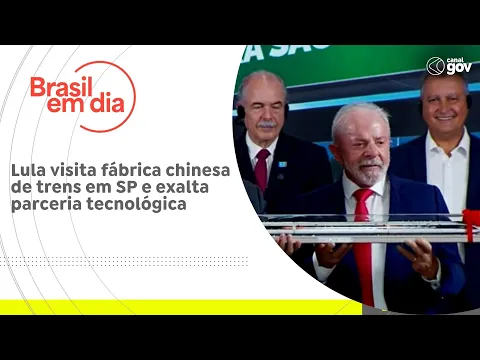

This difference in pace quickly expanded China’s share in São Paulo’s trade. The increase in imports from China played a central role in this process, driven by demand for equipment, industrial inputs, and technological products.
This growth did not occur in isolation but accompanied a broader movement of intensification of trade relations between Brazil and China, especially in strategic sectors of the economy.
Imports from China boost volume and show increasing industrial dependence
A large part of the trade volume between São Paulo and China is linked to imports. The state, which has one of the largest industrial bases in Latin America, relies on a wide range of foreign products to keep its production chain active.
Among the main imported items are:
- large industrial equipment, including platforms related to the oil sector
- electronic devices, such as cell phones and technological components
- agricultural inputs, such as herbicides used in rural production
These products are essential for different sectors of the São Paulo economy, from heavy industry to agribusiness. The growing presence of China as a supplier of these items reinforces a pattern of technological and industrial dependence, in which the state imports higher value-added products.
This scenario also highlights China’s strategic role as a partner capable of meeting large-scale demand, with competitive prices and extensive production capacity.
Exports to China follow a pattern based on commodities and primary products
If on one hand São Paulo imports industrialized products from China, on the other hand it mainly exports items linked to the commodities sector. Among the main products sent to the Asian country are:
- crude oil, which represents a significant share of exports
- beef, with strong demand in the Chinese market
- soybeans, a staple of animal and industrial feed in China
This pattern of exchange, in which Brazil exports raw materials and imports industrialized products, is well-known and repeats itself in the specific case of São Paulo. The trade relationship is marked by economic complementarity, but also by asymmetry in terms of value added.
This model reinforces China’s position as one of the main buyers of Brazilian natural resources, while also expanding its presence as a supplier of manufactured products.
Turnaround in São Paulo reinforces national trend initiated in 2009
What happened in the state of São Paulo is, in practice, an extension of a phenomenon that has been occurring in Brazil as a whole. Since 2009, China has held the position of the largest trading partner of the country, surpassing the United States.
The difference is that São Paulo, due to its more diversified and industrialized economic structure, maintained a more balanced relationship with the USA for a longer time. The change recorded in 2025 indicates that Chinese influence has also consolidated in Brazil’s main economic center, further reducing the historical dependence on the United States.
This alignment between the state and national scenarios reinforces the consistency of the trend and indicates that the change is not isolated, but structural.
United States remain relevant but lose prominence in São Paulo’s trade
Despite being surpassed, the United States remains a highly important trading partner for São Paulo. The volume of US$ 27.3 billion demonstrates that the bilateral relationship remains solid.

However, the loss of leadership symbolizes a change in the balance of power within the state’s international trade. The American presence, although still significant, now competes with an increasingly dominant China in terms of volume and growth.
This scenario reflects broader global transformations, in which the Chinese economy has expanded its influence in various regions of the world, including Latin America.
Growth of relations with China has a direct impact on São Paulo’s economy
The intensification of trade with China brings direct effects to the economy of São Paulo. The increase in imports contributes to the supply of industry, while exports ensure revenue flow in strategic sectors.
This increase in trade movement influences entire production chains, from industry to agribusiness, impacting jobs, investments, and competitiveness.
Moreover, the growing presence of China may stimulate new business opportunities, including direct investments and industrial partnerships.
Trade relationship reflects changes in global economic geopolitics
The rise of China as the main trading partner of São Paulo cannot be analyzed in isolation. It is part of a broader context of transformation in global economic geopolitics.
In recent decades, China has consolidated itself as an industrial and commercial power, expanding its presence in international markets. The change observed in São Paulo reflects this new configuration, in which the global economic axis gradually shifts towards Asia.
This movement has implications that go beyond trade, influencing political, strategic, and economic decisions at different levels.
São Paulo reinforces its position as Brazil’s main economic hub in relations with China
As the largest state economy in the country, São Paulo plays a central role in Brazil’s trade relations with the outside world. China’s leadership in this context reinforces the importance of the state as an economic integration hub.
A large part of the import and export operations goes through São Paulo, whether due to its logistical infrastructure or the concentration of companies and industries.
This means that the changes observed in São Paulo’s trade have a direct impact on the national economy, increasing the state’s relevance in international relations.
The latest numbers point to the continuation of this trend. The accelerated growth of exchanges with China, combined with the maintenance of high volumes, indicates that the Asian country is likely to remain in the lead in the coming years.
The combination of Chinese demand for commodities and the supply of industrial products creates a stable trade relationship, which tends to strengthen over time.
This scenario suggests that the change observed in 2025 is not temporary, but part of a broader and more lasting transformation.
Do you believe that China should further expand its economic influence in Brazil?
The change in the ranking of trading partners of São Paulo highlights a significant transformation in the state’s economic relations. China’s rise as the main partner reinforces global trends and raises questions about the future of Brazilian international trade.
In light of this scenario, a relevant reflection arises: should China continue to expand its economic presence in Brazil, or could the balance with other partners shift again in the coming years? Share your opinion in the comments.








Seja o primeiro a reagir!