





 Portuguese
  English
  Spanish
  4 min of reading
  3 comments


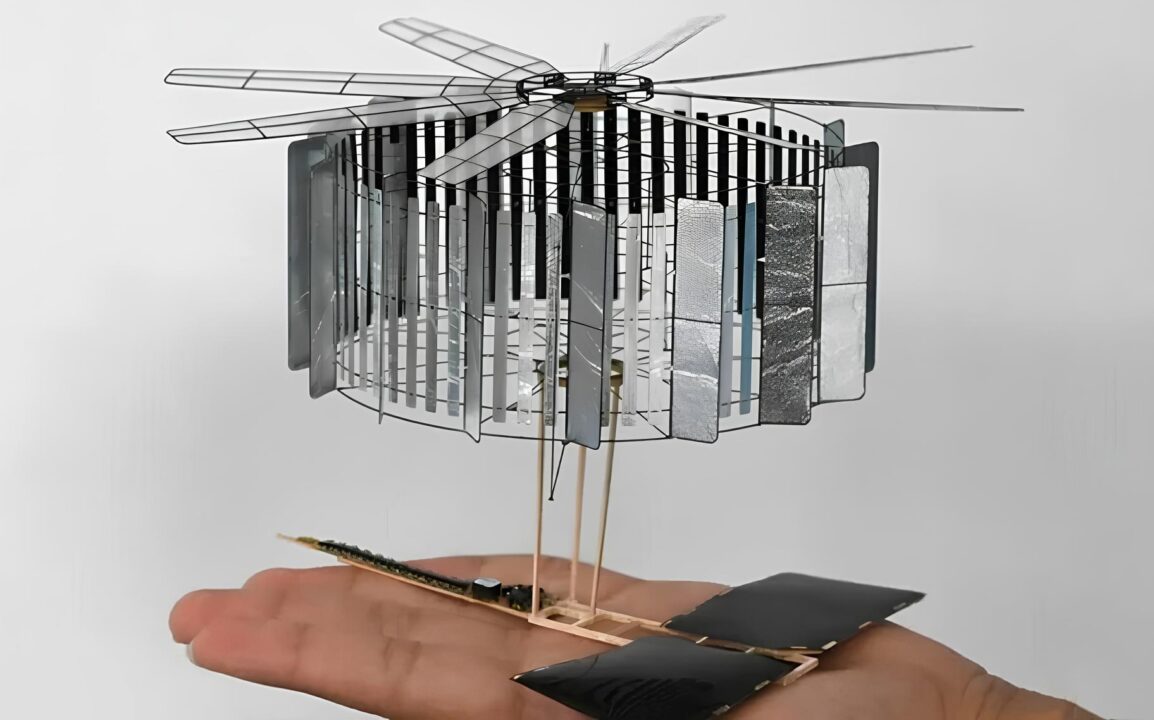

The Smallest Solar Drone in The World, Created by China, Weighs Only 4.2 Grams and Is Revolutionizing the Technology Market. Fully Powered by Solar Energy, This Ultra-Light Drone Promises to Open New Possibilities for the Industry and Redefine Innovation Standards.
China has once again demonstrated its innovative power by launching the smallest drone in the world, powered by solar energy. The device, known as “CoulombFly”, weighs only 4.2 grams, less than a sheet of A4 paper, and represents a milestone in drone technology. Developed by a team of researchers from Beihang University in Beijing, the drone is a significant advancement in the field of engineering and materials science, and its research was published in the renowned journal Nature.
The Innovation Behind The Smallest Drone in The World
The “CoulombFly”, the smallest drone in the world, was created with the goal of reducing the size of solar-powered drones, a challenge that has intrigued scientists for decades. Shen Wei, a doctoral student at Beihang University and the lead author of the paper, was the project leader. His dedication to the development of drones began during his undergraduate years and culminated in the creation of this innovative device.
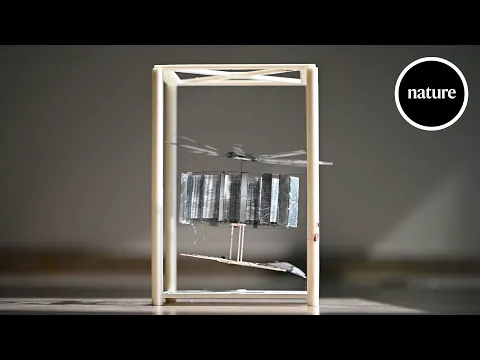

Solar-powered drones are not a novelty; however, until now, most available models were large and heavy. In 2019, the National University of Singapore had developed a helicopter considered the smallest drone of its time.
-
While the world looks at oil, the war with Iran is already disrupting helium supply from Qatar, affecting car and iPhone chips, threatening AI expansion, and putting pressure on aluminum packaging at the highest value in four years.

-
Global warming will expose a treasure hidden under the ice of Antarctica and may spark an international dispute over gold and valuable minerals.

-
A street vendor from Praia Grande built a robot made of scrap from scooters and washing machines that pulls his popcorn cart on the beach, emits sounds, and interacts with customers, becoming an attraction on the coast of São Paulo.
-
The specifications of the Xiaomi 18 Pro Max have been leaked, and the highlight is a dual 200 MP camera with a new 22-nanometer technology that promises to consume less energy and capture details in shadows and bright areas using LOFIC HDR.

However, reducing size and weight without compromising functionality remained a technical challenge. The creation of the “CoulombFly” represents a solution to this problem, using electrostatic motors, a different and bold technological approach.
Shen Wei’s Journey in Creating the Solar-Powered Drone
Shen Wei faced numerous challenges in his journey to create the smallest solar-powered drone in the world. Since his first year at Beihang University, he was involved with electrostatic motors, a technology that initially seemed limited in its practical applications. Shen almost abandoned the research several times due to the common belief that electrostatic motors were not useful enough for meaningful applications.
However, a sleepless night was the catalyst for a revolutionary idea. Shen began to contemplate the potential of coupling a propeller to an electrostatic motor, enabling the creation of a micro-drone.
Based on his knowledge, he believed that if he could develop an appropriate structure, the electrostatic motor could generate the necessary speed and lift for flight. In just three weeks of intensive testing, Shen and his team confirmed the viability of the concept, resulting in the creation of the “CoulombFly”.
Why The “CoulombFly” Is Considered The Smallest Drone in The World?
The title of smallest drone in the world, held by the “CoulombFly”, is not only due to its weight of 4.2 grams but also because of its ability to operate efficiently with solar energy. Solar-powered drones have the potential to operate for longer periods without the need for constant recharging, making them ideal for a variety of applications, from environmental monitoring to rescue operations in hard-to-reach areas.
The use of electrostatic motors in the “CoulombFly” was an innovative choice. These motors are known for their high efficiency and low energy consumption, characteristics that are essential for the operation of such small and lightweight devices.
The combination of a minimalist design with the energy efficiency of electrostatic motors allowed the “CoulombFly” to achieve the status of smallest solar-powered drone in the world.
Impact and Future Applications of The Smallest Drone in The World
The development of the “CoulombFly”, the smallest drone in the world, has significant implications for the future of drone and solar technology. Smaller and lighter drones, like the “CoulombFly”, have the potential to revolutionize various industries. For example, in agriculture, these drones can be used for detailed crop monitoring, detecting pests and diseases at early stages. In the field of security, they can be used in surveillance operations where size and discretion are essential.
The use of solar-powered drones, such as the “CoulombFly”, opens new possibilities for exploring remote and inhospitable areas, where access to electricity is limited. The ability to operate for long periods without the need for recharging also makes these drones ideal for data collection missions in hard-to-reach locations, such as dense forests or disaster zones.
The positive environmental impact is also a factor to be considered. With the growing concern about carbon emissions and the search for sustainable alternatives, solar-powered drones like the “CoulombFly” represent an important step in reducing dependence on fossil fuels and promoting cleaner technologies.
The “CoulombFly” and China’s Advancement in Drone Technology
China continues to lead the way in technological innovation with the launch of the “CoulombFly”, the smallest solar-powered drone in the world. This milestone not only demonstrates the advancement of engineering and materials science but also highlights the potential of new technological approaches to overcome longstanding challenges.
The creation of this drone is a testament to the perseverance and creativity of researchers like Shen Wei, who, even in the face of difficulties, can turn bold ideas into reality.
As the “CoulombFly” opens new possibilities for the application of drones in various fields, China further solidifies its position as one of the main centers of global innovation. This advance in the development of solar-powered drones not only drives research and development in this area but also inspires future generations of engineers and scientists to explore the limitless potential of technology.









Kendi adıma araştırırken öğrendiğim güvenilir bahis siteleri ile ilgili şeffaf bilgi bulmak zor.
Kazançlı çıkmak isteyenlerin güvenilir bahis siteleri ile ilgili içerikler her zaman ilgi çekici.
Kararsız kaldığım bir anda karşılaştığım güvenilir bahis siteleri konusunda güncel kalmak şart.