





 Portuguese
  English
  Spanish
  3 min of reading
  0 comments


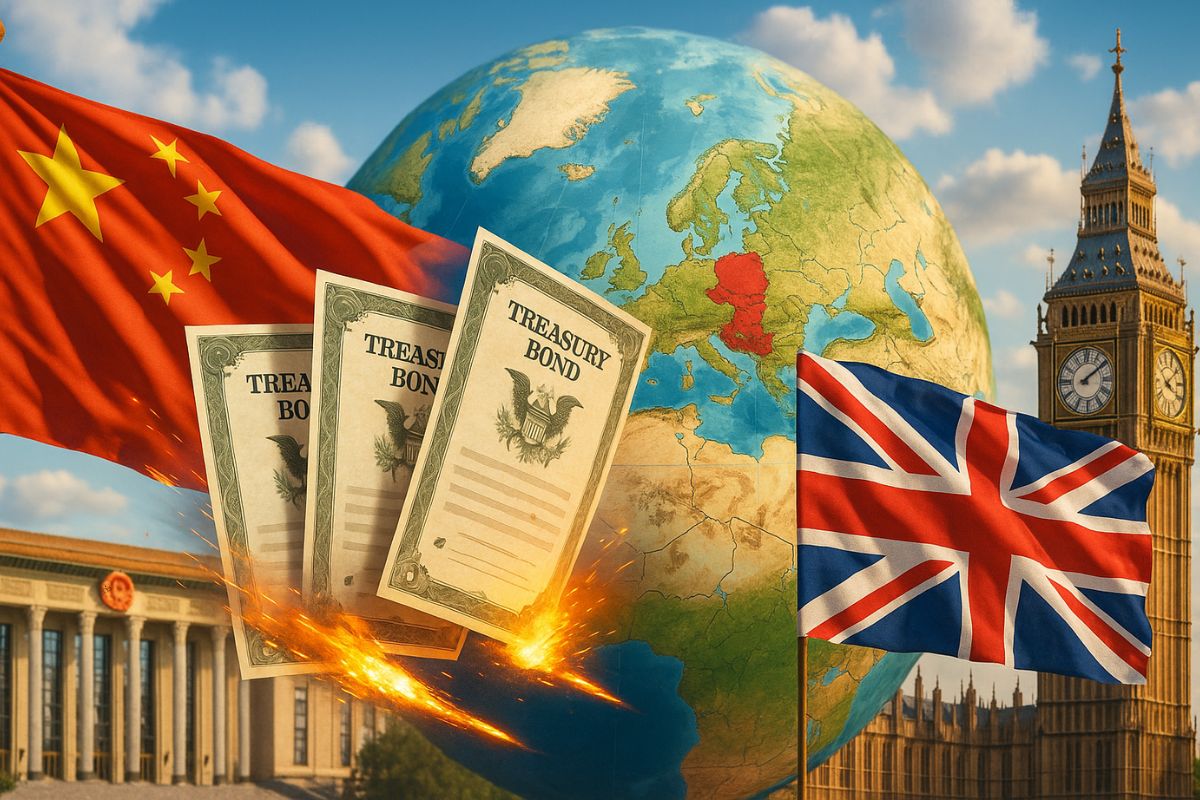
China Has Rapidly Sold U.S. Treasury Securities and Is Pressuring the Dollar Amid Tensions with Trump. Financial Moves Reduce Exposure to U.S. Debt, Weaken the Dollar, and Expose Fragility of the U.S. Economy
The China Has Rapidly Sold U.S. Treasury Securities at a pace that worries economists and creates political tension in Washington. The decision coincides with a decline in the value of the dollar and reignites the debate about U.S. dependency on foreign capital, especially at a time of internal instability in the Trump administration.
According to an analysis published by Financial Times, China’s reserves of these securities have fallen to levels lower than those of the United Kingdom, something unimaginable just over a decade ago. This movement occurs amid punitive trade tariffs, sanctions, and diplomatic tensions, and signals that Beijing is redesigning its strategy to protect assets against political and economic risks.
Why Is China Disposing of American Securities?
The selling process began gradually but gained momentum over the last two years, driven by three main factors: the decline in the value of the dollar, loss of revenue from exports to the U.S., and fear of asset freezes, as occurred with Russia after the war in Ukraine.
-
A new Brazilian shopping center worth R$ 400 million will be built in an area equivalent to more than 4 football fields, featuring 90 stores, 5 cinemas, a supermarket, a college, and parking for 1,700 cars, potentially generating 3,000 jobs.

-
Larger than entire cities in Brazil: BYD is building a 4.6 km² complex in Bahia with a capacity for 600,000 vehicles per year, but the discovery of 163 workers in conditions analogous to slavery has shaken the entire project.

-
With an investment of R$ 612 million, a capacity to process 1.2 million liters of milk per day, Piracanjuba inaugurates a mega cheese factory that increases national production, reduces dependence on imports, and repositions Brazil on the global dairy map.

-
Brazilian city gains industrial hub for 85 companies that is equivalent to 55 football fields.


Economists note that in the past, dollars obtained from exports were recycled into buying Treasury securities, strengthening U.S. debt. Now, Beijing is directing a significant portion of this capital into gold reserves and tangible assets, such as mines of strategic minerals, which are considered safer against unilateral measures from Washington.
Impact on the Dollar and Markets
The China Has Rapidly Sold U.S. Treasury Securities in a context where the American economy is already facing persistent inflation and high interest rates. The reduced demand for these securities puts upward pressure on interest rates and makes debt financing more expensive.
The dollar, which has already lost about 10% of its value relative to other strong currencies, is likely to weaken further if the trend continues. This decline, while it may benefit American exporters, increases import costs and reduces international confidence in the currency.
Political Context and Its Effect on Trump
The Trump administration, pressured by low approval ratings and external crises, views the Chinese movement as part of a broader strategic dispute. The high tariffs imposed on Beijing have reduced bilateral trade by up to 40% in some sectors, but also decreased the inflow of dollars into China, altering global financial flows.
Experts interviewed by the Financial Times believe that Trump is attempting to compensate for the loss of influence with high-profile bilateral agreements, such as the one made with Japan, which includes aircraft purchases and increased agricultural imports. However, critics say this strategy may isolate the U.S. even further in the long run.
Ripple Effect on the Global Economy
The sale of American securities by China does not only affect Washington. By reducing its participation, Beijing pressures other countries and investors to reconsider their exposure to U.S. debt, generating volatility in the markets.
If the trend continues, there is a risk of structural changes in the international financial system, with greater weight for alternative currencies and trade backed by assets such as gold and strategic commodities — something that benefits the BRICS bloc and challenges the dollar’s hegemony.
Do you believe that China’s decision could accelerate the decline of the dollar as the global reserve currency? Do you think the U.S. government is responding correctly? Share your opinion in the comments and participate in the debate.








-

Uma pessoa reagiu a isso.