





 Portuguese
  English
  Spanish
  4 min of reading
  0 comments


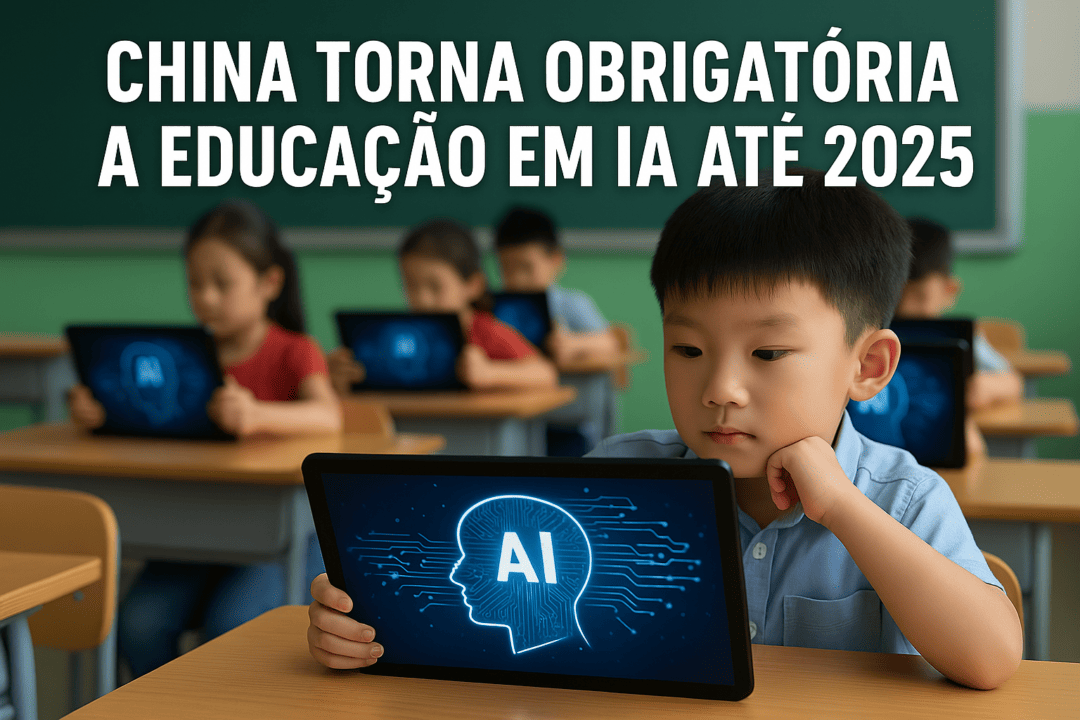
China is Rapidly Advancing in Its Global Technological Leadership Strategy. The Government Announced That, By 2025, Teaching Artificial Intelligence Will Be Mandatory in Schools Starting at Six Years Old. The Measure Aims to Prepare New Generations for the Challenges and Opportunities of the Digital Future, Reinforcing the Country’s Role at the Forefront of Innovation.
China has taken an unprecedented step on the global stage by announcing the mandatory teaching of artificial intelligence (AI) for elementary and high school students.
The measure will take effect from September 1, 2025. Even six-year-olds will have to learn about the subject, making it the first country in the world to implement AI education so broadly and early.
New Educational Policy
According to the government’s decision, all students will have to have at least 8 hours of AI classes per year.
-
Mercor paid $1.5 million per day for doctors, lawyers, and former Goldman Sachs bankers to teach artificial intelligence to do their jobs, and in 17 months, it went from zero to $500 million in annual revenue while its own contractors accelerated the replacement of their own work.

-
Casio Unveils Moflin, Robotic Pet With Artificial Intelligence Designed To Provide Emotional Comfort And Simulate A Permanent Affectionate Bond

-
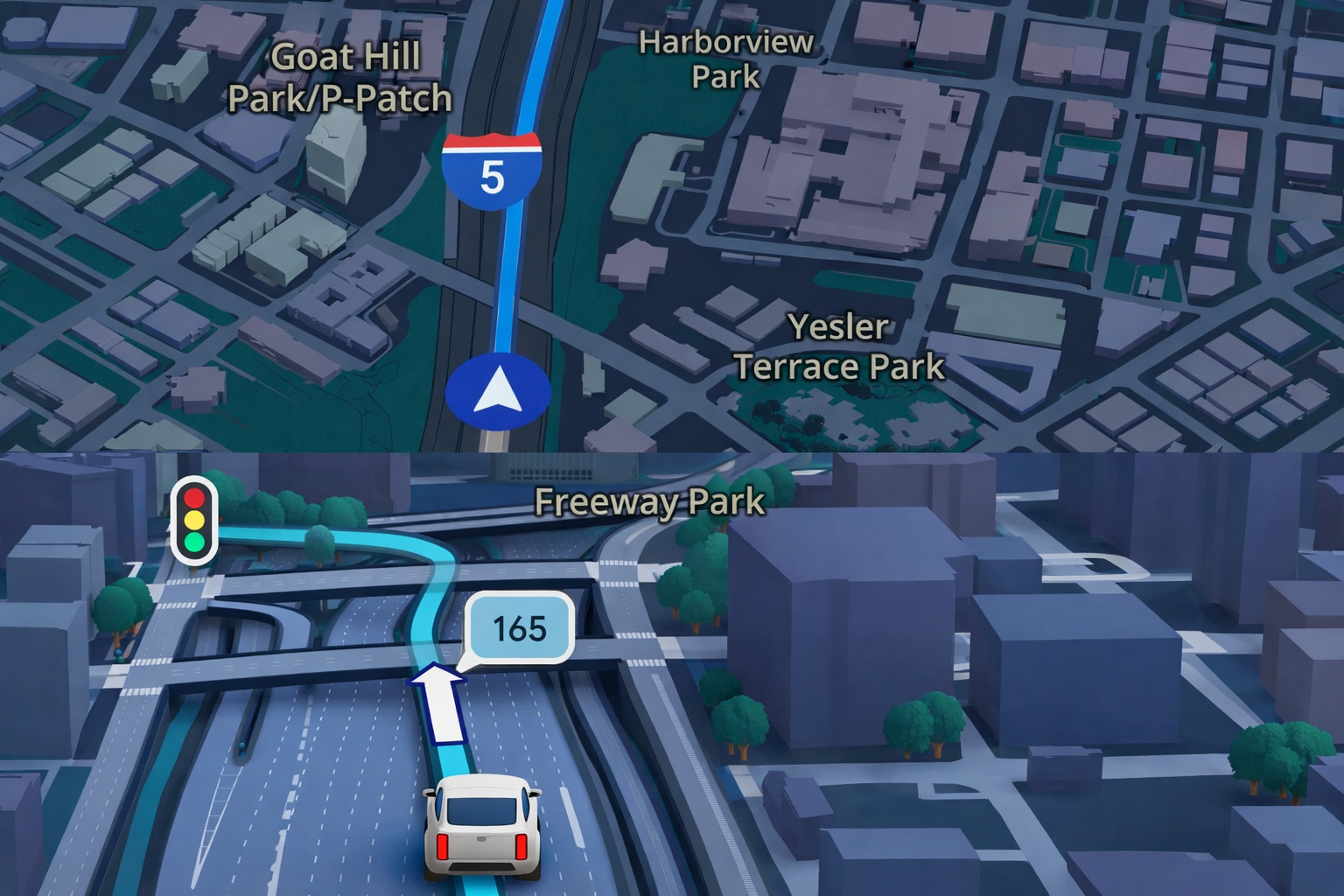
Google Maps Revolutionizes GPS Navigation With Gemini Artificial Intelligence, Ask Maps Feature, and Advanced 3D Visualization for Route and Travel Planning
-
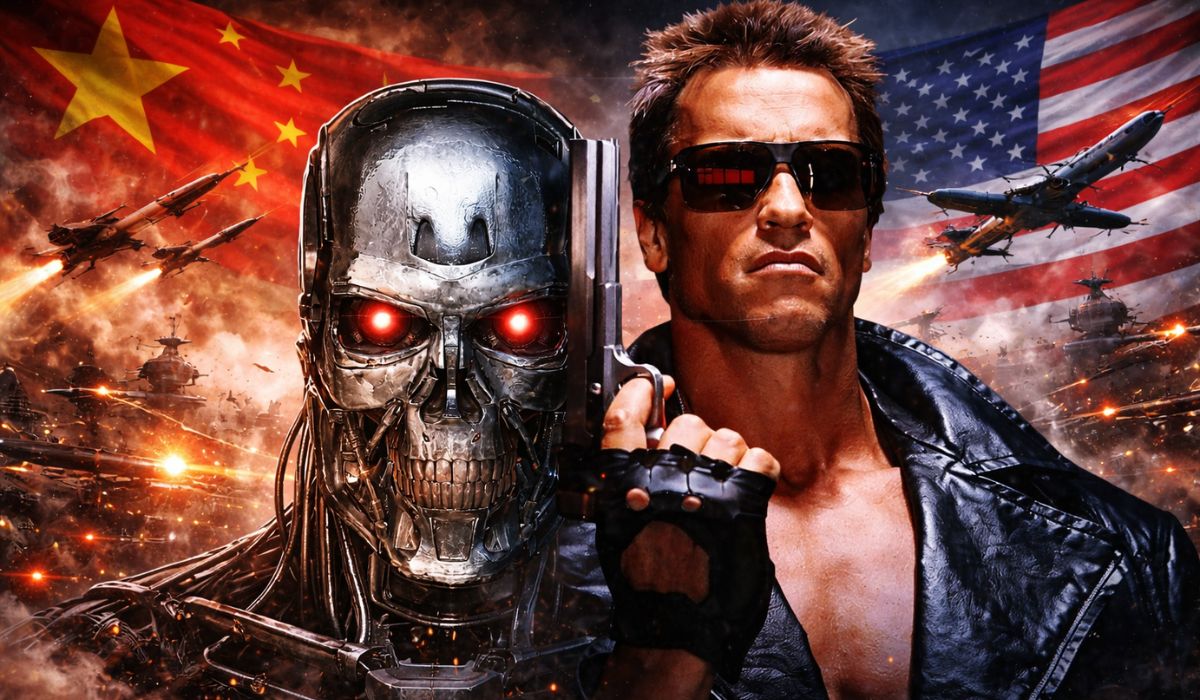
China Warns the U.S. of a “Terminator” Style Apocalypse: Military AI Rivalry, Sanctions Against American Startup, and Fear of Algorithms Deciding Who Lives or Dies Place the World on the Brink of a Nightmare That Seemed Like Fiction

The classes will be included in existing subjects, such as mathematics, science, and computing, or may be offered as independent courses. The format will depend on the structure and resources of each school.
The Chinese Ministry of Education has developed a specific curriculum for each age group. Children in the 1st to 3rd grades will be exposed to basic applications of AI in daily life. Students in the 4th to 6th grades will participate in simple coding and automation projects.
Starting in middle and high school, students will learn more advanced topics, such as neural networks, data training, and ethical use of technology. The goal is to ensure a gradual learning evolution.
China’s Goal is Global Leadership in AI
The measure is part of China’s national strategy to become the world’s largest power in artificial intelligence by 2030.
The government believes that by introducing the subject early on, it will be possible to form a generation prepared to operate in the digital economy and technological sectors.
The Chinese Minister of Education, Huai Jinpeng, stated that AI is “a transformative force in all sectors”. He also announced that a National White Paper on AI Education will be released soon, providing guidelines for schools and educators.
Companies like Baidu, Alibaba, and SenseTime are expected to collaborate with the government by providing tools, content, training, and digital platforms.
AI startups should also contribute with virtual assistants and solutions for use in the classroom.
New textbooks focused exclusively on AI will be launched, along with interactive apps and virtual labs. These materials will be adapted by grade and will include practical coding activities, simulations, and challenges based on real-life situations.
Virtual Teachers and Digital Assistance
Some schools will have virtual teachers and AI-based assistants to support teaching, especially in remote areas. These systems will be able to answer questions, correct assignments, and personalize content for each student.
The government is also investing in support programs for rural areas and underprivileged communities. There will be more funding, teacher training, and distribution of equipment to ensure that all students have access to the new curriculum.
The Chinese proposal is already attracting interest from other countries. Delegations from places like Pakistan, Brazil, the United Arab Emirates, and South Africa have shown interest in adopting similar models. China intends to offer training for foreign educators, strengthening its influence in the area.
International Scenario
Despite being a pioneer on a national scale, China is not the only country to include AI in the school curriculum. Italy, for example, determined in 2023 that ethics in AI must be part of high school education.
The United States has been funding pilot programs in various states, with elective AI courses in partnership with companies like Google and Microsoft.
South Korea also has initiatives underway, but none of these nations have made teaching mandatory for all age groups, as is being done by China.
Why Start So Early?
Experts advocate for the introduction of AI as early as childhood to make technology more familiar and understandable.
This helps to shape students not only as users but also as creators and critics of technology. Early on, children learn to think about the social impact and the values behind the decisions made by AI systems.
Challenges and Concerns
Despite the advancements, the new policy presents significant challenges. Teacher training is still a weak point, especially in rural areas.
There are also concerns about a possible overload in the curriculum, as well as ethical issues related to the collection and use of student data.
Another point raised by critics is the risk of excessive surveillance or digital control, especially with the use of virtual assistants in classrooms.
Even with these concerns, supporters of the measure believe that the challenges will be overcome with adequate investments and technical support. The vision is that the effort will be worthwhile to prepare the country for a future where AI will play a central role.










-

-

3 pessoas reagiram a isso.