





 Portuguese
  English
  Spanish
  4 min of reading
  1 comment


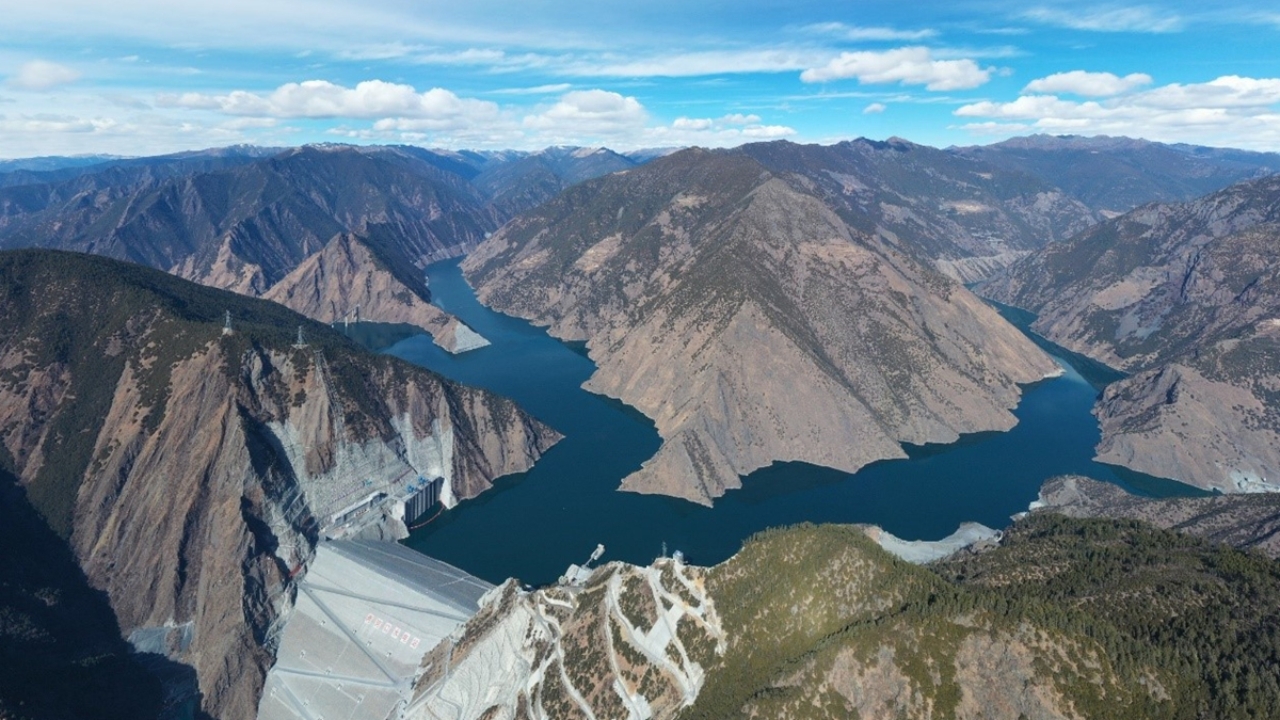


China Builds Mega Power Plant at 4,300 Meters Above Sea Level in Sichuan, Installs 2.1 GW with Six Pumped Turbines, Turns Water into a “Giant Battery” and Challenges Cold, Thin Air, and Extreme Logistics to Stabilize the Power Grid in the Mountains
China has once again pushed the limits of world engineering with a project that seems straight out of a futuristic movie. In the southwestern province of Sichuan, a pumped hydroelectric mega plant at about 4,300 meters above sea level is under construction — a project already considered one of the boldest on the planet.
The altitude is impressive. We are talking about a structure built practically at the “roof of the world,” in a mountainous area where the air is thin and the weather conditions are extreme. But what really draws attention is not just where it is located — but what it is capable of doing.
A Colossal Power of 2.1 Million kW
The project, known as the Daofu Pumped Storage Plant, will have a rated capacity of 2.1 million kilowatts (2.1 GW). To give an idea of its size, this places the plant among the largest pumped storage facilities in operation or under construction in the world.
-
The Brazilian state accelerates industrial competitiveness with a focus on the extraction of strategic minerals to boost the energy transition in Goiás.

-
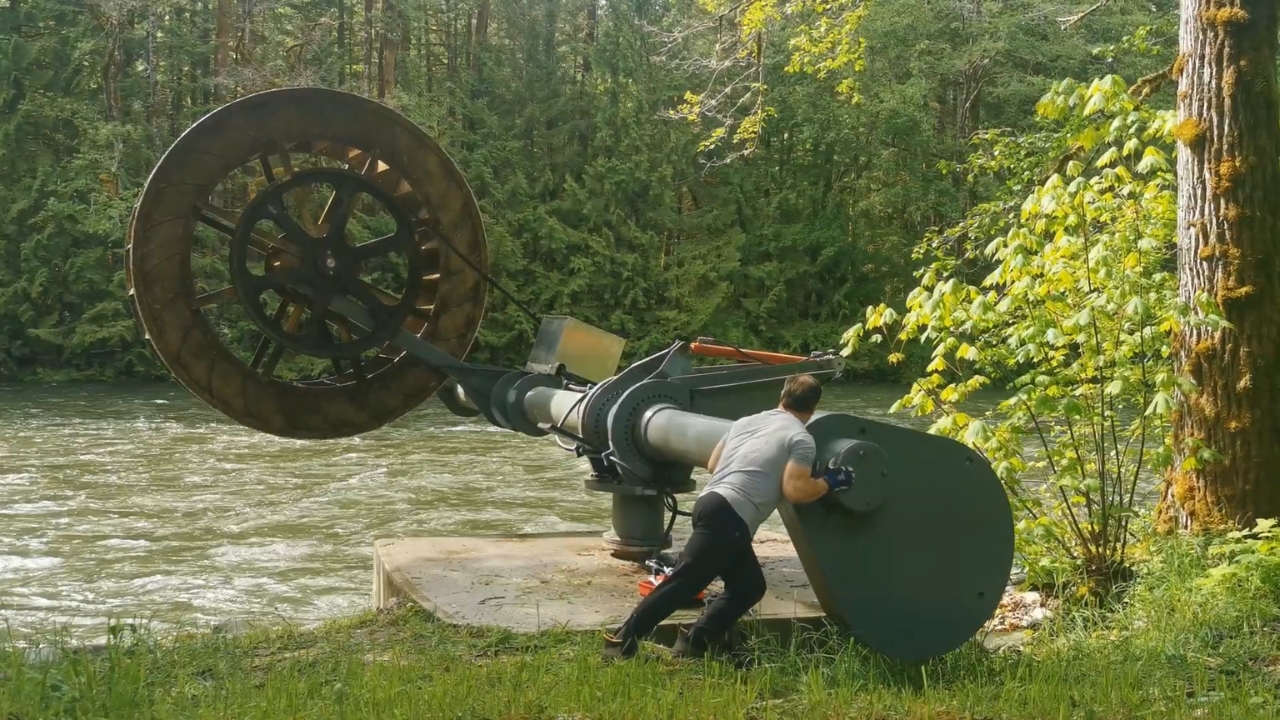
A Canadian retiree creates a hydroelectric system on a real river, generating energy continuously throughout the day and demonstrating how the power of water can supply a house with stability even in a simple structure.
-
Petrobras reaffirms its commitment to the market and ensures that it will carry out the energy transition safely to maintain national sovereignty.

-
Researchers discover a possible hydrogen deposit of up to 46 million tons beneath an ancient coal basin, and the volume could exceed half of the entire global production.


The structure will feature six reversible generator units of 350 thousand kW each, forming a true energy heart capable of storing and releasing electricity according to the grid’s demand.
According to information released by the Xinhua News Agency, the plant is being developed as part of a national strategy to strengthen energy storage infrastructure and enhance the stability of the Chinese power grid.

Not Just “Let the Water Fall”: It Is a Giant Battery
Many sensationalist headlines talk about “dropping water from a height equivalent to half of Everest.” The comparison helps to illustrate the altitude of the location, but the operation is even more interesting.
This is a pumped hydroelectric power plant, a technology considered one of the most efficient forms of large-scale energy storage in the world.
The system works like this:
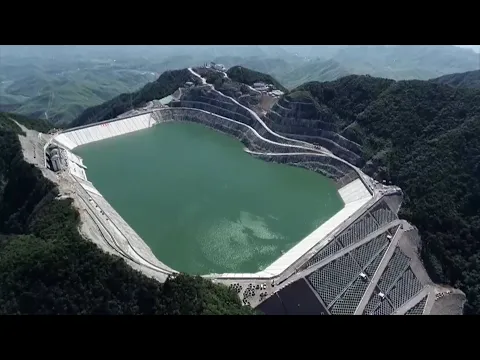
- When there is an excess of electricity — primarily from solar and wind energy — the plant uses that energy to pump water to an upper reservoir.
- When consumption increases, the stored water is released to the lower reservoir, passing through turbines and generating electricity immediately.
In practice, it is like a giant battery made of water and mountains.
The operational height difference between the reservoirs can reach approximately 760 meters, an impressive number from the perspective of hydroelectric engineering.
Impressive Storage Capacity
The numbers released about the project reinforce its impact:
- Estimated daily storage capacity of 12.6 million kWh (12.6 GWh).
- Expected annual generation of about 2.994 billion kWh (nearly 3 TWh).
These volumes are often compared to the daily consumption of approximately two million households, which helps illustrate the scale of the undertaking.
Engineering in Extreme Conditions
Building a power plant of this size is already complex anywhere in the world. Now imagine doing it at over 4,000 meters above sea level.
According to the Global Times newspaper, the technical challenges are significant:
- The thin air complicates operations and requires special care for workers and equipment.
- Lower temperatures impact the operation of electrical and hydraulic systems.
- Tunneling and reservoir excavation in mountainous areas requires advanced technology and meticulous planning.
Experts highlight that construction at high altitude requires specific structural adaptations to ensure stability, efficiency, and long-term operational safety.

Part of a Much Larger Energy Plan
The Daofu plant is not an isolated project. It is part of a broader Chinese plan to expand energy storage infrastructure.
China is already the world leader in installed hydroelectric capacity and is also rapidly expanding its solar and wind generation capacity. The challenge now is not just to produce energy but to store it efficiently for when the system needs it.
Pumped storage facilities are considered key pieces in this energy puzzle, as they allow balancing fluctuations in supply and demand.
Billion-Dollar Investment
The estimated investment in the project is around 15.1 billion yuan, equivalent to approximately 2.1 billion dollars. The amount reinforces the strategic importance the Chinese government places on energy security and stability.
In addition to the technical impact, the project also boosts the regional economy, creates jobs, and drives infrastructure development in hard-to-reach mountainous areas.
A Symbol of Energy Power
More than just a power plant, Daofu has become a symbol.
Symbol of engineering in extreme conditions.
Symbol of technological capability.
Symbol of the global race for large-scale energy storage solutions.
While many countries are still discussing how to store large volumes of renewable energy, China is building one of the world’s largest “natural batteries” — and doing it at heights few would dare to attempt.
If energy is the engine of the 21st century, this mega plant at 4,300 meters shows that the future may literally be in the mountains.










Hola