





 Portuguese
  English
  Spanish
  3 min of reading
  4 comments


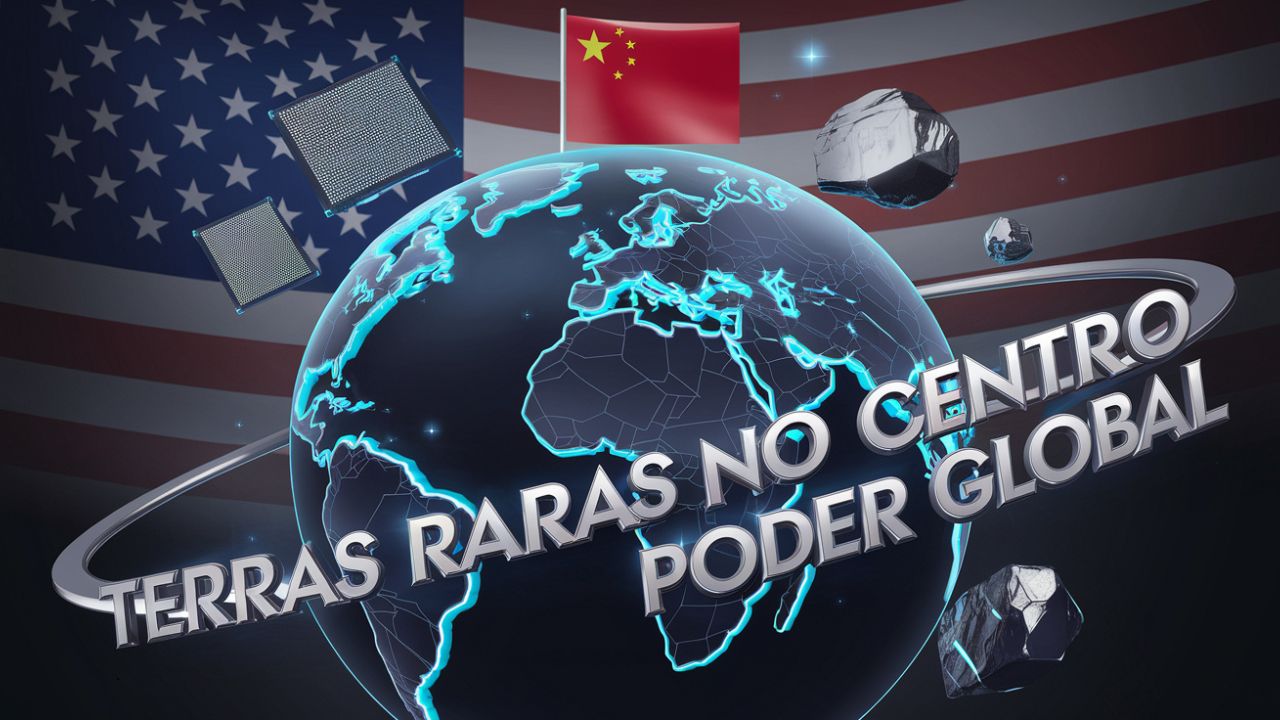


With 90% of Global Rare Earth Refining Control, China Restricts Exports of Essential Metals Like Gallium and Germanium, Threatening Semiconductor Production and Reinforcing Its Position in the Trade War Against the U.S.
China is showing the world by using rare earths as a true weapon in the trade dispute with the United States. But what are these rare earths, and why are they so important? Let’s understand.
What Are Rare Earths and Why Are They Important?
Rare earths are a group of 17 chemical elements used in practically everything that involves high technology. From smartphones to wind turbines and, of course, semiconductors – those chips that make devices work. Despite the name, they are not that rare, but the extraction and refining process is costly and complicated, which makes their market highly concentrated.
China controls 60% of extraction and an impressive 90% of global rare earth refining. This did not happen by chance. Since the 1980s, the country has heavily invested in the sector, while other nations viewed the activity as something “dirty” and expensive. Thus, China gained the monopoly and, with it, the power to dictate the rules of the game.
-
Brazilian city bets on the business environment to generate jobs and attract investments in the energy sector — secretary reveals strategy at Macaé Energy 2026.

-
50 viaducts, 4 tunnels, 28 bridges, and 40 kilometers of bike paths: BR-262 in Espírito Santo will receive 8.6 billion reais for the largest engineering project in the state’s history, inspired by the Immigrant Highway in São Paulo.

-
Brazil produces too much clean energy and doesn’t know what to do with it: over 20% of solar and wind capacity was wasted in 2025 while investors flee and 509 renewable generation projects were abandoned in the last year.

-
Piauí will produce a new fuel that replaces diesel without needing to change anything in the truck’s engine and reduces pollutant gas emissions by half: truck drivers from all over the Northeast are already celebrating the news that will arrive later this decade.

China’s Strategy: How Rare Earths Became a Trade Weapon
When the United States imposed restrictions on Chinese access to semiconductors, the response was swift: China cut exports of rare earths like gallium, germanium, and antimony. These metals are crucial in chip production, making the measure a direct blow to the Western technology sector.
The ban put the world on alert. Without access to these materials, the production of advanced technologies is compromised. It’s like taking the fuel out of a car in a race. By restricting supply, China demonstrated how control of the supply chain can be a strategic weapon in times of trade war.
Partnerships with Taiwan, Japan, and Other Countries
The United States did not stand still. Together with Taiwan, Japan, South Korea, and the Netherlands, the country seeks to strengthen its semiconductor production. However, even with technology in hand, they still need rare earths to manufacture the chips – and that is the problem.
Under the Trump administration, there were initiatives to reactivate mines and refineries in the United States. With Biden, the focus continued, but the challenges are enormous. In addition to high costs, environmental concerns still hinder the growth of the local industry.
Sustainable Production Outside of China
Producing rare earths outside of China is like trying to row against the tide. Environmental regulations are strict, costs are high, and technologies still need advancements to make the process viable. Even so, countries like Australia and the United States are betting on this recovery.
In addition to environmental issues, there is the barrier of time. Building new refineries and mines is not something that can be done overnight. Meanwhile, China continues to be the absolute leader, using its position to negotiate from a place of advantage.
The Future of the Trade War and the Role of Rare Earths
If the United States and its allies manage to diversify their sources of rare earths, the balance of power may change. However, if dependency on China continues, the Asian country will have a valuable card to play in future negotiations.
The solution may lie in innovation. Developing substitutes for rare earths or recycling already used materials are promising paths. International collaboration will be essential to reduce China’s influence in the sector.
Rare earths are the oil of the 21st century. Controlling them means having power, and China understood this decades ago. For the United States and other countries, the challenge is to find ways to reduce this dependency while balancing the global trade scales. In the end, the lesson here is clear: diversify or perish.








SE NÃO ME VENDES O PÃO, TAMBÉM NÃO TE DOU O TRIGO ….
Quem tem armas tem soberania. Quem não tem fica ameaçado pelos estadunidenses.
Ele faida, faida … Amo essa música