





 Portuguese
  English
  Spanish
  4 min of reading
  0 comments



Aerial Images Reveal Immense Abandoned Electric Car Yards in Various Chinese Cities, Where Vehicles Less Than a Decade Old Remain Forgotten, Many Still With Personal Belongings Inside, Becoming Symbols of the Rapid Collapse of the Sector.
Since 2019, large areas in at least six Chinese cities have accumulated hundreds of identical electric cars, left to rot in vacant lots and remote parking lots.
In some places, vegetation has taken over the car bodies. In others, vehicles were hastily abandoned, still with belongings inside.
The scenes, captured by reports and aerial images, reveal the collateral effect of the accelerated expansion of electric mobility in the country.
-
Garlic with pure honey undergoes a natural fermentation that transforms the two ingredients into a versatile condiment for marinades, sauces, and roasted vegetables, and it can also be used as a natural treatment in your garden.

-
A woman in the United States hired six immigrants for a $10,000 job on her house, and when the work was almost done, she allegedly called ICE to avoid paying and to have the workers deported.

-
iPhone in 2026: the technological innovations that go beyond cameras and processors

-
The longest public work in history began in Antiquity, spanned empires, was attempted by Nero, and was only completed 2,500 years later, turning the Corinth Canal into one of the most incredible stories of world engineering.


How The Electric Car Graveyards Emerged
The volume of abandoned cars is not the result of a single reason.
The combination of rapid growth, changes in incentive rules, and industrial consolidation explains the formation of these open-air deposits.
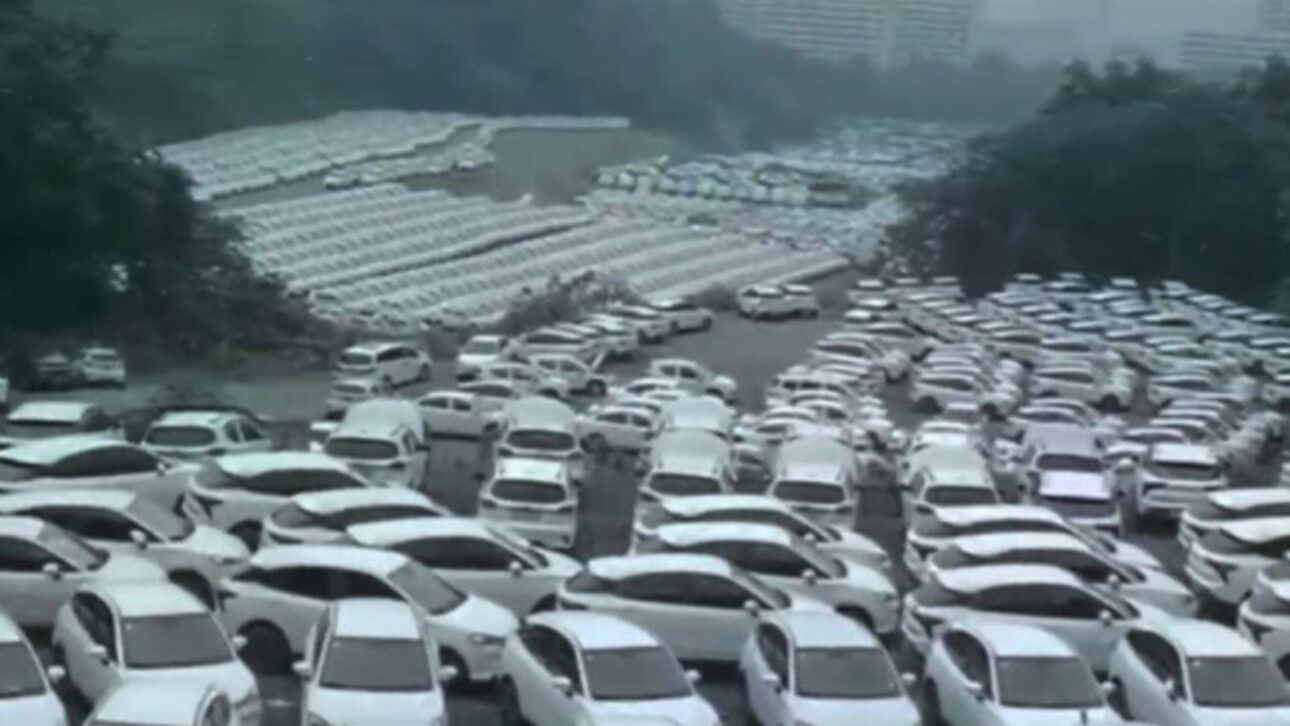
In 2019, China tightened criteria and reduced subsidies for new energy vehicles, changing the cost equation for companies that relied on these incentives to operate fleets.
The result, seen from that year onward, was the closure of several initiatives and market consolidation.
App Fleets Under Pressure
The rise of ride-hailing services throughout the decade was significant. As of October 2023, 334 platforms held licenses to operate in the country, indicating the scale of the sector.
However, with the reconfiguration of incentives and growing competition, some of these companies shrank or ceased operations, leaving entire fleets idle.
The accumulated vehicle yards in various cities became a picture of this adjustment.
Why Are Almost All of Them White
The images show a predominance of white cars, with rare exceptions in silver or light blue.
This standardization is explained by two combined factors: local consumer preference for light shades and a common practice among corporate and app fleets.
Industry studies indicate that white remains the most popular automotive color in China, which helps explain the homogeneous appearance of the abandoned lots.
Hangzhou, An Emblematic Case
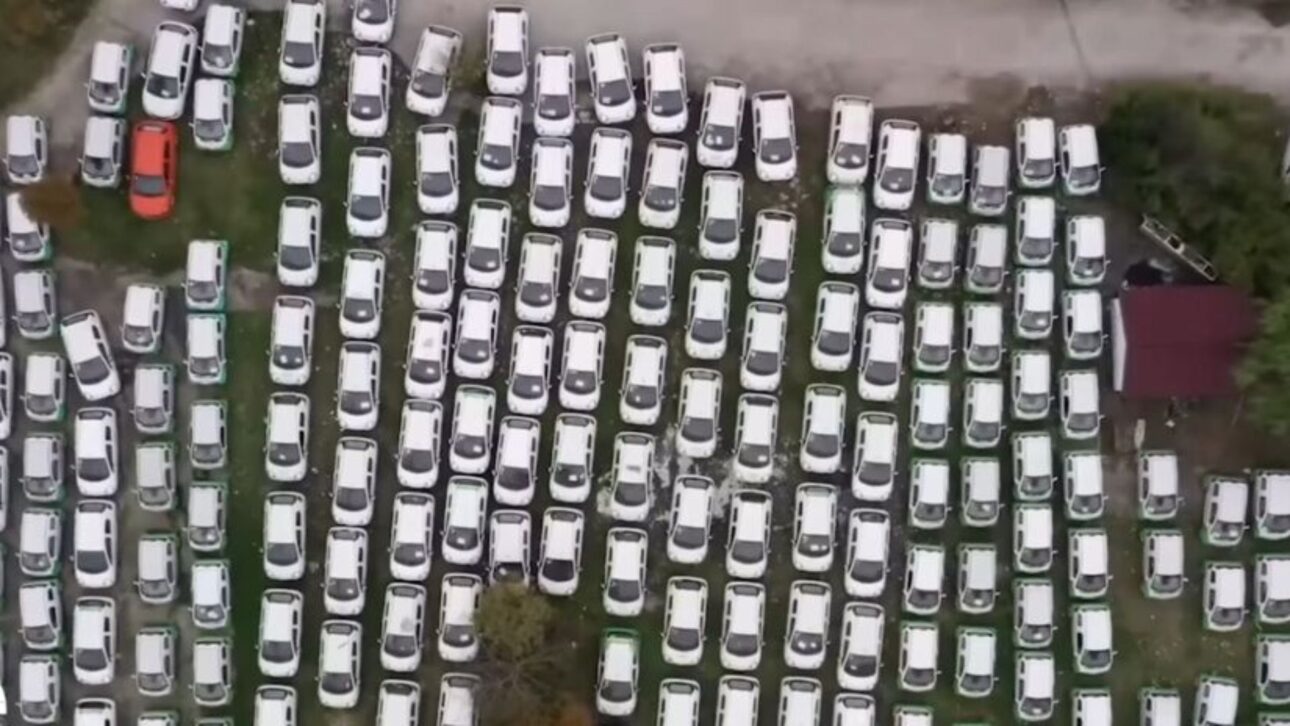
In Hangzhou, where cars began to accumulate as early as 2019, authorities promised to remove the vehicles. Nevertheless, reports identified hundreds of units in the same lot years later.
Most displayed blue plates, indicating they were manufactured and registered before December 2017, when the city adopted green plates for new energy vehicles.
This landmark was formalized on December 26, 2017, when the issuance of new plates advanced in the Zhejiang capital.
Records affixed to windshields indicated that some cars continued in circulation until 2021.
Still in Hangzhou, visual inspections of the fleets showed that the vehicles were primarily from Chongqing Changan Automobile Co., operated by transportation companies like Didi Chuxing and Faststep Automobile Management, reinforcing the connection of these “graveyards” with app fleets that lost operational viability.
Consolidation: From 500 Brands to About 100
The competitive adjustment also weighed heavily. In 2019, the country had about 500 registered electric car manufacturers.
After years of market competition and incentive cuts, only about 100 remained.
The reduction in the number of manufacturers, although it promoted efficiency, left behind quickly outdated models in a sector where new launches come at a rapid pace.
Models That Age Quickly
The very pace of innovation helps explain why many vehicles did not find their way in the used market.
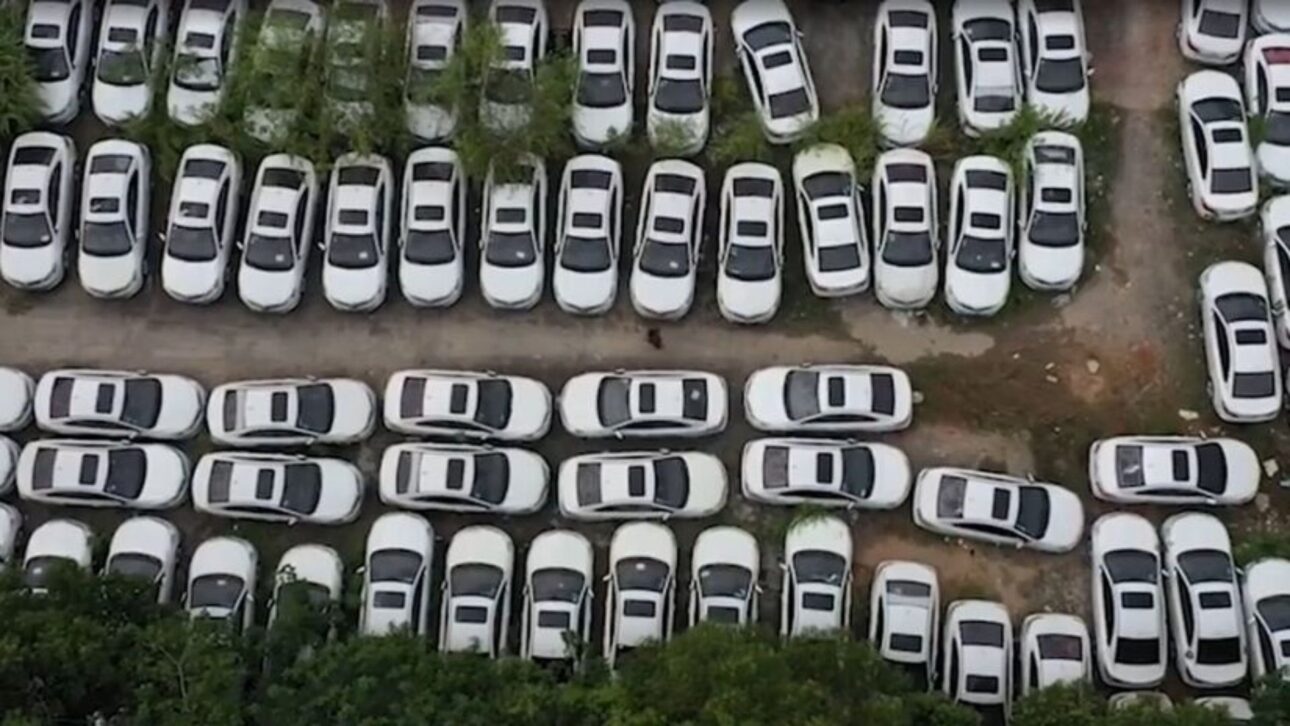
With frequent software updates, more efficient batteries, and increasing range, models released just a few years prior became obsolete for professional services.
For some companies, especially those that ceased operations, stocking or selling these cars in bulk was less viable than simply abandoning them, despite the loss.
In some locations, lots were partially cleared. In others, the stack of vehicles persisted.
Official Signage on Plates: Blue and Green
The chromatic change in plates helps date the vehicles. The green plate for new energy vehicles began to be implemented by pilot cities in 2016 and expanded in 2017, with adoption in Hangzhou on December 26 of that year.
The presence of blue plates on the accumulated cars indicates registrations prior to this turning point, while inspection tags show that some still operated until 2021, before being mass-discarded.
The Parallel with Shared Bicycles in 2018
The images evoke the collapse of the shared bicycle market observed in 2018, when oversupply and company bankruptcies left mountains of bikes collected by municipalities in various Chinese cities.
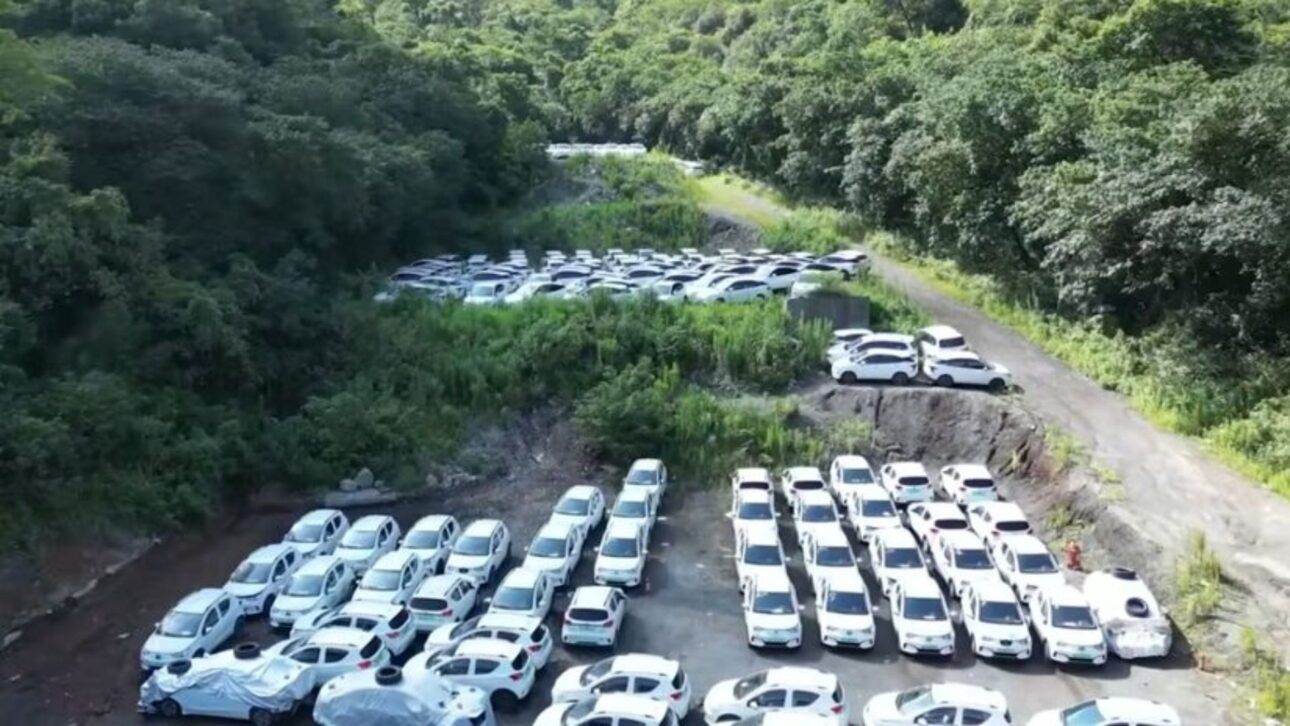
Just as with bicycles, the “graveyards” of electric cars expose the discrepancies between accelerated innovation, regulation, and the economic sustainability of business models scaled in a short time.
What Remains Exposed
The phenomenon of “electric graveyards” does not invalidate the progress of electrification in China but highlights the costs of the transition when public policies and private strategies shift direction rapidly.
While the country continued to lead in sales and consolidate competitive manufacturers, bubbles of inefficiency became visible in the urban landscape.
Amid this adjustment, the proper disposal of vehicles and their batteries remains a sensitive point for local governments and companies, which have begun integrating cleaning and disposal efforts as public pressure has increased.
With this scenario in mind, what should be the immediate priority: to accelerate the removal and recycling of these idle fleets or to address the market failures that could still produce new “graveyards” in the coming years?







-

2 pessoas reagiram a isso.