





 Portuguese
  English
  Spanish
  3 min of reading
  0 comments


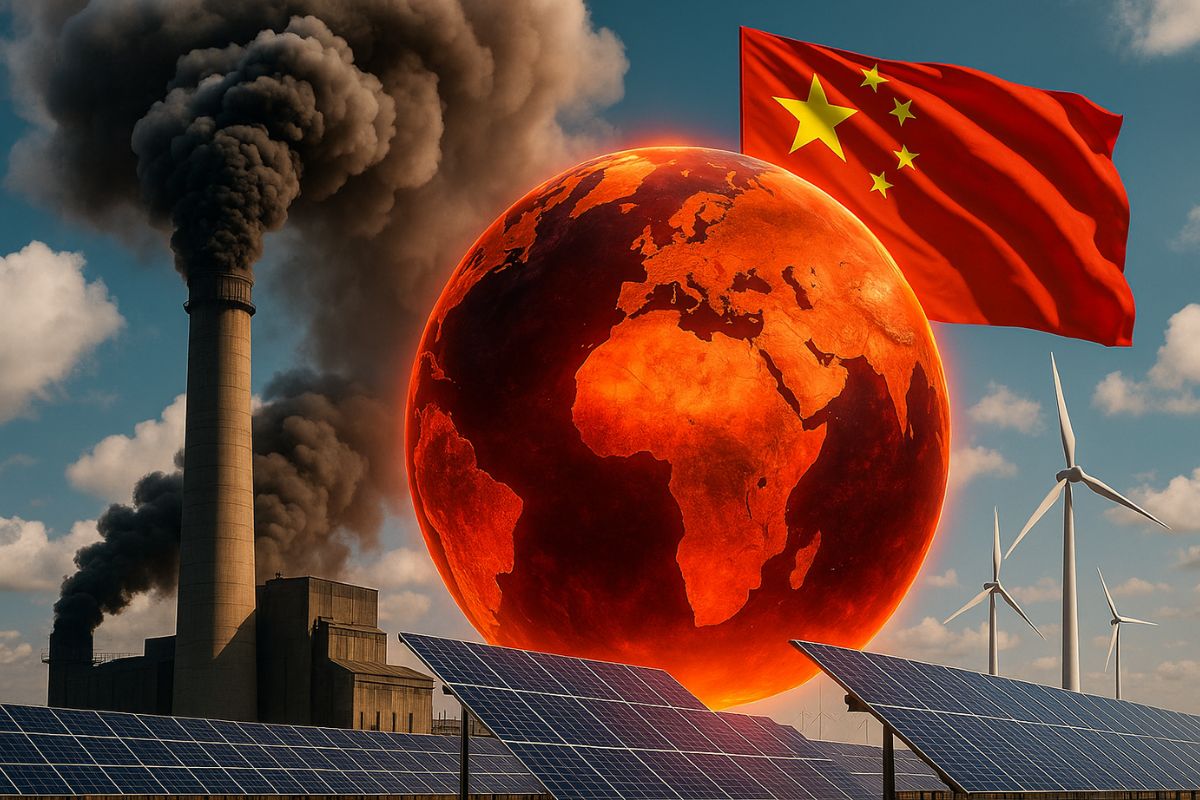
China Resumes Using Coal to Generate Energy Despite Progress in Renewables. Report Shows That China Is Resuming Coal Use at an Accelerated Pace, Putting Climate Goals and International Commitments at Risk.
The China Resumes Using Coal to Generate Energy in volumes that surprise experts, even after setting records in the installation of renewable sources. According to a report from the Center for Research on Energy and Clean Air (CREA) and the Global Energy Monitor (GEM), published by the newspaper The People, the country put into operation 21 gigawatts (GW) of new coal plants just in the first half of 2025, the highest number since 2016.
Although solar and wind energies are growing at a historic rate, coal still accounts for nearly half of the Chinese electricity matrix, casting doubt on the goal to peak emissions by 2030.
Why Is China Resuming Coal Use for Energy Generation?
The report points out that China Is Resuming Coal Use for Energy Generation for reasons related to energy security and pressure from powerful economic groups in the sector. There was also a significant increase in new licenses in 2022 and 2023, when the electrical system faced difficulties in absorbing the rapid expansion of renewable sources.
-
Renewable energy advances over protected areas in Brazil, and a survey by the Energy Transition Observatory reveals silent impacts that challenge environmental conservation and pressure sensitive traditional territories.

-
Rio Grande do Sul accelerates energy transition: State invests in renewable technologies and consolidates decarbonization strategies and pathways to attract billions in new industrial investments.

-
With 160,000 m² of collectors, an area larger than 20 football fields, Silkeborg, in Denmark, hosts a solar thermal plant that heats 19,500 homes and could become the largest solar heating plant in the world.

-
A study reveals the expansion of renewable energy procurement in Brazil and shows how companies are taking advantage of opportunities to reduce expenses, ensure energy efficiency, and strengthen strategic environmental commitments.


In addition, China has resumed or started the construction of 46 GW of new coal projects, equivalent to all of the installed capacity of this type of energy in South Korea, and has presented other plans totaling an additional 75 GW. This pace worries experts who see a risk of prolonged dependence on fossil fuel.
Advancement of Renewable Energies Does Not Curb Coal
Despite the escalation of coal, China remains a global leader in renewables. Just in the first half of 2025, the country installed 212 GW of solar energy, a number that surpasses the total capacity of the United States by the end of 2024.
Even so, the speed of coal-fired power plants threatens to compromise the energy transition. This is because new plants, once built, tend to operate for decades, blocking space for clean sources. Analysts highlight that coal may limit investments in solar, wind, hydropower, and nuclear energy.
Climate Goals at Risk
The promise made by President Xi Jinping in 2021 was to progressively reduce coal consumption between 2026 and 2030. However, in 2025, only 1 GW of coal capacity was retired, when the goal called for the elimination of 30 GW by the end of the year.
The report warns that China Is Resuming Coal Use for Energy Generation at a Scale Incompatible with Its Climate Goals. This stance could directly impact COP30, scheduled for November in Belém (PA), when the country is expected to detail commitments until 2035.
What to Expect in the Coming Years
China should include new energy and climate targets in its 15th Five-Year Plan (2026-2030). The expectation is that the country will present clearer targets to balance renewables and coal, but analysts highlight that the influence of the coal sector remains strong.
On one hand, China’s energy transition inspires with the record expansion of clean sources, but on the other, the return of coal signals that environmental commitments may be sacrificed in the name of energy security and internal economic pressure.
The fact that China Is Resuming Coal Use to Generate Energy illustrates the global dilemma between economic growth and climate responsibility. The moves made by the Asian giant will have repercussions worldwide, especially for countries that rely on international cooperation to combat climate change.
In your opinion, is China right to prioritize coal as a way to ensure energy, or should it accelerate its abandonment of fossil fuels? Leave your opinion in the comments.









Seja o primeiro a reagir!