





 Português
  Inglês
  Espanhol
  7 min de leitura
  0 comentários


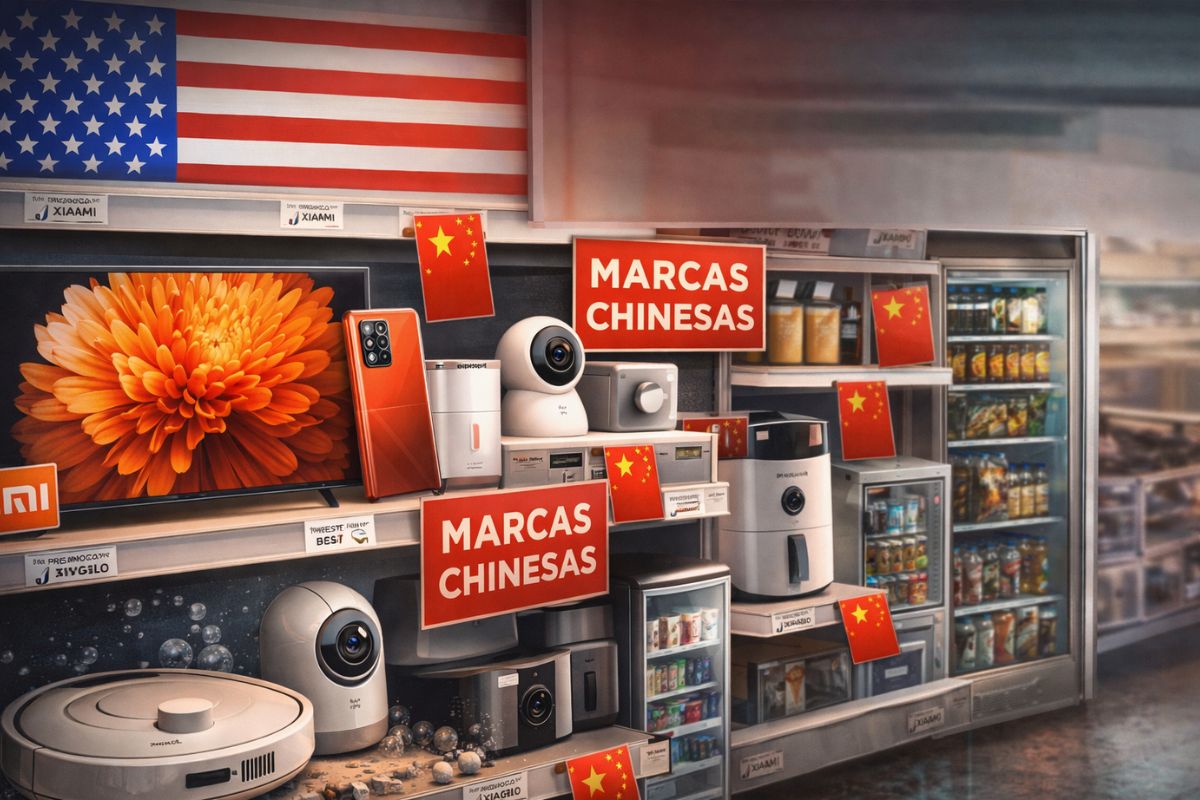
From Miniso to Flower Knows and Dreame, Chinese brands are rewriting the rules of global retail by betting on intellectual property, emotional design, and smart technology to win over consumers in Europe, the United States, and even celebrities like Katy Perry, proving that the label “Made in China” has changed its meaning.
A new type of Chinese brands is emerging on the world’s most important shopping streets, on American cosmetics shelves, and within European homes. They do not compete on low prices but win consumers over with culture, design, intellectual property, and cutting-edge technology. From Times Square in New York to Oxford Street in London, passing through the Champs-Élysées in Paris, these companies have transformed global retail by creating shopping experiences that feel more like a theme park than a traditional store. And the list of illustrious fans keeps growing: Katy Perry has been seen shopping and showcasing products from these Chinese brands in her own shows.
The change is structural. Three distinct sectors illustrate the breadth of this offensive: Miniso, which operates over 7,900 stores in more than 110 countries by betting on licensed intellectual property from Disney, Marvel, and Harry Potter; Flower Knows, a makeup brand that has won over American retailers like Urban Outfitters and Ulta Beauty with fairy tale packaging; and Dreame, which has become a leader in robot vacuums in Europe with over 27% market share on the continent by 2025. Together, these Chinese brands prove that the “Made in China” strategy has evolved from cheap prices to something much more sophisticated.
Miniso: when the store becomes a theme park of intellectual property

If you enter a Miniso store today, the feeling is less of a conventional retail and more like a mini theme park. The Chinese company maintains intellectual property agreements with over 150 license holders, including Disney, Marvel, Warner Bros, Sanrio, Harry Potter, and Barbie.
-
Drought may be creating stronger superbugs in the soil and helping antibiotic resistance reach hospitals, warns a study highlighting a problem that could grow alongside extreme weather.

-
The biggest scam in history: Napoleon’s France deceived the United States by selling them a territory that was Spanish.
-
Why is the Danakil Desert so dangerous? It has unstable terrain and how extreme temperatures and toxic gases turn the region into one of the most hostile environments on Earth.

-
With a height of 221 meters and a capacity for trillions of liters, Hoover Dam still holds a trick that makes water defy logic.


In Beijing, licensed products account for over 80% of sales. A cup is not just a cup: it is a Harry Potter item. A plush toy is not just a toy: it is a character from Zootopia that the consumer just saw in the cinema.
The global retail numbers of Miniso are impressive. By mid-2025, the company operated over 7,900 stores in 112 countries. In 2024 alone, 1,200 new units were opened, with 70% of them outside China.

In the United States, the number of stores nearly doubled in a year, jumping from 238 to over 500. Global revenue reached $2.3 billion in 2024, with a growth of 22.8% over the previous year. In Europe, Miniso already operates in cities like London, Paris, Madrid, Munich, and Düsseldorf, consolidating its presence on the continent with increasingly larger stores.
The secret to the speed lies in the supply chain. When a movie character becomes popular, Miniso can develop, produce, and distribute licensed products in a matter of weeks. The collaboration with Zootopia, for example, included insertions within the film itself and simultaneous launch events in stores across various countries.
For the consumer, the result is clear: the purchase has ceased to be a matter of price versus utility and has become an emotional, identity-driven, and impulsive experience. However, this strategy comes at a cost: in 2024 alone, Miniso paid over $420 million in intellectual property licensing fees. Therefore, the company has already begun to develop its own characters, seeking to reduce dependence on third parties.
Katy Perry, Zootopia, and the formula of emotional consumption
Among the Chinese brands redefining global retail, Miniso has found an unexpected ally: celebrities. Katy Perry appeared in one of her music videos holding a mini bag and a personalized teddy bear from the brand, and even interacted with Miniso during one of her live shows.
The director of Zootopia was also seen shopping at the store. This type of spontaneous endorsement indicates something that goes beyond marketing: when an artist of Katy Perry’s caliber chooses to carry a product from a Chinese brand, it signals that the perception of quality and design has changed.
Miniso is not alone in this emotional strategy. PopMart, another Chinese brand, has turned its Labubu dolls into a global collecting phenomenon. What these companies have understood is that an optimized supply chain allows for a consumption model driven by interests and affection, not just by necessity.
The company adapts its offerings by market: reinforcing Hello Kitty in Southeast Asia and doubling down on Disney in Mexico and Brazil. This ability to regionalize is what differentiates the new Chinese brands from the old exporters of generic products.
Flower Knows: Chinese makeup on American shelves
In a global beauty market valued in the hundreds of billions of dollars and dominated by Western conglomerates, an Asian newcomer is carving out space in the United States. Flower Knows, founded in 2016, has built its identity around a fairy tale aesthetic that looks like nothing that has ever existed on American shelves.
While most cosmetics brands bet on minimalism, Flower Knows offers ornate packaging with rose gold details, sculpted reliefs, and themes like Rococo Strawberry and Swan Lake.
The strategy for entering the American global retail market was surgical. The brand started with a six-month exclusivity at Urban Outfitters in 2024, and within three months, it was already among the top five best-selling beauty brands in the chain. In December 2025, it took the next step by entering Ulta Beauty, becoming the first Chinese makeup brand to occupy that showcase.
Flower Knows’ global revenue has already surpassed $200 million, with annual growth exceeding 30%. The United States has become its largest international market, accounting for 60% to 70% of revenue abroad.
What stands out is the company’s stance towards competition. Instead of competing directly with established giants, Flower Knows created its own category: that of cosmetics as objects of visual and narrative desire.
The brand has accumulated over 4 million combined followers on Instagram and TikTok and has already expanded to Japan, the UK, Germany, France, and South Korea. Among the Chinese brands operating in the beauty segment, Flower Knows demonstrates that design and storytelling can compete on equal footing with major European and American houses.
Dreame and the technological conquest of homes in Europe

While Miniso and Flower Knows conquer global retail through emotion and visuals, Dreame does so through technology. The Chinese smart appliance brand is transforming the way European families clean their homes. By 2025, Dreame became the number one brand in robot vacuums in Europe by units sold, with a 27.6% market share on the continent, according to IDC. In Germany, this share reaches 42%. In Belgium, it exceeds 62%.
Dreame’s revenue in Europe grew 139% between January and July 2025. The company is present in over 6,000 physical points of sale in more than 100 countries and already operates seven own stores on the European continent, including units in Birmingham, Frankfurt, Munich, and Madrid.
Its robot vacuums use embedded cameras and structured 3D light to map the home environment, learn from it, and determine the best cleaning program for each house. More than half of the brand’s European revenue comes from premium products priced above 1,000 euros.
Dreame’s success in Europe shatters the last stereotype that still surrounded Chinese brands: that they only know how to compete on price. European consumers interviewed by CGTN reported that Chinese technology is “always ahead” and that “European brands are not innovating enough.” Meanwhile, Dreame expands its line beyond cleaning, presenting at IFA 2025 a complete smart home ecosystem that includes air conditioning, washing machines, refrigerators, and dishwashers with app connectivity.
From cheap “Made in China” to premium global retail
What unites Miniso, Flower Knows, and Dreame is a paradigm shift that goes beyond their individual sectors. Chinese brands have ceased to be synonymous with cheap copies and have begun to compete in global retail with strategies that combine intellectual property, technological innovation, and adaptation to local tastes. Miniso adapts its intellectual property portfolio by region. Flower Knows develops specific formulas for American skin tones. Dreame designs features for the typical floors and carpets of European homes.
According to a joint report by Kantar and Google on the 50 largest global Chinese brands, the brand power of these companies grew 17% compared to the previous year, even amid a global economic slowdown. From the silks of the past to today’s smart sensors, Chinese brands continue to connect China with the rest of the world.
The difference is that now this connection happens through experiences that generate desire, identity, and loyalty, not just savings. In Europe and the United States, consumers no longer ask where the product comes from. They ask if it solves, if it delights, and if it innovates.
Have you ever bought from a Chinese brand without knowing?
The expansion of Chinese brands in global retail is no longer a future trend. It is a present fact. From Miniso with its Disney intellectual property to Flower Knows on Ulta’s shelves, passing through Dreame, which dominates robot vacuums in Europe, the label “Made in China” is being rewritten in real time. And celebrities like Katy Perry are already endorsing this new generation of products without anyone needing to ask.
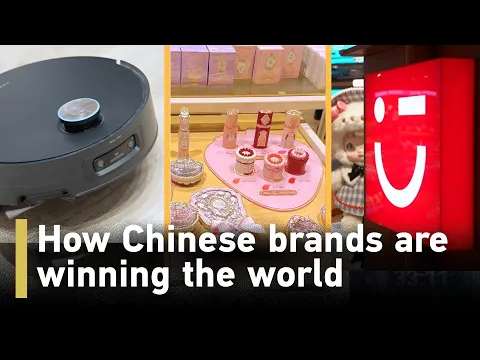

With information from the channel CGTN.
And you, have you used or bought something from a Chinese brand recently? Did you know it was Chinese at the time of purchase? Do you believe these companies can dethrone the big Western brands? Share your experience in the comments. We want to know if this transformation in global retail has reached you.









Seja o primeiro a reagir!