





 Portuguese
  English
  Spanish
  3 min of reading
  0 comments



With the promise of creating purer and more powerful chips, Axiom Space bets on microgravity to revolutionize semiconductor production, attracting Taiwanese giants and transforming space into the next frontier of technology.
The chips that power our smartphones, computers, and even autonomous cars can be manufactured in space. This is the ambitious proposal from Axiom Space, which aims to transform the way we produce semiconductors, harnessing the incredible possibilities that only the space environment can offer.
But why manufacture chips off Earth? What makes this idea so special? Let’s explore this vision that could revolutionize the future of technology.
Why Manufacturing Chips in Space Could Change Everything
Chips are the backbone of almost everything that involves technology. Without them, concepts like artificial intelligence, robotics, or even internet access would be just ideas on paper. Axiom Space believes that the next technological leap depends on moving semiconductor production to 400 kilometers above the Earth’s surface.
-
While the South begins April with sun and heat, a change in the weather already has a defined scenario in Brazil, and forecasts indicate heavy rain in the North and a sharp drop in temperature in the coming days.

-
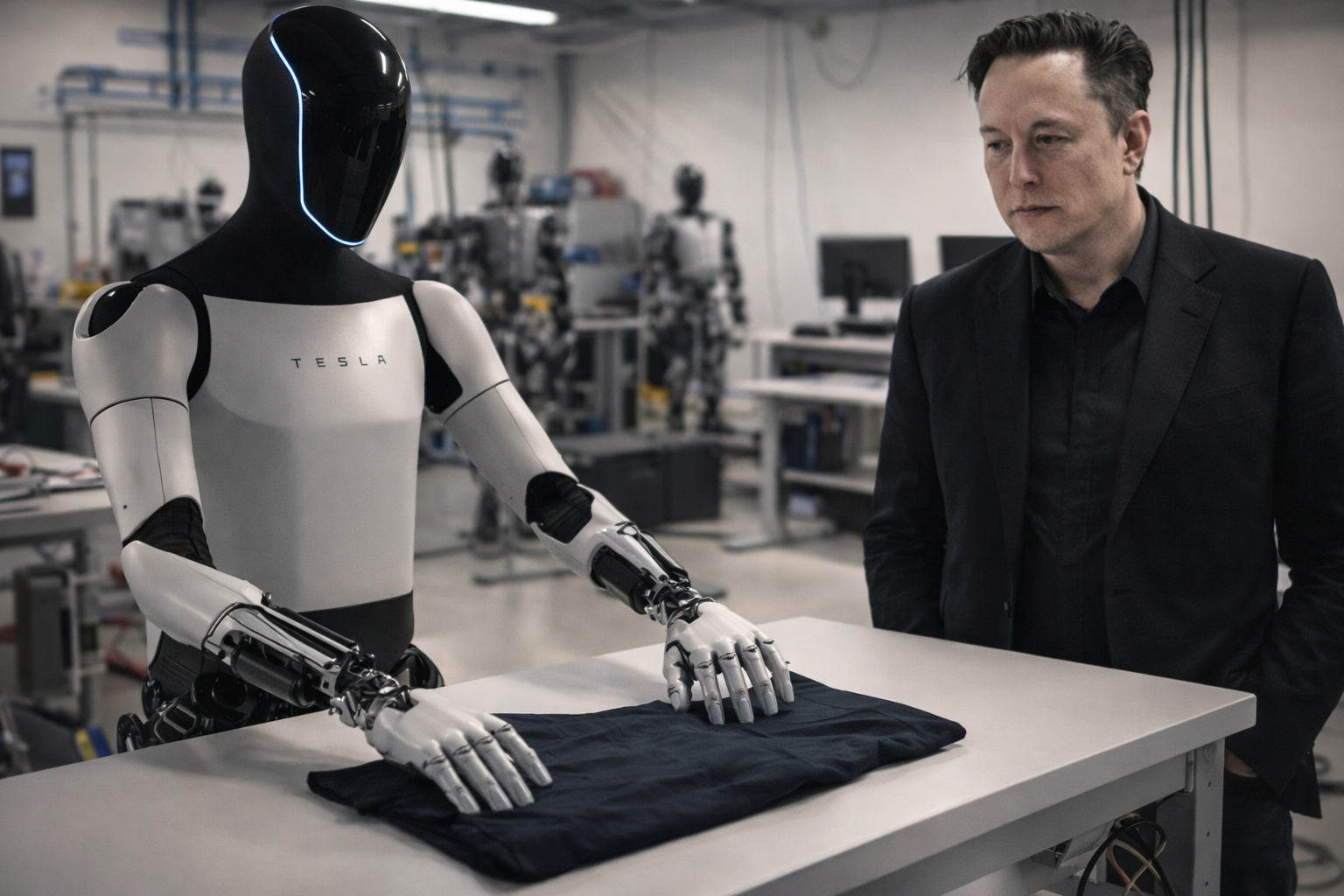
Elon Musk wants to place humanoid robots in roles currently occupied by people, leading alongside giants like Amazon, Nvidia, and Figure in a race to replace human labor with machines, and advocates for a future where working would cease to be an obligation and become a choice.
-
A US company creates a facade that looks like stone or wood but generates energy: “invisible” solar panels for walls, easy installation, up to 130 W, and an off-grid YouTuber showcases it and raises funds for a battery.

-
Scientists at the world’s largest particle accelerator accidentally managed to turn lead into gold during a simulation of the Big Bang, but the amount produced is so small that it fits in trillionths of a gram.

Imagine a weightless environment, where the crystals that make up the chips can grow without defects and where the vacuum of space eliminates any impurities. It sounds like science fiction, but it is already being tested at the International Space Station (ISS).
The Advantages of Microgravity in Semiconductor Production
Why is space so promising? The answer lies in the unique conditions it offers. On Earth, gravity influences the growth of crystals, creating imperfections that affect chip performance. In space, without that interference, the crystals grow uniform and practically perfect.
The vacuum of space acts as a “natural purifier,” eliminating impurities that could compromise material quality. This means more efficient and powerful semiconductors, capable of meeting the demands of the most advanced technologies.
How Axiom Space Plans to Transform the Technology Sector

Axiom Space is not just dreaming; they have a well-structured plan. First, they are conducting tests at the ISS to prove technical feasibility. Next, they plan to build a commercial space station that will dock with the ISS before operating independently after 2030.
With the support of experts like Koichi Wakata, former Japanese astronaut, and Divya Panchanathan, marketing leader, Axiom aims to attract Taiwanese chip giants to this undertaking. The goal? To position Taiwan as a pioneer in the semiconductor space race and establish a new standard for the industry.
The Challenges and Costs of Producing Chips 400 Kilometers from Earth
Despite the potential, manufacturing chips in space is not a simple or cheap task. Every kilogram sent to low Earth orbit comes with a high cost, not to mention the expenses of maintaining and operating an orbital factory.
Still, Axiom Space believes the benefits outweigh the challenges. With purer and more efficient semiconductors, the impact on the global market could be massive, attracting companies and consumers interested in superior performance.
The Future of Technology: Taiwan and Leadership in the Chip Space Race
Taiwan is already a global leader in chip manufacturing, and this partnership with Axiom Space could further solidify its position in the market. In addition to innovating in the field of technology, the country would have the opportunity to lead a historic transformation, redefining global production standards.
For consumers, this means faster, more powerful, and reliable products, although initial prices may reflect the high costs of space production.






-

-

3 pessoas reagiram a isso.