





 Portuguese
  English
  Spanish
  4 min of reading
  0 comments


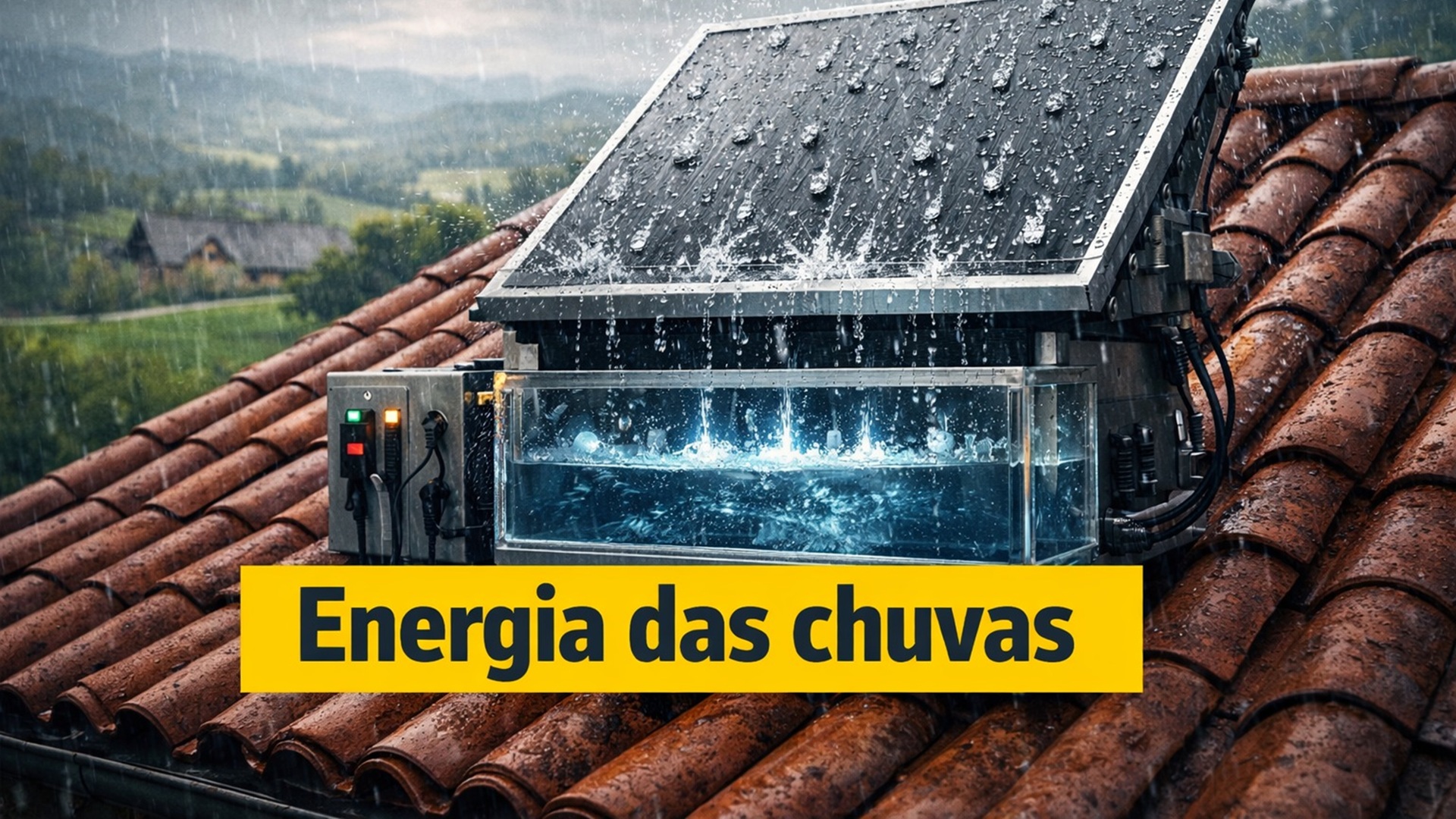
Developed By South Korean Researchers, The Generator Uses Super-Hydrophobic Carbon Fiber To Transform The Impact Of Raindrops Into Instant Electricity, Enabling Drainage, Sensors, And Urban Alerts To Be Activated Without Relying On The Electricity Grid Or External Batteries
The Development Of An Electricity Generator From Raindrops By South Korean Researchers Proposes Immediate Urban Use, Producing Up To 60 Volts Per Impact, Activating Drainage And Sensors, And Operating Without External Electrical Connection.
Rain As A Complementary Energy Source In Cities
The Proposal Begins With A Simple Question: To Treat Rain Not Just As An Urban Challenge, But As A Useful Energy Resource, Especially During Intense Storms That Require Immediate Response From Critical Urban Systems.
The Device Was Designed To Function In Real Conditions, Such As Roofs And Gutters, Where Rain Naturally Occurs, Avoiding Common Limitations Of Technologies Designed Solely For Controlled Laboratory Environments.
-
With a cost per shot close to zero, the DragonFire laser could change naval warfare in 2027 and provide British ships with nearly unlimited defense against drones.

-
A British startup creates tires that generate electricity in electric vehicles when passing over potholes, speed bumps, and cracks.

-
Scientists have created robots made with living cells that have their own nervous system, swim on their own, explore the environment, and self-organize without any genetic engineering, and now they want to do the same with human cells.

-
Students create a solar-powered ambulance that operates without a plug, without fuel, and still keeps medical equipment running in remote areas.


Instead Of Competing With Sources Like Solar Or Wind, The System Occupies A Complementary Space, Specifically At Times When These Sources Are Least Effective And Urban Infrastructure Is Most Pressured.
Device Structure And Carbon Fiber Selection
The Generator Utilizes A Polymer Reinforced With Carbon Fiber, Known As CFRP, A Lightweight, Durable Material Widely Used In Sectors That Require Longevity, Such As Civil Construction And Weather-Exposed Aerospace Applications.
This Choice Ensures Mechanical Resistance, Low Corrosion, And Stability Over The Years, Essential Characteristics For Equipment Permanently Installed In Urban Environments Subject To Constant Moisture And Pollution.
The Developed Version, Named S-FRP-DEG, Also Incorporates A Super-Hydrophobic Surface Inspired By The Lotus Leaf, Preventing Water Accumulation And Favoring Rapid Drainage Of The Droplets.
This Structural Combination Allows Each Raindrop Impact To Be Energetically Harvested, Without Liquid Retention Or Accelerated Material Degradation Over Time In Urban Use.
Conversion Of Raindrop Impact Into Electricity
The Operation Is Based On A Principle Similar To Static Electricity, Functionally Applied, Where Positively Charged Droplets Come Into Contact With A Negatively Charged Surface.
When The Droplet Detaches And Rolls Off The Super-Hydrophobic Surface, An Electric Charge Transfer Occurs, Generating A Flow Of Electrons Through The Carbon Fiber Integrated Into The Structural Material.
The Entire Process Happens In Milliseconds, Without Moving Parts Or Complex Electronics, Reducing Points Of Failure And Allowing Instant Response To The Start Of Rain On Roofs Or Drainage Systems.
In Laboratory Tests, A Single Droplet Of Approximately 92 Microliters Produced Electric Peaks Of Up To 60 Volts, With Currents In The Microamp Range, Demonstrating The Functional Viability Of The Concept.
Scalability And Low-Power Applications
Although The Current Generated By A Droplet Is Small, Connecting Multiple Modules In Series Allowed For Temporarily Powering 144 LEDs, Showing That The System Can Be Scaled For Specific Urban Uses.
These Applications Include Activating Sensors, Monitoring Systems, And Alert Devices That Do Not Require Continuous High-Power Supply But Depend On Immediate Response During Rain Events.
The Approach Prioritizes Reliability And Autonomy, Critical Factors For Distributed Infrastructures That Need To Operate Even During Failures Of The Conventional Power Grid During Severe Storms.
The System Demonstrates Potential For Large-Scale Integration Without Needing Major Changes To Existing Urban Design, Taking Advantage Of Surfaces Already Present In Modern Cities.
Lower Corrosion And Higher Reliability In Urban Environments
Generators Based On Droplets Often Suffer Rapid Degradation Due To Moisture, Suspended Particles, And Pollution, But The Use Of CFRP Significantly Reduces These Adverse Effects Over Time.
Unlike Conventional Metals, Carbon Fiber Maintains Stable Performance In Aggressive Environments, Contributing To Greater Reliability And A Lower Need For Frequent Maintenance In Extensive Urban Installations.
The Hydrophobic Coating Also Reduces The Accumulation Of Dirt, Soot, And Dust, Preventing Loss Of Electrical Efficiency And Operational Failures That Could Compromise Critical Drainage Systems.
These Features Make The Technology Suitable For Installation In Thousands Of Distributed Points, Such As Residential Roofs, Commercial Buildings, And Public Rainwater Drainage Infrastructures.
Roofs That Detect And Respond To Rain
In Addition To Generating Electricity, The Device Functions As A Passive Rain Intensity Sensor, Producing Electric Signals Proportional To The Frequency And Volume Of The Droplets Hitting The Installed Surface.
Practical Tests Showed A Direct Correlation Between Rainfall Intensity And The Pattern Of The Electric Signals, With Sporadic Pulses In Light Rain And Continuous Signals During Heavier Precipitations.
This Information Allows The System To Activate Drainage Pumps, Open Floodgates, Or Send Flood Risk Alerts Without Relying On Batteries Or The Conventional Power Grid.
In Scenarios Of Increasingly Frequent Extreme Events, This Functional Autonomy Represents A Significant Operational Gain For Urban Stormwater Management.
Discreet Integration And Expansion To Other Sectors
The Proposed Technology Takes Advantage Of The Fact That Carbon Fiber Is Already Present In Various Urban Structures And Mobility Systems, Facilitating The Incorporation Of Additional Energy Functions.
This Integration Does Not Require A Complete Redesign Of Cities, But Rather Adaptation Of Existing Surfaces, Making The Process More Technically And Economically Viable For Distributed Applications.
The Concept Also Opens Up Possibilities For Use In Vehicles, Trains, Or Aircraft, Where CFRP Is Common And Constant Exposure To Rain Can Power Embedded Sensors And Monitoring Systems.
Even With Modest Generation, The Electricity Produced Meets Specific Demands At The Exact Moment They Are Needed, Reinforcing The Logic Of Autonomy And Immediate Response Of Urban Infrastructure.






-

-

-

-

-

22 pessoas reagiram a isso.