





 Portuguese
  English
  Spanish
  5 min of reading
  0 comments


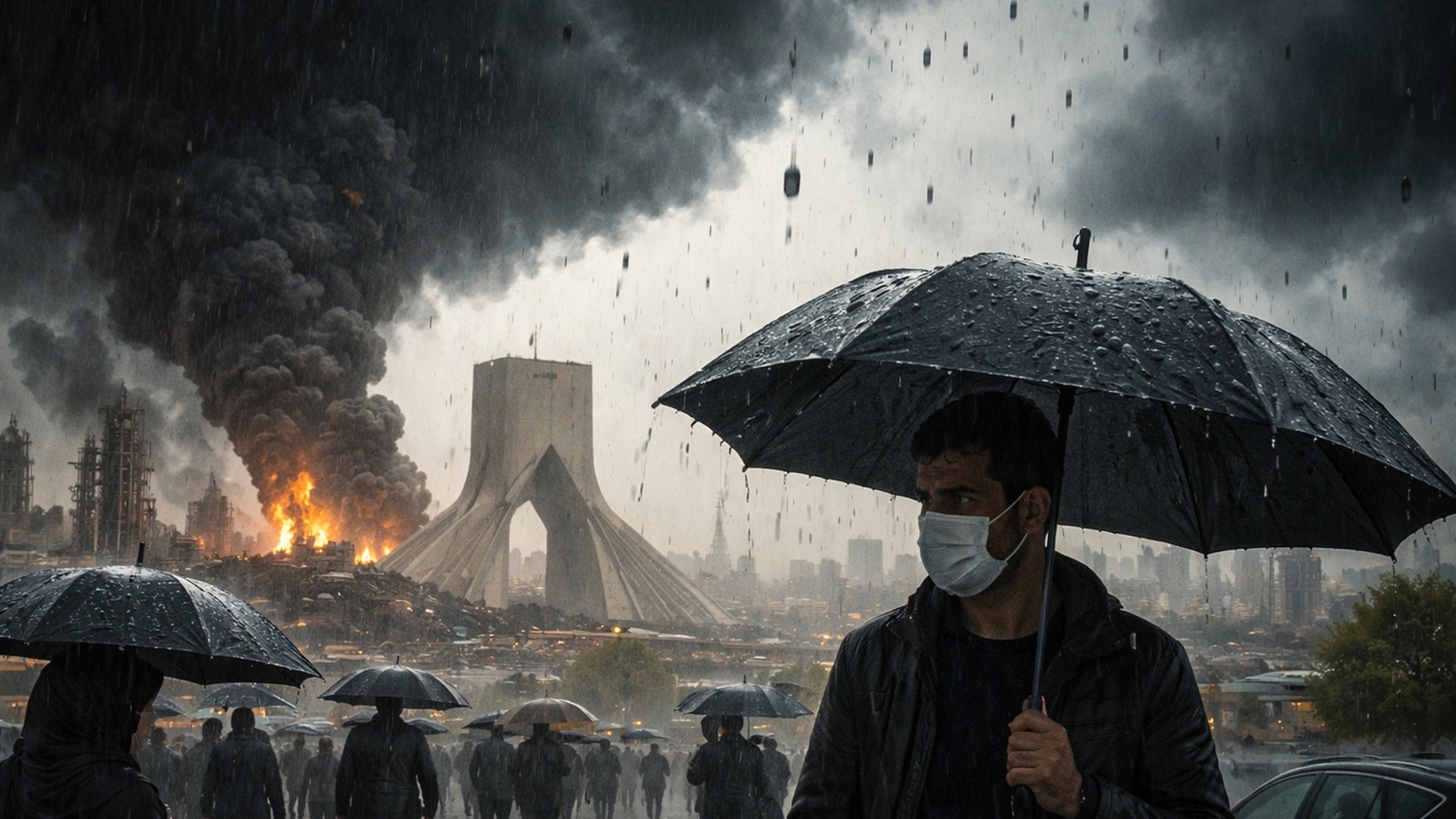
After Attacks on Oil Refineries and Desalination Plants Beginning on February 28, Toxic Smoke Reaches Tehran and Causes Black Rain, a Phenomenon Associated with Extreme Atmospheric Pollution That Raises Public Health Alert and Worsens Environmental and Water Crisis in Iran
An episode of black rain hit Tehran after attacks on oil and desalination infrastructure in Iran that began on February 28. The smoke from the damaged refineries reached the Iranian capital, generating an alert from the World Health Organization about immediate and long-lasting health risks.
The recent attacks on energy infrastructure in the Middle East have triggered an environmental and humanitarian crisis marked by the formation of what is called black rain. The phenomenon occurs when rain darkens upon falling in an environment with extreme air pollution levels.
Satellite images confirmed that the smoke released after attacks on refineries and oil depots advanced to Tehran on Monday. The presence of these particles in the air raised immediate concern among health authorities and environmental experts.
-
Brava Energia begins drilling in Papa-Terra and Atlanta and could change the game by reducing costs in oil while increasing production and strengthening competitiveness in the offshore market.
-
Petrobras surprises the world again by announcing a new discovery in the pre-salt with excellent quality oil.
-
Offshore industrial demand in Macaé skyrockets with the recovery of oil and gas and could grow by up to 396% by 2026 in the Campos Basin.
-
Offshore industrial demand in Macaé surges with the recovery of oil and gas and could grow by up to 396% by 2026 in the Campos Basin.

The World Health Organization warned that attacks on energy infrastructure can pose serious health risks to the urban population.
According to the organization, exposure to contaminants released into the atmosphere can cause immediate physical effects and lasting consequences.
Black Rain and Extreme Atmospheric Pollution
The phenomenon of black rain is directly linked to excessive atmospheric pollution generated by the fires at the damaged oil facilities. Since the beginning of the joint attacks by the United States and Israel, at least four facilities near Tehran have been hit.
The attacks caused a chemical haze described as unprecedented, capable of physically blocking sunlight in certain areas. This scenario intensified concerns about air quality and the effects of pollution on the population.
When refineries and oil depots catch fire, incomplete combustion of fuels often occurs. This process releases a toxic mixture of carbon monoxide, soot, sulfur, and nitrogen oxides into the atmosphere.
These compounds can react with moisture in the atmosphere and form acid rain, while also carrying metallic particles and small oil droplets. The presence of these elements explains the dark and potentially toxic coloring of black rain.
Reports from residents indicate a persistent and described as “horrible” burnt smell in the city air. Many also mention intense fatigue and respiratory discomfort after prolonged exposure to the polluted environment.
Health Impacts and Environmental Risks
The immediate physical effects associated with black rain include respiratory difficulty and chemical burns to the eyes and throat. Experts warn that these symptoms may represent only the first signs of a broader health crisis.
Scientists highlight that the contaminated environment can create a persistent cocktail of environmental pollutants. Prolonged exposure to these substances may increase the risk of cancer, neurological disorders, and complications during pregnancy.
Researchers claim that this chemical contamination is more complex and dangerous than common urban pollution. The mixture of industrial particles, burned fuels, and metallic waste makes the environmental scenario harder to control.
As toxic particles settle on the ground and on urban structures, they may infiltrate the groundwater. This process creates a prolonged risk that can affect human populations and ecosystems long after the fires have ended.
Experts also warn that nearby marine environments may suffer indirect consequences. The accumulation of chemical contaminants threatens ecosystems already considered fragile in the region.
Attacks on Water Worsen Water Crisis
In addition to atmospheric pollution, the attacks hit desalination plants crucial for regional supply. These facilities are essential for producing drinking water in areas where natural resources are scarce.
Experts believe that these attacks have created a dangerous precedent by turning water infrastructure into a strategic target. Interruptions have already affected the supply of dozens of Iranian villages.
Reports also indicate potential impacts on facilities in Bahrain. Disruptions to these structures could increase instability in a highly interconnected regional water production system.
According to EuroNews, water production in the Gulf is often connected to electrical grids through cogeneration plants. Any energy failure can trigger an immediate cascading effect that impacts water availability.
Water vulnerability is especially severe in Iran, which has faced a severe drought for five years. This prolonged period has drastically reduced river and aquifer levels in various regions of the country.
Attempts to expand desalination projects along Iran’s southern coast face significant obstacles. International sanctions, high energy costs, and infrastructure limitations hinder the expansion of these initiatives.
Experts claim that these limitations have brought the country to a critical point. Authorities even considered the possibility of evacuating the capital last summer due to water scarcity.
Energy Crisis and Increase in Global Emissions
The shutdown of refineries and the closure of the Strait of Hormuz have also had far-reaching effects on the global energy system. The strait is responsible for about 20% of the world’s oil and one-third of global fertilizer trade.
With the interruption of this strategic route, various countries are seeking alternative energy sources. In times of supply shock, governments often turn to coal or liquefied natural gas to maintain economic stability.
These energy alternatives have higher emissions and can increase the global environmental impact. Experts warn that this shift may lead to a significant rise in carbon emissions.
Routing tankers around Africa has also increased emissions from maritime transport. This detour prolongs trade routes and raises the risk of environmental accidents, including oil spills.
Research indicates that military activities already account for about 5.5% of global carbon emissions. Analysts claim that the current conflict could destroy years of gradual environmental progress in just a few days.
As fires and attacks continue to affect the region’s energy and water infrastructure, experts warn that the effects of black rain and pollution may persist for a long time. The scenario combines environmental, health, and climate risks on a regional and global scale.








Seja o primeiro a reagir!