





 Portuguese
  English
  Spanish
  5 min of reading
  0 comments


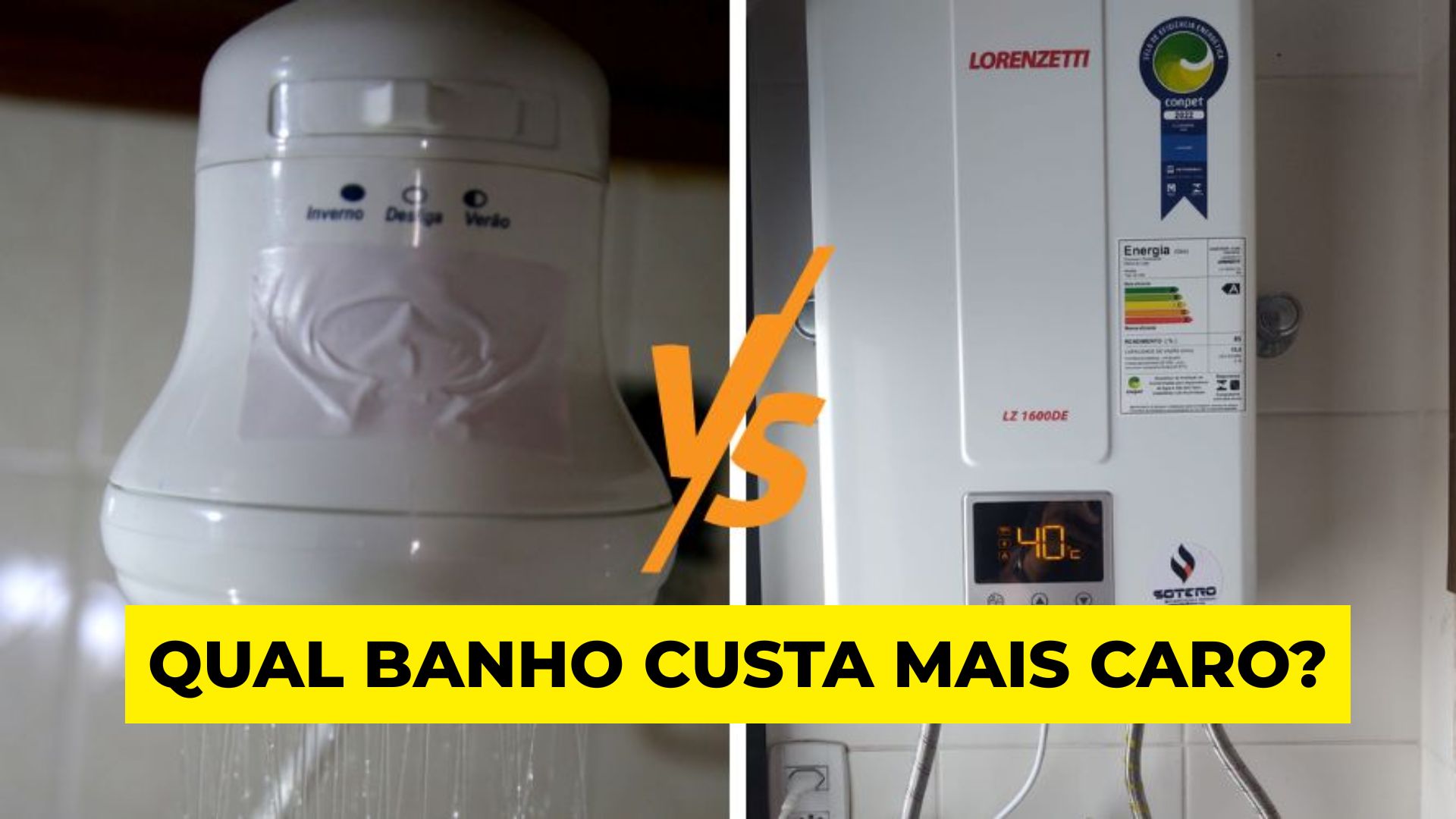
Comparing Costs and Practicality Between Electric Showers and Gas Heaters Can Surprise Those Who Plan to Save Money and Ensure Comfort. Structural and Maintenance Details Completely Change the Ideal Choice for Each Residential Profile.
Factors such as installation cost, monthly consumption, durability, ease of maintenance, and suitability for the residential infrastructure have a direct impact on the pocket and daily life of Brazilian consumers.
Recent data shows that, despite the popularity of the electric model, there is an increasing search for gas alternatives, especially in large cities.
-
The heatwave that has been affecting Brazil in recent weeks is coming to an end: a cyclonic vortex is moving in during Holy Week with heavy rains, and a cold air mass is already threatening to lower temperatures in the South starting in April.

-
(VIDEO) Cameras from an astronomical observatory captured two meteors falling over Santa Maria in Rio Grande do Sul with only a one-minute difference and such close trajectories that scientists are now investigating whether the two objects have the same origin.

-
Fireballs shoot across the skies of the USA and meteor explosions draw attention: what is causing this mysterious wave of sightings?

-
Brazil has quietly developed an electric tactical drone that takes off and lands vertically without needing a runway, flies at 140 km/h in a fully autonomous manner, and can operate in forests, conflict zones, and remote areas.


In Brazil, the national preference still falls on the electric shower, present in over 70% of urban homes, according to estimates from the electricity sector.
The explanation lies in the simplicity of the system, which uses an internal resistance to heat water instantly.
This characteristic eliminates the need for specific constructions or piping, making the installation simple, quick, and low initially cost.
Additionally, the price of the device is considered affordable: a quality electric shower costs from R$ 70 and rarely exceeds R$ 300, even for the most modern models.
On the other hand, this type of equipment may present limitations in water flow, and the temperature can fluctuate according to pressure and power, especially during peak usage or in locations with unstable electrical networks.


How Each Heating System Works
But after all, why do so many people consider switching to a gas heater?
The little-considered secret before installation lies in the necessary infrastructure and initial investment, often ignored by those seeking only thermal comfort.
Unlike the electric shower, the gas system requires specialized labor, appropriate piping, a gas outlet, forced ventilation, and, in many cases, the installation of a pressurizer to ensure the correct water pressure. The device alone, with a flow rate of 15 liters per minute, costs an average of R$ 1,500.
When adding items such as a pressurizer (R$ 450), monocommand (R$ 200), labor, exhaust kit, and piping (R$ 1,470), the total cost can reach R$ 3,600.
The high investment is justified in specific scenarios, such as in homes with higher demand for hot water at multiple points, large families, or properties already outfitted for the system.
The advantage is the ability to distribute heated water throughout the house — bathrooms, sinks, and laundries — with greater flow and stable temperature, significantly increasing comfort in daily use. However, the costs are not limited to installation.
The monthly expense for gas needs to be considered, especially when choosing between LP gas (liquefied petroleum gas, usually in cylinders) and natural gas (piped natural gas).
Cost of Showers with Piped Gas or LP Gas
In the case of the most common heater in households, such as the Komeco model with a capacity of 7 liters, daily use during a 10-minute shower results in a monthly expense of approximately R$ 34.50 with LP gas (cylinder gas) and R$ 69.00 with piped natural gas (GN).
The values consider the maximum consumption indicated by the manufacturer and reflect the daily cost multiplied by 30 days of use.
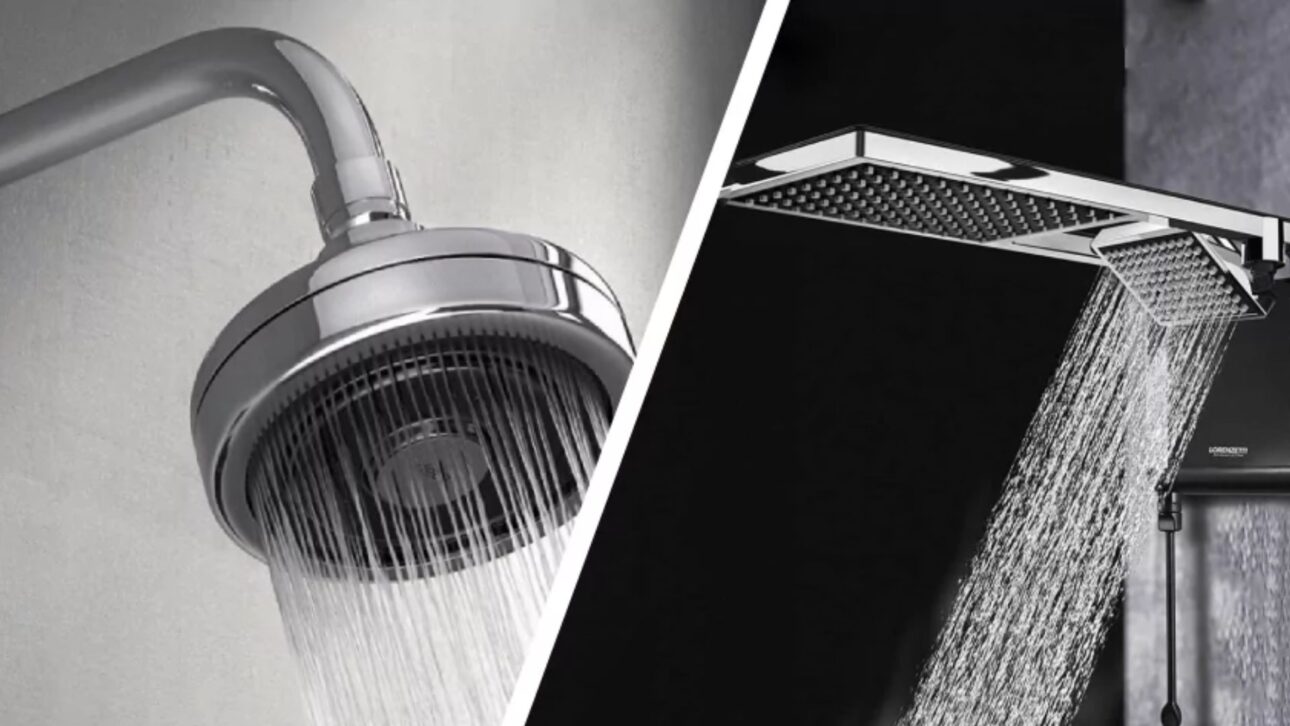
This updated data indicates that the cost of piped gas can, in some cases, be higher than that of electric showers, whose average monthly expense usually varies between R$ 30 and R$ 40 per person.
On the other hand, LP gas presents a competitive price, but attention is required regarding the logistics of cylinder replacement and regional price variations.
Thus, the choice between one system or another directly depends on the local gas tariff, the type of available supply, and the number of showers per day in the residence.
Additionally, it is essential to consider that these values refer to the use of a single point. In homes with multiple bathrooms or high demand, consumption tends to be higher, as do total costs.
When the Electric Shower Is the Best Choice
For most Brazilians, especially those who live alone or as a couple, the electric shower is still the most economical and practical option.
The ease of installation, availability throughout the country, and low initial value favor the choice, especially for those living in regions where winter is mild or short.
More recent models, with electronic temperature control, already offer higher comfort levels than older versions.
Another favorable point is the simple maintenance.
Replacing the shower or the resistance, when necessary, can be done without great complications and with low cost, increasing the lifespan of the equipment without requiring frequent technical visits.
The average lifespan of an electric shower varies from two to three years, potentially exceeding five years under ideal conditions of use and adequate electrical installation.
Gas Heater: For Whom Does It Make Sense?
The installation of a gas heater makes more sense in homes with multiple bathrooms, large families, or properties already equipped with compatible infrastructure.
The system allows for longer showers, constant temperature, and distribution of hot water to various points, increasing comfort and proportionally reducing the individual cost per user.
The consumption of electricity also decreases, positively reflecting on the electricity bill compared to the intensive use of electric showers.
The differential intensifies in areas served by piped natural gas, where the monthly tariff is more competitive, and supply does not rely on logistics for cylinder replacement.
With periodic maintenance — recommended annually — the lifespan of the equipment can reach 15 years.
Modern models feature safety sensors, automatic shutdown systems, and technologies that prevent leaks, ensuring greater peace of mind for the user.
What Is the Impact on the Energy Bill and Family Budget?
Updated data confirm that the electric shower accounts for an average of 25% of the energy bill in Brazilian homes, which can exceed this percentage in winter months.
Although the monthly expense for electric showers is generally similar to that of the gas system with LP gas, the use of piped natural gas can represent a higher cost, depending on the heater model and regional tariff.
Another relevant factor is the issue of sustainability.
Although both systems present environmental challenges — the electric shower due to electricity consumption, and the gas heater due to emissions from cylinders or natural gas — the efficient use of energy and the durability of the equipment are points increasingly considered by consumers attentive to environmental impact and long-term living costs.
Therefore, the choice between electric or gas shower should be made based on factors such as the number of residents, consumption profile, residence structure, and availability of piped gas.
Evaluating all these points before installation avoids unpleasant surprises in the budget and ensures that the investment truly brings returns in comfort and savings.
Have you evaluated how much your shower costs in your monthly budget? Which system makes more sense for your home: practicality or total comfort?





-

-

-

-

8 pessoas reagiram a isso.