





 Portuguese
  English
  Spanish
  5 min of reading
  0 comments


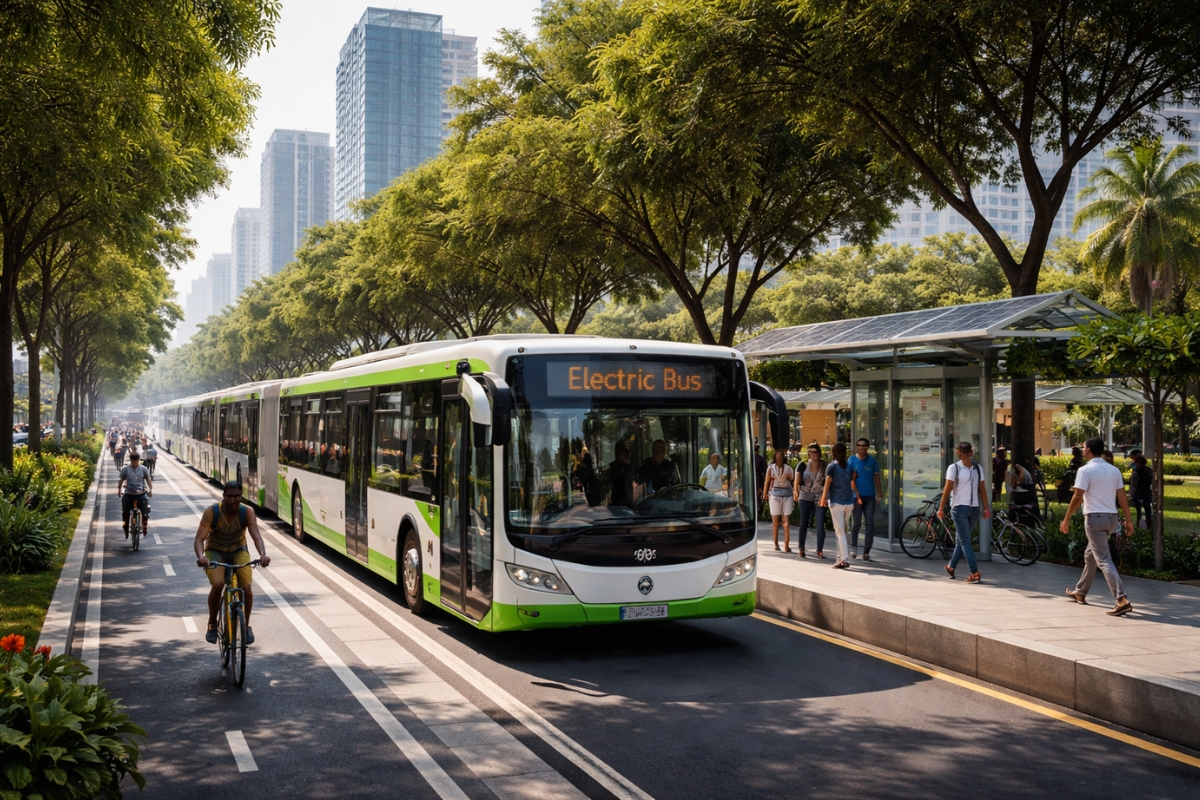
In An African Capital, The Local Government Carried Out A Redesign Of Mobility With Three Pillars To Zero Emissions In Transport, Creating Less Pollution And Calling The Attention Of Residents, Specialists And Public Managers.
For Decades, Major African Cities Have Grown Too Quickly. The Result Appeared On The Streets: Avenues Overrun With Used Cars, Intense Pollution, And Traffic Jams That Seemed Never-Ending.
At The Same Time, The Climate Crisis Tightened. Heat Waves, Floods, And Drought Began Directly Affecting The Lives Of Millions Of People On The Continent.
In This Scenario, An African Capital Decided To Invert The Urban Logic. The Proposal Is Simple To Understand And Difficult To Execute: Reduce The Space For Cars And Open The Way For Electric Buses, Bike Lanes, And Green Corridors, Aiming To Achieve Zero Urban Transport Emissions In A Few Decades.
-
Worlds covered by water, atmospheres filled with hydrogen, and the possibility of life beyond Earth: ocean planets are rewriting the map of cosmic search and forcing scientists to rethink where to look.

-
Argentina achieves the unimaginable after more than 110 years and reintroduces the largest native herbivore of South America to the Chaco to restore a lost link in nature.

-
Returning to the Moon now costs a billion-dollar bill and reignites the competition between the USA and China for science, technology, and rare minerals on lunar soil.

-
While the world looks at oil, the war with Iran is already disrupting helium supply from Qatar, affecting car and iPhone chips, threatening AI expansion, and putting pressure on aluminum packaging at the highest value in four years.


The Investigation Was Published By ICLEI Africa, An International Network Of Sustainable Local Governments, Detailing Strategies For Clean Mobility And Decarbonization In African Cities.
From Congested City To Clean Mobility Laboratory In A Few Years
The Starting Point Was A Harsh Diagnosis: Road Transport Was Among The Greatest Contributors To Air Pollution And Greenhouse Gas Emissions.
The Presence Of Old Cars, Imported Second-Hand, Burning Diesel And Low-Quality Gasoline, Made The Air Unbreathable In Many Neighborhoods. As A Result, Respiratory Diseases Increased, Along With Costs For Public Health.
It Was From This Scenario That The City Began To Treat Mobility As A Climate Priority And Also As A Health And Budget Theme.
The Plan That Changed The Streets, Exclusive Corridors, Continuous Bike Lanes, And Less Dependence On Cars

The Turnaround Was Organized Into Three Central Pillars. The First Aims At Exclusive Corridors For Electric Buses On Structural Axes, To Transport More People In Less Space.
The Second Pillar Creates A Continuous Network Of Bike Lanes And Wide Sidewalks For Pedestrians, With The Intention Of Making Walking And Biking Real Options In Daily Life.
The Third Is The Most Sensitive: Gradually Reducing Dependence On Private Cars, Using Restrictions, Fees, And Cheaper Transport Alternatives.
This Package Also Involves International Organizations Dedicated To Sustainable Cities As Technical Support, Reinforcing That Electric Mobility And High-Capacity Public Transport Are Quick Paths To Decarbonize Urban Areas On The Continent.
Electric Buses Come Out Of The Pilot And Become Symbols, Less Noise, Less Local Pollution, And Less Imported Fuel
The Heart Of The Change Lies In The Fleet Of Electric Buses. The Movement Started Timidly In Pilot Lines, But Now It Moves Towards Long Routes With High Demand.
Replacing Diesel Vehicles With Battery-Powered Buses Brought Visible Effects: Less Noise On Avenues, A Reduction In Local Pollutant Emissions, And The Beginning Of A Reduction In The Consumption Of Imported Fossil Fuels, Which Pressured Public Accounts.
Besides The Environment, There Is An Economic Component That Draws Attention. Even With A Higher Initial Investment, The Maintenance And Fuel Costs Tend To Be Lower Over Time, Especially When The Energy Comes From Local Clean Sources Like Solar And Wind.
Ethiopia And Other Countries Already Set Goals, And Even Restrict Imports Of Combustion Vehicles
The Information Was Released By NovaCana, A Brazilian News Portal About Energy, Pointing Out That Countries Such As Ethiopia, Kenya, Nigeria, And South Africa Are Already Defining Formal Goals For Transport Decarbonization.
The Focus, According To These Reports, Includes Electric Buses, Green Corridors, And Integration With Renewable Energy. The Most Striking Detail Is That In Some Cases, Such As Ethiopia, The Import Of Combustion Vehicles Is Being Restricted To Accelerate The Shift Toward An Electrified Fleet.
In Practice, This Changes The Pace Of Transition, As It Directly Affects The Entry Of Traditional Cars Into The Market And Pushes The System Towards Electric Alternatives.
Green Corridors Become More Than Bus Lanes, Shade, Thermal Comfort, And Vibrant Neighborhood Commerce
The Concept Of A Green Corridor Goes Beyond Just Painting A Lane On The Asphalt. On Major Axes, The Proposal Combines Exclusive Lanes For High-Capacity Electric Buses With More Structured Stop Points, Which May Have Coverage, Efficient Lighting, And, In Some Cases, Solar Panels On The Roof.
Another Key Point Is The Trees Planted In Sequence, Forming Tunnels Of Shade, In Addition To Wide And Accessible Sidewalks Connected To Continuous Bike Lanes.
Defenders Of Sustainable Transport Treat This Kind Of Solution As Relatively Cheaper And Quicker To Implement Compared To Subways And Large Underground Works. And There Is An Urban Effect That Often Accompanies It: More People Walking, More Comfort For Walking Or Biking, And A Stimulus To Neighborhood Commerce.
Less Privileges For Cars, Fees, Pedestrian Streets, And Restrictions On Old Vehicles Come Into Play
For The Green Corridors And Electric Buses To Function Properly, The City Had To Face The Unpopular Side Of The Equation: Reducing Car Privileges.
Among The Measures Adopted Or Studied In Various African Capitals Are Higher Parking Fees In Central Areas, Permanent Pedestrian Streets In Historical Regions, And Gradual Restrictions On The Circulation Of Very Old And More Polluting Vehicles. There Is Also A Tariff Integration Between Buses, Public Bicycles, And In Some Cases, Urban Trains.
Reports From ICLEI Africa, An International Network Of Sustainable Local Governments, Highlight That Recovering Road Space For Pedestrians And Cyclists Is Essential To Break The Cycle Of More Cars, More Congestion, And More Emissions.
When The Streets Are No Longer Designed Solely For Automobiles, Town Squares, Bike Lanes, Bus Lanes, And Green Spaces Emerge, Increasing Quality Of Life And Helping To Reduce Inequalities, As Most Of The Urban Population Relies On Public Transport.
In The End, The Climate Impact Also Weighs On The Symbolism. Transport Is One Of The Most Difficult Sectors To Decarbonize, Involving Millions Of Vehicles, Established Habits, And Global Fossil Fuel Supply Chains.
Therefore, Seeing An African City Investing In Electric Buses, Green Corridors, And Extensive Cycling Networks Shows That Deep Transitions Can Also Happen In The So-Called Global South, Aligned With The Goals Of The Paris Agreement And Global Sustainability Agendas.






-

-

-

-

-

-

28 pessoas reagiram a isso.