





 Portuguese
  English
  Spanish
 7 min of reading
  3 comments


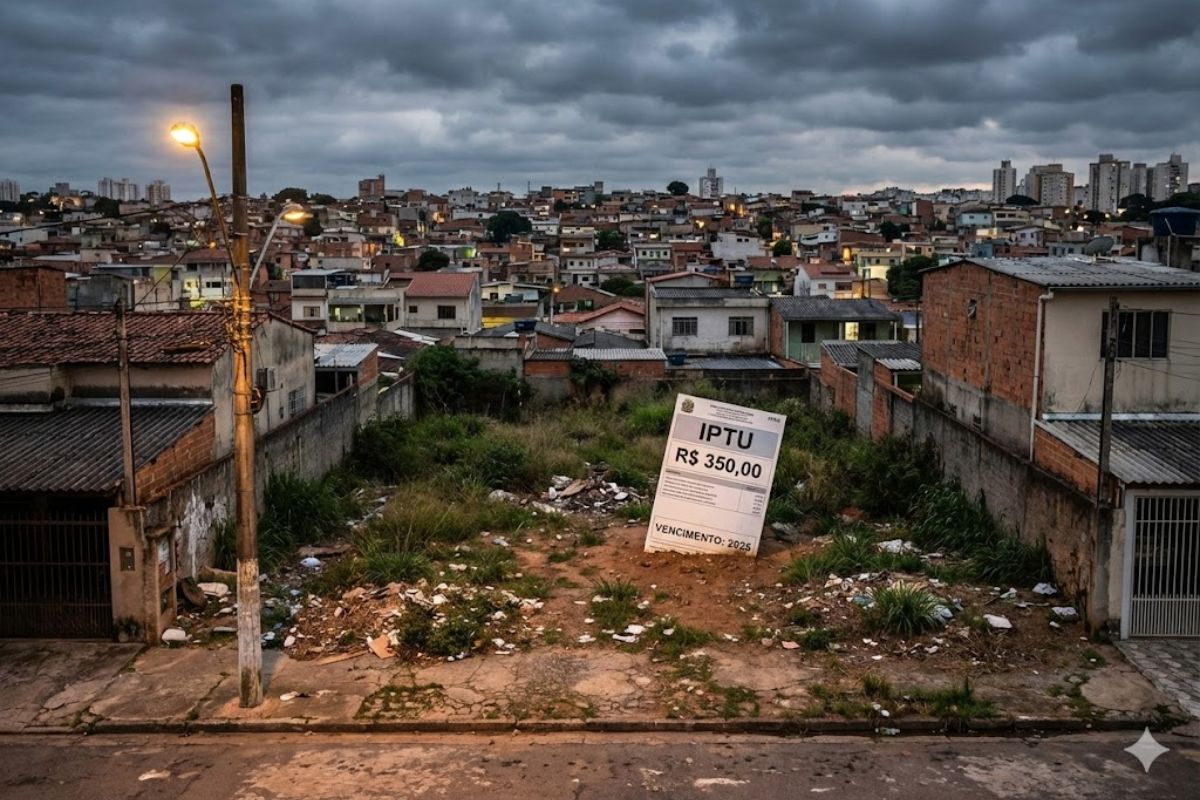


In Uberlândia, the New Public Lighting Fee for Vacant Lots Enters the IPTU Guide, Affects 50 Thousand Properties and Coexists with the Change in the Organic Law that Declares Access to Water a Fundamental Right, Opening a Fiscal and Social Debate on Tax Justice and Local Urban Services in 2025
In practice, the new public lighting fee approved by the Uberlândia City Council changes the bill for those who maintain vacant lots in the city, as the fee will now be included with the IPTU and comes in the same package as the Organic Law, which recognizes access to water as a fundamental right.
In the same session, the council members approved an amendment to the Municipal Organic Law stating that “access to water is a fundamental right”, elevating the issue to a structural clause of the local Constitution. The new wording, with a direct impact on future public policies, signals that decisions regarding sanitation, water supply, and water tariffs will have to be evaluated in light of this new legal parameter starting in 2025.
What Changes with the New Public Lighting Fee
The Complementary Law Project No. 48/2025, authored by the mayor, modifies Complementary Law No. 387/2004, revokes previous standards regarding COSIP, and adjusts points of the municipal tax administrative process.
-
The noise law will no longer be in effect at 10 PM starting in June with a new rule valid during the 2026 World Cup.

-
The Chamber opens a debate on driver’s licenses at 16 years old as part of a reform that includes around 270 proposals to change the Brazilian Traffic Code and may redesign rules for licensing, enforcement, and circulation in the country.

-
The new Civil Code could revolutionize marriages in Brazil with “express divorce” and changes that could exclude spouses from inheritance.

-
Banco do Brasil sues famous influencer for million-dollar debt and intensifies debate on delinquency, risks of seizure, and direct impact on Gkay’s credibility.


The central axis is the definition of how the public lighting fee will be charged for undeveloped properties, the so-called vacant lots.
According to the justification, about 50 thousand vacant lots already benefit directly from the public lighting network, enjoying property valuation, increased security, and urban infrastructure on the streets bordering these lands.
Currently, only developed properties incur the COSIP on a recurring basis, which, in the Executive’s view, creates a disparity between those who pay and those who also benefit.
The project argues that the public lighting fee needs to reach all beneficiaries of the network, developed or not, so that the service cost is equitable.
By including vacant lots in the system, the administration broadens the contributive base and strengthens the revenue allocated to the maintenance, expansion, and modernization of the city’s lighting network.
How Values for Vacant Lots Will Be Calculated
The criterion chosen for the public lighting fee for vacant lots is the frontage of the property in linear meters, that is, the extent of the lot’s front to the public road.
According to the project, this parameter is considered objective, transparent, and directly related to the benefits enjoyed, as the frontage represents the section of the street illuminated in front of the lot.
The annual defined values are tiered, with progressivity linked to the frontage measurements of the undeveloped lot:
I – up to 10 meters: R$ 70.00 per year
II – above 10 meters up to 30 meters: R$ 140.00 per year
III – above 30 meters and up to 50 meters: R$ 210.00 per year
IV – above 50 meters and up to 100 meters: R$ 280.00 per year
V – above 100 meters: R$ 350.00 per year
In practice, an owner of a vacant lot with a frontage of 8 meters will pay R$ 70 annually for the public lighting fee, while a large lot with a frontage exceeding 100 meters will reach the cap of R$ 350.
The logic is to align the amount paid with the size of the benefit, avoiding both total exemption and a uniform charge disconnected from the physical reality of the property.
Connection with the IPTU and the Argument of Fiscal Justice
The public lighting fee will be charged annually, together with the IPTU guide, utilizing the existing collection structure.
The Executive argues that this strategy simplifies management, reduces operational costs, and facilitates payment for taxpayers, by concentrating urban taxes into a single document.
From a political perspective, the official discourse highlights that the absence of a public lighting fee on vacant lots created a “distortion” in relation to developed properties, which already contribute monthly through energy bills.
By extending the COSIP, the government claims to be harmonizing responsibility between those who occupy and those who merely maintain property enhanced by public infrastructure.
For the allied base, the measure reinforces the idea of “beneficiary payer”: if the presence of the lighting network contributes to the safety and market value of the land, the owner cannot remain completely exempt.
Critics, on the other hand, warn that the public lighting fee on idle lots may burden small property owners and lower-tier investors, especially in peripheral areas, even though this discussion is not detailed in the approved text.
Proceedings, Votes and Power Correlation in the Chamber
The Complementary Law Project No. 48/2025 was voted on in two rounds, in a nominal vote, requiring an absolute majority.
In the first vote, the public lighting fee for vacant lots was approved with 19 favorable votes, 5 against, and 2 absences.
In the second vote, the tally rose to 20 favorable votes, 5 against, and 1 absence, consolidating the victory of the proposal.
The numbers reveal a relatively stable governing base, capable of approving sensitive tax changes, albeit with explicit resistance from part of the opposition.
The fact that the project advanced comfortably in both votes indicates alignment between the Executive and the majority of council members around the idea of expanding COSIP collection on undeveloped properties.
In addition to the direct impact of the public lighting fee, the complementary law also revokes Complementary Law No. 295/2002 and provisions of Complementary Law No. 508/2009, adjusting the framework of the municipal tax administrative process.
In practice, this means reordering old regulations to accommodate the new method of funding the service.
Water as a Fundamental Right in the Organic Law
In the same session, council members reviewed the Proposal for Amendment to the Organic Law No. 2/2025, authored by several parliamentarians.
The text adds item IV to article 149 of the Municipal Organic Law, which explicitly states that “access to water is a fundamental right”.
The amendment required a two-thirds qualified majority and was approved with 21 favorable votes and 5 absences, with no record of opposing votes.
Thus, the Chamber sends an institutional message that water should be treated as a essential good, with reinforced legal protection in public policy decisions, regulation, and management of the supply system.
Although it does not directly address values or tariffs, the measure opens space for future legal actions, sanitation policies, investments in networks, and decisions on concessions and public-private partnerships to be analyzed in light of this new fundamental right status.
In a context of climate change, extreme events, and conflicts over water resources, this type of clause is likely to gain increasing importance.
Next Steps and Practical Effects in 2025
With the approval of the public lighting fee in two rounds and the amendment regarding access to water, the next formal step is the promulgation and detailed regulation, including the calendar, launch instructions, and guidelines for taxpayers about the new IPTU guide already including the COSIP for vacant lots.
The tax and fundamental rights agenda will continue to be discussed in upcoming plenary meetings.
The Chamber has scheduled a new in-person ordinary session for Wednesday, December 3, at 9 AM, in the Homero Santos Plenary, keeping the theme of revenue and public services on the political radar.
The Communication Department reports that this is the third ordinary plenary meeting of the eleventh period of the first ordinary session.
In practice, the year 2025 marks a turning point: on one hand, owners of undeveloped lots will incur an additional annual cost with the public lighting fee, tiered according to the property’s frontage; on the other hand, the municipality assumes, in the local constitutional text, the obligation to treat access to water as a fundamental right, which may limit future decisions that put this access at risk.
How Much Is It Worth to Light Streets and Secure Water as a Right
By approving the public lighting fee for 50 thousand vacant lots and, in the same session, enshrining in the Organic Law that access to water is a fundamental right, the municipality redesigns part of the relationship between taxpayers, public service, and basic rights.
On one hand, the financing base for street lighting is expanded; on the other, the legal protection of an essential resource is strengthened.
The Executive defends that the measure corrects distortions and promotes fiscal justice, ensuring that all beneficiaries of the lighting infrastructure contribute to the cost of the service.
The amendment on water elevates the discussion on sanitation and supply to a new institutional level, with potential reflection in medium- and long-term decisions.
And you, as a taxpayer and resident, do you think that the public lighting fee on vacant lots is a fair way to share the city’s costs, or do you believe that the measure weighs too heavily on the budget of small property owners, even with the simultaneous progress in recognizing water as a fundamental right?










Não sou do Município
Mas tem que definir mais situações. Benefícios que deve ter no lote dados pela Administração Municipal.
Iluminação Publica ,esgoto , asfalto , limpeza, coleta lixo , Cavalete de água encanada disponível.
Se não tiver isso a obrigação vira uma imposição ilegal.
E nos lotes vagos, sem a estrutura de rede elétrica, como fica a situação? Será cobrada taxa de iluminação pública?
O triste amigo e a população ver claramente o quanto estes políticos estão achando um jeitinho de retirar dinheiro do nosso bolso e ficamos calados, brigando entre nós e eles metendo a mão no nosso bolso para bancar seus privilégios.