





 Portuguese
  English
  Spanish
 6 min of reading
  4 comments





With Nearly 393 Thousand Inhabitants in the Most Recent Estimate, Bauru Combines Big City Services, Universities, and Strategic Logistics in the Paulista Center.
Bauru, in the interior of São Paulo, has ceased to be just a gastronomic reference because of the sandwich that bears its name. Today, it also appears on the radar of those seeking quality of life with complete infrastructure and more predictability in daily life.
The city has consolidated itself as a support point for work, study, shopping, health, and leisure for dozens of surrounding municipalities. This “magnet effect” helps explain why Bauru is often treated as a regional capital, even though it’s far from the São Paulo Metropolitan Area.
The internal migration movement, typical of medium-sized cities with a good service package, has been fueled by practical factors. Among them are the educational offerings, the health care network, and the advantageous location due to highways and its railway history.
-
The Argentine government celebrates the lowest poverty rate in 7 years, but experts warn that the methodology has changed, real wages have fallen, unemployment has risen, and the number of people on the streets of Buenos Aires has increased by 57% since Milei took office.

-
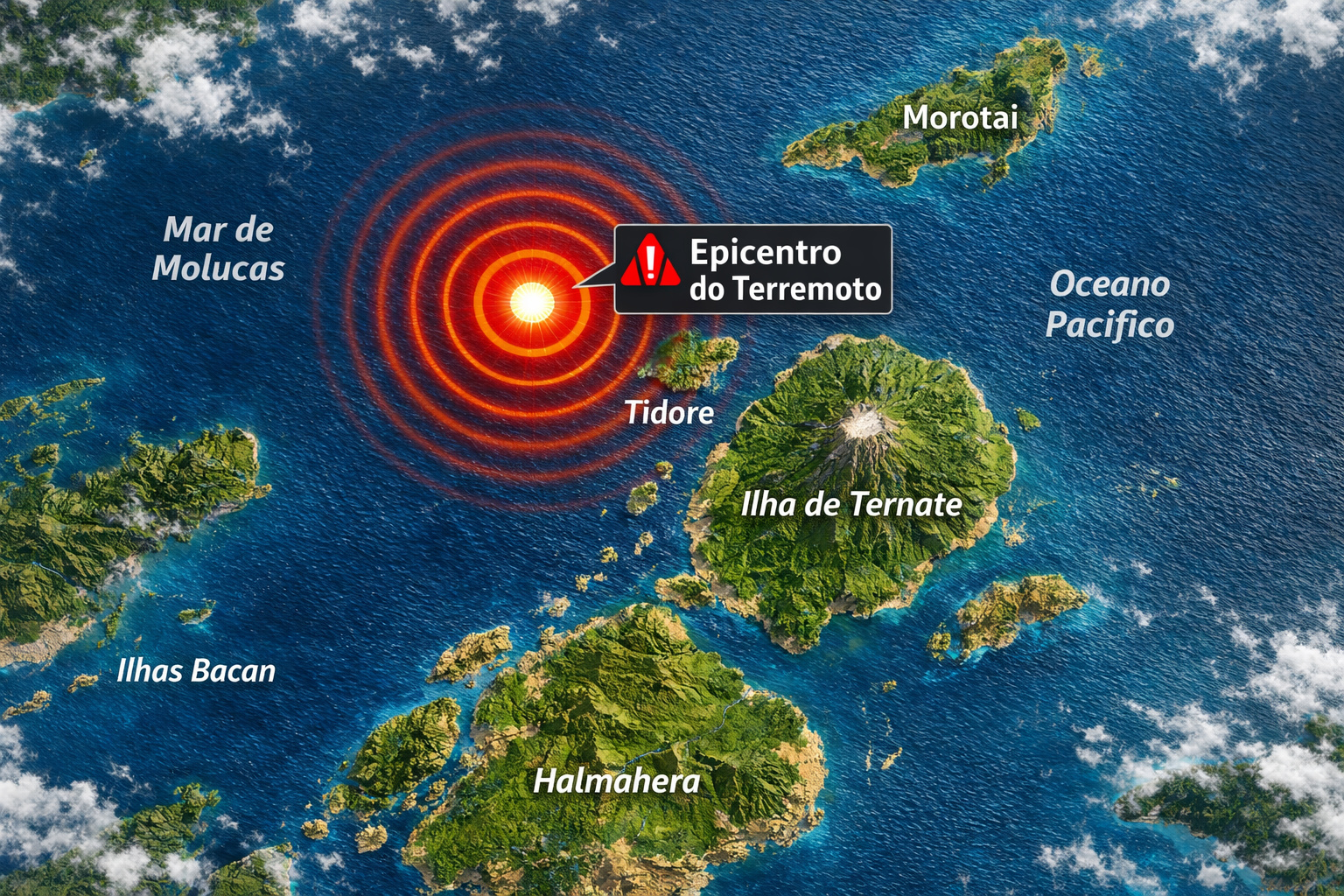
7.8 magnitude earthquake in Indonesia frightens the population, triggers tsunami alert, and hits an island with over 200,000 inhabitants this Thursday.
-
Google will finally let you change that embarrassing Gmail address you created in your teenage years without losing any accounts, logins, or old emails: the feature is already available in the United States.

-
Heading to Brazil in a Bonanza F33 single-engine aircraft: a couple departs from Florida on a visual flight, makes technical stops in the Caribbean to refuel and organize paperwork, and begins the staged crossing until they reach the country.

Below are the main numbers and elements that help to understand Bauru’s Real Size and why its influence extends beyond its own borders.
Bauru’s Real Size and Its Role as a Hub of West Paulista
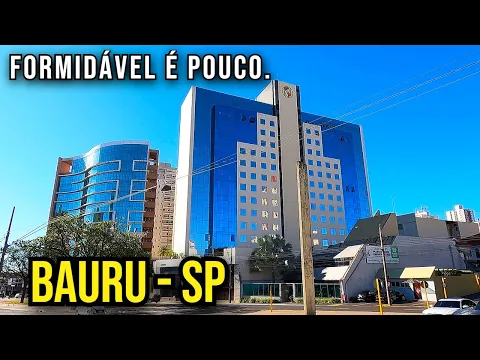
According to the Brazilian Institute of Geography and Statistics, Bauru has 392,947 inhabitants projected for 2025, and recorded 379,146 residents in the 2022 Census. In practice, this puts the municipality very close to the symbolic threshold of 400 thousand inhabitants. Watch this video about Bauru:

This population size translates into daily demand for services and an urban network that “pulls” movements from neighboring cities. It is common for surrounding residents to seek in Bauru job opportunities, specialized consultations, higher education, and leisure on weekends.
In addition to its size, the fact that Bauru concentrates commerce and services that are not always available in the same variety in smaller municipalities is significant. When a city becomes a regional reference, it starts to operate as an economic showcase and as a decision-making point for investments and expansion.
Location, Mobility, and the Road-Rail Heritage that Sustains the Economy
The geographical position helps to understand why Bauru became a logistical hub in the state. The city is served by important road axes, particularly the Marechal Rondon Highway (SP-300) and connections that facilitate access to different regions.
In practice, this shortens distances for those who need to travel for work, move products, or maintain frequent routes to the capital and the interior. It is a type of advantage that reflects in daily life as well as in the planning of companies seeking to reduce costs and travel time.
Bauru also carries a historical mark of urban Brazil: the railway. Specialized reports on the topic note that the municipality was once a significant junction, with railway connections that helped integrate strategic routes within the state and beyond.
This logistical past, however, brings a common side effect typical of growing regional hubs: more flow and more urban pressure. For those considering living in the city, the question shifts from “Does it have structure?” to include “How will the city organize its own growth?”.
Health Services and Indicators that Help Explain Quality of Life
When discussing quality of life, numbers help to separate impression from reality. In the most widely used statistical overview, Bauru appears with IDHM 0.801 and recent public indicators that reinforce its role as a service center.
In health, the name that usually comes first is Centrinho (HRAC-USP), a historical reference in care and training related to the rehabilitation of craniofacial anomalies. The institution itself reports that health services have continued under the responsibility of the Hospital das Clínicas de Bauru since 2023, within a cooperation arrangement with the state government.
This combination of specialized care and university vocation creates a circle of attraction. Professionals seek training, patients come from various cities, and the surrounding service structure tends to grow to meet this audience.
Universities, Education, and Innovation that Drive the City Year-Round
Higher education is one of the most visible engines of the local economy. At the USP Campus in Bauru, the Bauru Dental School integrates the university structure alongside Centrinho and administrative units, reinforcing the city’s academic profile.
Besides training professionals, the university also impacts the city with research activities, extension programs, and community care. This type of presence tends to increase the circulation of people, the demand for housing, and the demand for services related to student life.
On the state level, Unesp also maintains a relevant presence in the municipality, with the College of Architecture, Arts, Communication, and Design at the Bauru campus. This broadens the university profile and helps diversify areas of training and projects.
This academic environment does not exist in a vacuum. It tends to foster events, cultural life, internship opportunities, and a constant “renewal” of the job market, a typical characteristic of university towns.
For those considering a move, this weighs for two practical reasons: the chance to study without leaving the interior and the supply of qualified labor, which tends to attract service and technology companies. It is one of the points that explain why Bauru, despite being in the interior, maintains an intense routine at different times of the day.
Parks and Attractions that Show an Interior with the Look of a Big City
In leisure, Bauru relies on green spaces and public facilities that serve as meeting points. The Vitória Régia Park stands out as one of the local symbols, with a lake and an open-air amphitheater, and it generally hosts cultural activities and a constant flow of residents.
This type of space is crucial for the feeling of a “lively city,” especially in medium-sized municipalities. When leisure is accessible, it blends with routine and does not depend solely on shopping or long travels.
Another significant attraction is the Bauru Municipal Zoo, cited by the municipal administration as a reference in preservation and environmental education. Among the highlights are the collection of hundreds of animals and a history of species reproduction, in addition to educational initiatives.
For nature lovers, the Bauru Municipal Botanical Garden reinforces this green vocation. The city hall describes the space as a scientific institution open for visitation and records the presence of plant collections, trails, and environmental education initiatives.
In the end, what stands out is the “package”: a park for walking, a zoo to visit with family, and a botanical garden with a conservation proposal. In medium-sized cities, this combination tends to be a real differentiator, reducing the cost and effort required to have frequent leisure options.
The Sandwich that Took the City’s Name and Other Stories that Became a Brand
Bauru’s gastronomic fame has a curious and partly debated origin. There are municipal records indicating that the sandwich was created at Ponto Chic, in São Paulo, by Casimiro Pinto Neto, known as “Bauru,” with the account placing the creation in 1934, while other historical sources register the episode in the 1930s with varying dates.
The city and the state, in turn, have given official weight to the symbol. Bauru has a municipal law authorizing measures for the registration of the sandwich, and the State of São Paulo declared the “Bauru Sandwich” as Intangible Cultural Heritage by law published in December 2018.
And there is one more element of local identity that often surprises those unfamiliar with the region: the connection with Pelé’s childhood. Reports remind that the King of Football lived in Bauru and had ties with the Bauru Atlético Clube early in his career, a sports memory that still resonates in the city’s narrative.
Whether for the snack, the university, or regional strength, Bauru has become a name that circulates easily outside the traditional map of capitals. What was once “just the interior” began to be seen as a concrete alternative for living, studying, and working.
Do you think Bauru really delivers that balance between big-city and interior, or is the fame inflated by marketing and comparison to more chaotic capitals? And to spice things up, what’s your opinion on the controversy of the “original Bauru” and the versions that each place claims to be the true one? Leave your comment and share your experience.










Bauru é uma ****!
Qual Bauru é essa? Moro aqui a minha vida toda e essa matéria está totalmente desconectada da realidade. Emprego? Mercado ou empresa de cobrança só. Moro em Bauru mas trabalho em uma empresa de São Paulo. Aqui não tem empresas e o poder público não faz questão de atrair novas empresas ou desburocratizar o processo tributário e de implantação de novas indústrias.
Vivo em Bauru a 43 anos.
Hoje e o puro retrato da decadência.
Comércio central morrendo .
Emprego ? Só se for em empresa de cobrança ou supermercado.
As poucas indústrias que existiam , muitas fecharam .
Propaganda enganosa essa matéria .
Financiada por quem ????