





 Portuguese
  English
  Spanish
  4 min of reading
  2 comments


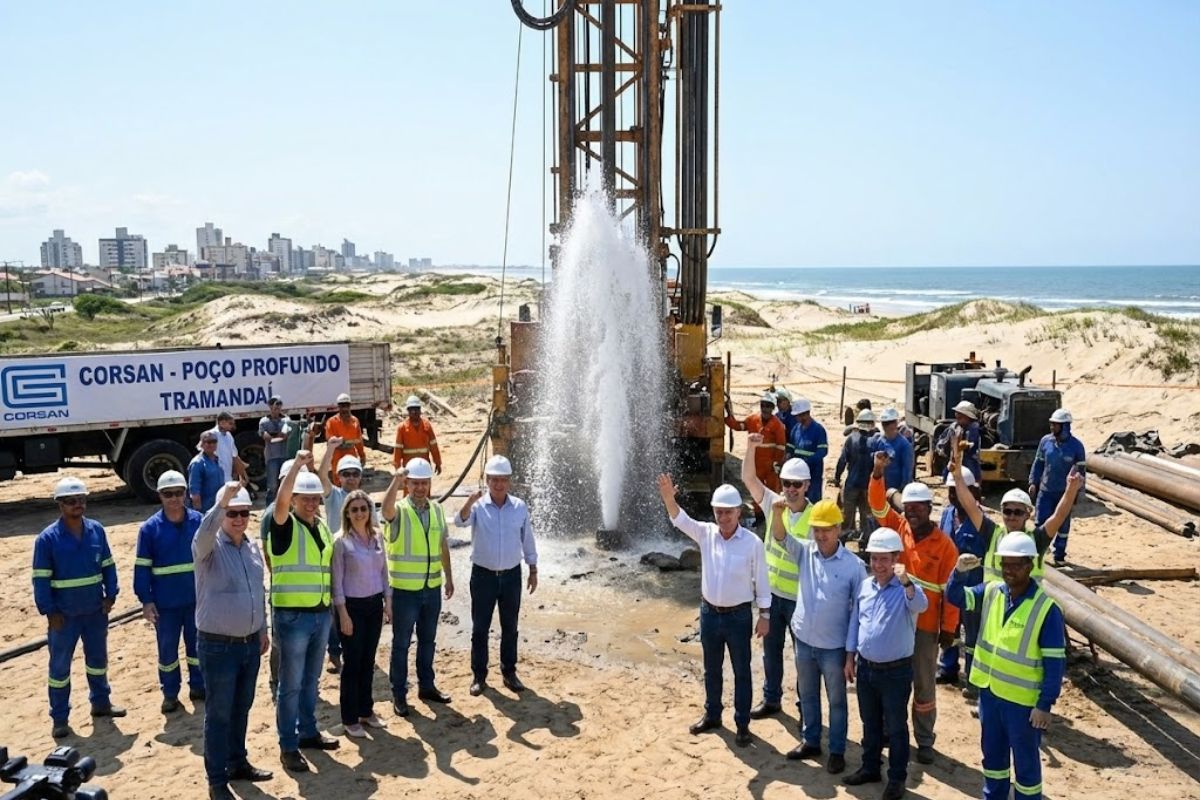


With Summer Approaching, Brazilian City of Tramandaí on the Northern Litoral Gaucho Gains Deep Tubular Well of R$ 750 Thousand at Corsan Station, Increases Flow by 20% to 860 Thousand Liters Per Hour and Reinforces Water Security for Up to 500 Thousand Residents and Summer Tourists in the Season.
A Brazilian city on the northern litoral gaucho, Tramandaí, is rushing to reinforce its water system before the peak of heat. This Thursday, on the 13th, Corsan is performing the flushing and putting a new deep tubular well into operation, which received an investment of R$ 750 thousand to enhance supply security.
With the new structure connected to the Tramandaí Water Treatment Station, the total capacity of the system is expected to grow by 20%, ensuring more flow for those living in the municipality year-round and for the thousands of summer tourists arriving to enjoy the summer season.
Deep Well Increases Flow by 20% in the Corsan System

The new deep tubular well was drilled within the Tramandaí Water Treatment Station and goes into operation during this pre-summer period.
-
Oil surged to $115 a barrel due to the war in the Middle East, and diesel in Brazil has already risen to R$ 7.45 per liter, while the United States…

-
Brazilian city bets on the business environment to generate jobs and attract investments in the energy sector — secretary reveals strategy at Macaé Energy 2026.

-
50 viaducts, 4 tunnels, 28 bridges, and 40 kilometers of bike paths: BR-262 in Espírito Santo will receive 8.6 billion reais for the largest engineering project in the state’s history, inspired by the Immigrant Highway in São Paulo.

-
Brazil produces too much clean energy and doesn’t know what to do with it: over 20% of solar and wind capacity was wasted in 2025 while investors flee and 509 renewable generation projects were abandoned in the last year.


The structure is designed to add a flow of 40 liters per second to the system, reinforcing the supply in a Brazilian city that multiplies in size during the season.
Currently, Corsan already operates five water intake sources in Tramandaí, with a total flow capacity of 200 liters per second.
This volume corresponds to approximately 720 thousand liters of water per hour being sent for treatment before reaching homes.
With the new well adding another 40 liters per second, the overall production capacity rises to around 860 thousand liters of water per hour, strategically designed to get through the summer with greater water security.
The raw water for treatment is also sourced from the Lagoa da Emboaba, which serves as another important source for the system.
Nine Reservoirs Distribute Water Throughout the City
After treatment at the Tramandaí station, the water goes to nine reservoirs distributed throughout the municipality.
These reservoirs have a total storage capacity of 4 thousand cubic meters, which corresponds to 4 million liters of water available to ensure pressure and more stable supply in different neighborhoods.
This infrastructure allows the Brazilian city to maintain supply both for those living in Tramandaí year-round and for those who arrive only in the season.
In the low season, the system serves about 60 thousand people, while in the summer the same network needs to support approximately 500 thousand residents and summer tourists.
The reservoirs act as the lungs of the system, helping to balance consumption during peak hours and reducing the risk of water shortages in higher or more distant areas.
Flushing: Why Water Might Be Seen Being Discharged Into the Street
Before the well begins operating under normal conditions, flushing is necessary.
Flushing is a controlled cleaning operation of the network, in which the first jet of water is released outside the system, removing impurities and air that accumulate in the pipes.
According to Corsan, this stage is essential to ensure the quality of the water supplied, preventing sediments, particles, and turbidity from reaching the taps of homes and businesses.
The procedure also helps to prevent pipe ruptures caused by air accumulation, which can create pressure shocks in the pipes.
In the coming days, the population may see water being discharged in front of the treatment station, located at ERS-030, number 13,850.
The image may give the impression of waste, but it is part of a necessary technical routine to safely put the new deep well into operation.
City Grows in Summer and Needs to Ensure Full Tap
Tramandaí is a Brazilian city that transforms when summer arrives.
The population served by the water supply system jumps from about 60 thousand people in the low season to around 500 thousand residents and summer tourists during the hottest months.
In this scenario, each increase in flow and storage becomes crucial to preventing dry taps on hot days, when water consumption increases due to more frequent bathing, sidewalk washing, and use in hotels, inns, restaurants, and vacation homes.
By investing R$ 750 thousand in a deep well and increasing production capacity by 20%, Corsan seeks to preempt problems and ensure greater stability for the supply system.
With this type of work, the Brazilian city aims to get through the season with less risk of shortages, even during moments of high demand concentrated in a few weeks.
In your opinion, should every Brazilian city that receives summer tourists invest in deep wells and reservoir reinforcement before summer?







Primeiro deveriam cortar todos os desperdícios nas respectivas redes que chegam a quase metade do volume em praticamente todo o Brasil. Após isso realizar um consumo racional. Depois disso sim elevar a oferta de água a população fixa e a flutuante.
Concordo, nós temos muita água e com isso não passamos apertos como dezenas de países no Planeta Terra. Dessa forma cometemos desperdícios desnecessários. Os nossos governantes deveriam intensificar nos bancos escolares estudos dessa matéria para que possamos ter água para todos e não guerra pela água.