





 Portuguese
  English
  Spanish
 5 min of reading
  0 comments


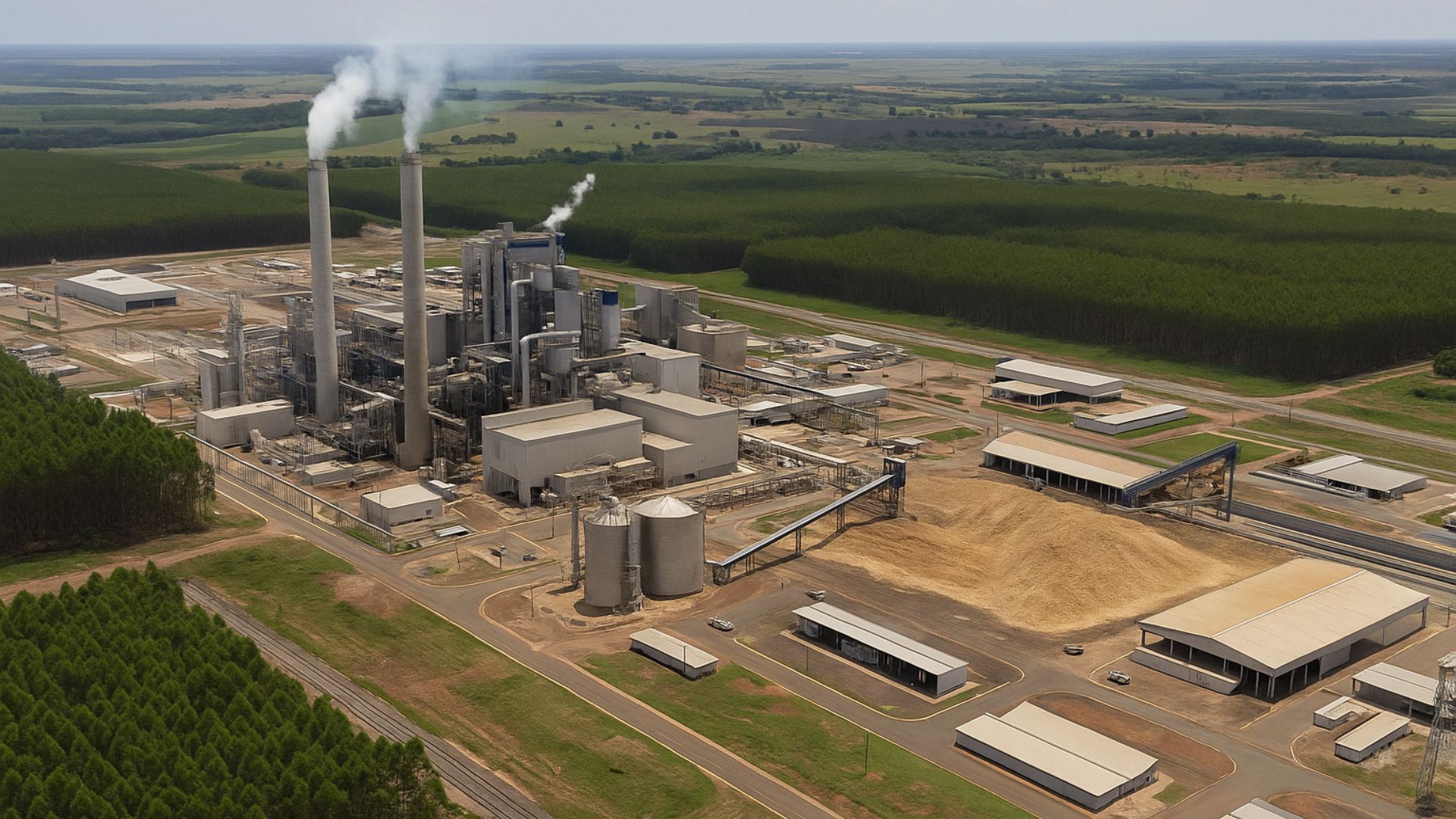
Small Town in the Interior of Mato Grosso do Sul Becomes Home to One of the Largest Industrial Projects in the Country, with Billion-Dollar Investment, Direct Impact on Local Employment, Record Cellulose Production, and Significant Renewable Energy Generation.
Ribas do Rio Pardo, a municipality in Mato Grosso do Sul with an estimated population of 24,152 inhabitants according to IBGE, has come onto the radar of the industrial sector after Suzano launched a new cellulose factory valued at approximately R$ 22 billion.
The facility is presented by the company as the largest single-line cellulose factory in the world and, according to technology provider ANDRITZ, has reached a nominal production capacity of 2.55 million tons per year in record time.
With a direct impact on the local job market, the construction project mobilized over 10,000 people at the peak of construction, which lasted about 30 months.
-
Everyone has started talking about the end of the minimum retirement age in Brazil — but has this “silent change” really happened, or are we facing one of the biggest recent rumors about the INSS?
-
Contactless payments in 2026 soar in Brazil, exposing new invisible fraud gaps and forcing users to double their security precautions with contactless cards.

-
End of Sunday shopping: one state has already prohibited supermarkets from operating on the day of rest, and more regions in Brazil may join by 2026.
-
“The country can be destroyed in one night”: Trump makes historic threat to Iran after ceasefire rejection and the world awaits what comes this Tuesday (04/07)

With the plant now operational, Suzano reports that approximately 3,000 professionals, both employees and contractors, are working in the industrial, forestry, and logistics areas related to the project.
Economic Impacts and Jobs in Ribas do Rio Pardo
The installation of the megafactory has altered the economic scale of a small town.

Although Ribas do Rio Pardo maintains a rural profile, it has become home to a large-scale industrial project, with a production chain involving forestry operations, wood transportation, industrial processing, cellulose shipping, and energy generation.
During the implementation phase, the volume of hiring was one of the main observable effects.
The number of workers mobilized at the peak of construction alone exceeded a significant portion of the resident population, which typically puts pressure on services and infrastructure when there is a rapid influx of temporary labor.
In the current phase, with the plant operational, demand is focused on permanent roles and recurring contracts associated with industrial routines and forestry operations.
In addition to direct and outsourced employment, the operation tends to drive complementary activities such as maintenance, transportation, and support services.
The original text does not detail these indirect effects, and there are no publicly consolidated reports that accurately quantify this secondary impact.
Production of 2.55 Million Tons and Operational Record
The Ribas do Rio Pardo unit was designed to produce 2.55 million tons of cellulose annually.
According to a statement from ANDRITZ, the factory reached its nominal capacity in record time, a result attributed to the set of installed technologies and the startup and stabilization process of the system.
Suzano itself, in statements about the project, also highlights the speed of the ramp-up as an operational milestone.
Commenting on performance, Leonardo Mendonça Pimenta, Director of Industrial Operations at Suzano in Mato Grosso do Sul, stated that “achieving nominal capacity in a plant of this scale, with all systems operating in an integrated and efficient manner in such a short period, is a remarkable achievement.”
“The performance achieved is the result of the combination of technology, expertise, and dedicated support from ANDRITZ, combined with the commitment and excellence of the Suzano team,” the executive added.

In the sector, reaching nominal capacity in less time is closely monitored because it involves equipment testing, automation calibration, and process adjustments in critical areas such as chemical recovery and quality control.
In the case of Ribas do Rio Pardo, the significance is heightened as it is a single-line plant, which concentrates a large volume of production in an integrated operation.
State-of-the-Art Industrial Technology and Automation
The factory operates with technology provided by ANDRITZ, which associates the design with advanced industrial solutions for cellulose processing.
The materials released reference automation, digitalization, and system integration as part of the industrial design of the plant.
The original text also mentions robotics and advanced automation as elements of the project.
However, these areas are not accompanied by detailed public indicators that allow for precise measurement of which steps are automated and the level of robot adoption in each operation.
Another highlighted point is the so-called SulfoLoop Plant, identified as a strategy for self-sufficiency in sulfuric acid production.
In institutional presentations, Suzano describes the proposal as a way to reduce external dependency and improve operational efficiency, with the potential for reducing logistical costs and environmental impacts.
Forestry Logistics and Suzano’s Smallest Average Radius


One of the most cited arguments in promoting the enterprise is forestry logistics.
The text states that the forestry base associated with the plant has Suzano’s smallest average radius, of about 65 kilometers between planting areas and the factory.
This characteristic reduces transportation distances, operational costs, and emissions associated with transportation.
The data is mentioned in institutional materials related to the project and appears as part of the unit’s supply model.
However, no public technical reports detailing the methodology used to calculate this average radius or standardized comparisons with other company units were found.
Renewable Energy Generation and Excess of 180 MW
Energy generation is another central focus of the unit.
In institutional statements, Suzano claims that the factory is self-sufficient in energy and has an average excess of about 180 MW, contributing to the National Interconnected System.
According to the company, this volume would be sufficient to supply, monthly, a region with over 2 million inhabitants.
Even before the official inauguration, suppliers linked to the project were already projecting excess in this magnitude.
In corporate disclosures, Siemens Energy associated the expectation of excess generation with the capacity to supply a city with millions of residents.
Experts emphasize that the concept of “supplying a city” depends on variables such as average consumption, industrial profile, and seasonality.
The consulted sources use population estimates but do not publicly present the calculation memory adopted.
Inauguration and International Projection of the Unit
Suzano officially inaugurated the Ribas do Rio Pardo unit in December 2024, presenting the project as the largest single-line cellulose factory in the world.
Since then, the plant has been cited in sector communications as a reference for scale and operational performance, especially due to the speed in stabilizing production.
With operations at full capacity, Ribas do Rio Pardo has permanently integrated into the industrial geography of cellulose, affecting local employment, workforce training, and demand for services related to the forestry and logistics chain.
The speed with which the project progressed from construction to full production has become a competitive argument in a global market pressured by efficiency and costs.








-

-

-

-

-

27 pessoas reagiram a isso.