





 Português
  Inglês
  Espanhol
  6 min de leitura
  0 comentários


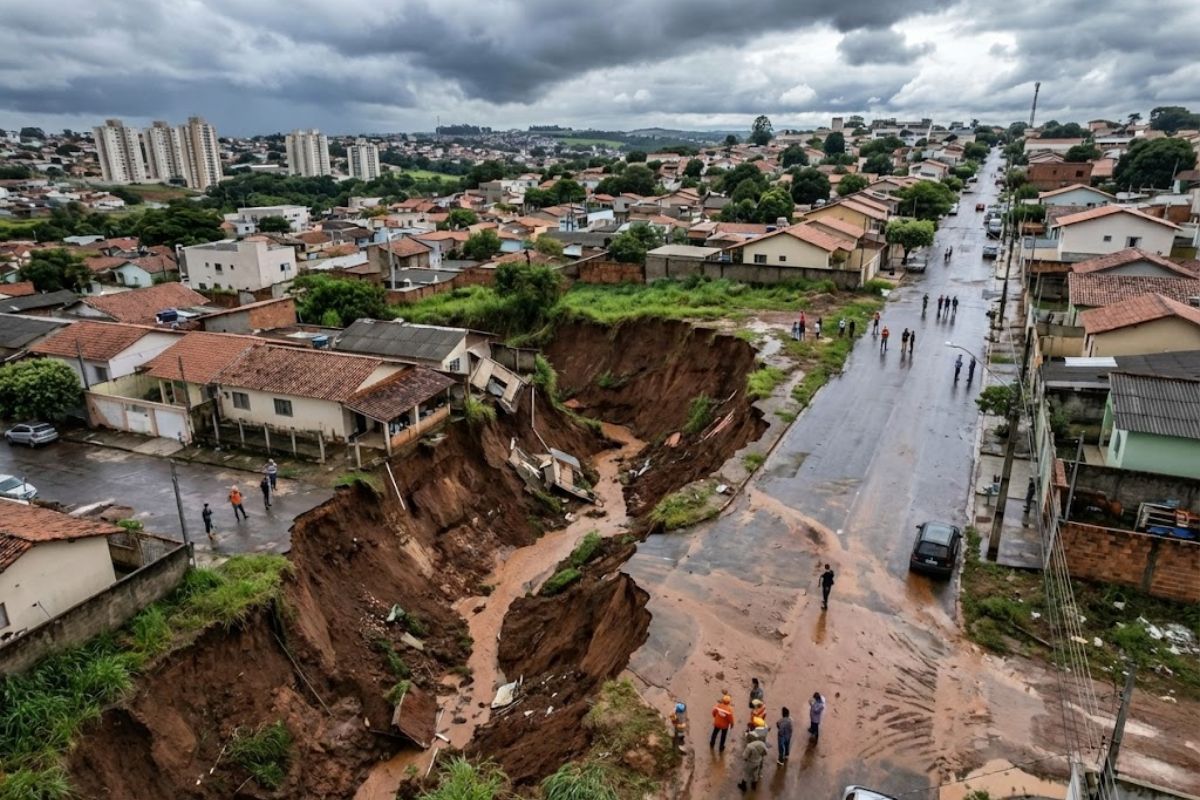
In Buriticupu, in the Interior of Maranhão, Giant Canyons Advance Like Canyons Opened by Rain and Sewage, Already With Almost 30 Erosions and Abysses of 80 Meters. Without Drainage and Sanitation Works, Entire Streets Disappear, Houses Are Engulfed, and the Risk Is That the Largest Could Unite, Cracking the City.
The giant canyons have already changed the urban map of Buriticupu, a city in the interior of Maranhão where a busy street has turned into an abyss 80 meters deep, equivalent to the height of a 20-story building. The erosion has created cuts so large that entire neighborhoods now live with permanent risk, while houses and stretches of roads have been swallowed.
What is happening in Buriticupu exposes a problem that goes beyond Brazil. The giant canyons are advancing at a concerning speed in different regions, destroying homes and infrastructure in Latin America and Africa and threatening agricultural areas in parts of China, Europe, and the United States, in a scenario where more intense rains tend to accelerate the dynamics of erosion.
Buriticupu on the Frontline: Almost 30 Erosions and the Risk of the City Cracking

Buriticupu has about 70,000 inhabitants, is 350 meters above sea level, and coexists with almost 30 large erosions. The two largest are separated by less than 1 km, which fuels local fear that they could approach each other and merge, irreversibly changing the geography of the municipality.
-
The world’s first octopus farm wants to open in the Canary Islands and is already provoking an international reaction: the plan aims to produce 3,000 tons per year.

-
Drought may be creating stronger superbugs in the soil and helping antibiotic resistance reach hospitals, warns a study highlighting a problem that could grow alongside extreme weather.

-
The biggest scam in history: Napoleon’s France deceived the United States by selling them a territory that was Spanish.

-
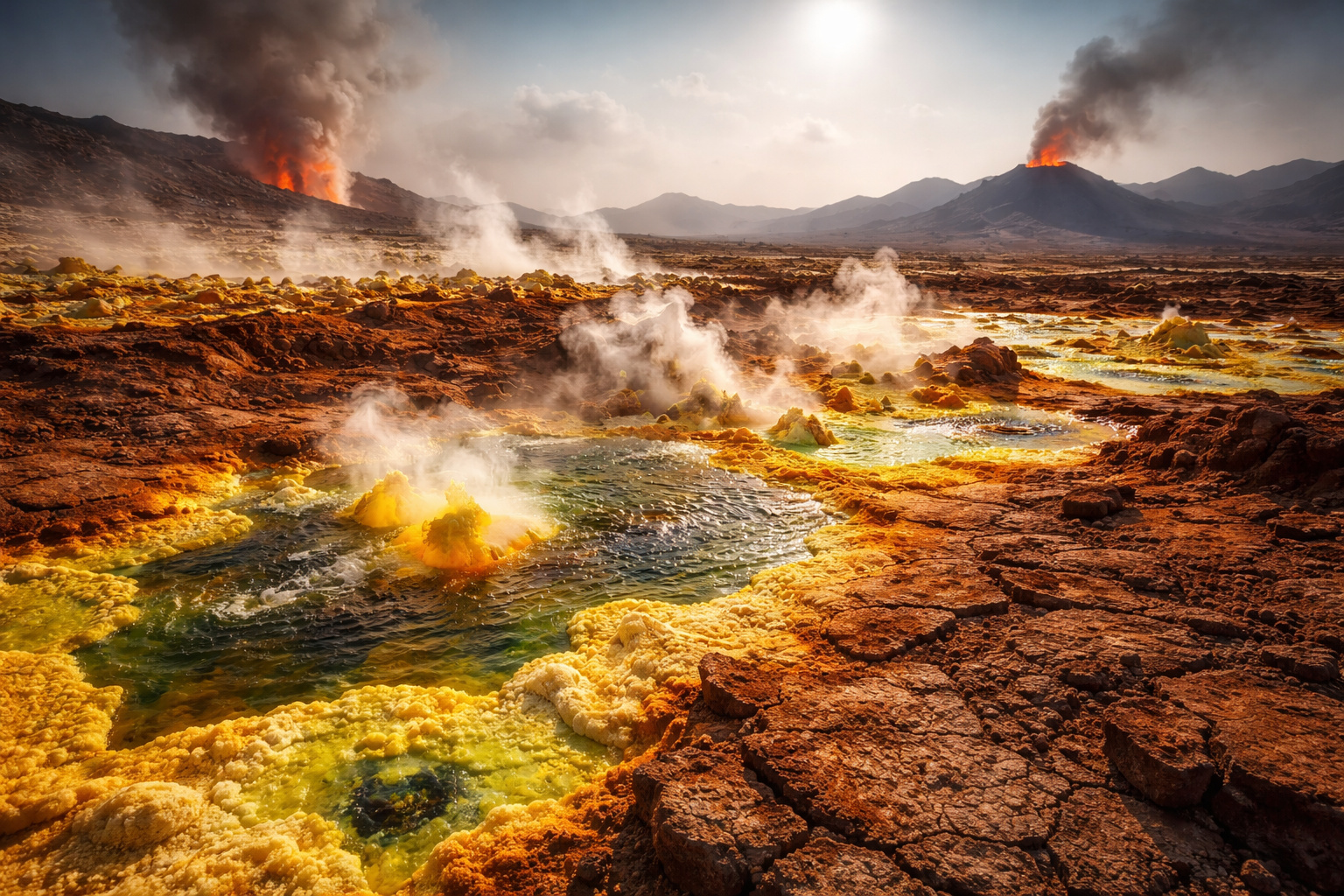
Why is the Danakil Desert so dangerous? It has unstable terrain and how extreme temperatures and toxic gases turn the region into one of the most hostile environments on Earth.

Geologist and professor at the Federal University of Maranhão Edilea Dutra Pereira describes a scenario where, without intervention, the erosions could join in the future and form a watercourse. In practice, the message is clear: the giant canyons are not isolated holes; they are an expanding system, capable of redrawing neighborhoods and cutting connections within the city itself.
How Giant Canyons Are Born and Why Rain Becomes Fuel for Erosion

A canyon is a type of soil degradation caused by the action of rainwater and other sources, creating real canyons. The process is described as a sequence in which, without vegetation to cushion the impact of raindrops and favor infiltration, water pushes soil particles, sweeps the surface, creates channels, deepens gullies, and reaches the canyon stage.
In Buriticupu, the risk increases when there is a lack of infrastructure to prevent rainwater from reaching the edge of the erosions and when sanitation is insufficient, causing sewage water to flow into the giant canyons. Rain and disordered runoff act as continuous engines, widening and deepening the cracks.
Deforestation and Territory Change: From Forest to Exposed Soil
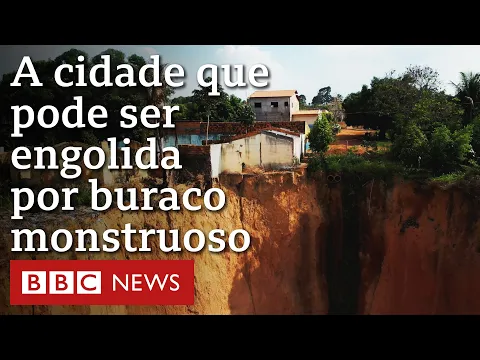

Deforestation appears as a decisive factor for the emergence and acceleration of giant canyons. Buriticupu, in an area of Amazon rainforest, has taken on a drier and rockier appearance, although it was once marked by trees such as cedar, jatobá, and ipê of various colors.
In the 1990s, the timber industry established itself in the region, and more than 50 sawmills operated 24 hours a day. The loss of vegetation reduces the natural protection of the soil and increases surface runoff during rains, which intensifies erosion and increases the risk of opening new fronts.
Extreme Rain, Maranhão in Emergency, and the Acceleration of Giant Canyons
The expansion of giant canyons is associated with the increase in rain intensity and storm patterns. Climatologist Juarez Mota Pinheiro, from the Federal University of Maranhão, reports that Buriticupu has recorded more storms than in the past, in a context where extreme events alter the speed at which erosion evolves.
In the first months of 2023, Maranhão faced one of the worst floods in its history: more than 60 cities entered a state of emergency, thousands of people were displaced, and there were dozens of deaths. For researchers examining the issue globally, an intensification of rainfall by 10% to 15% by the end of the century may seem small, but it changes the game when extreme episodes become more frequent.
Why the Problem Is Global and Already Has Crisis Status in Other Countries
Brazil is cited as the most affected country in Latin America, but Argentina, Colombia, Ecuador, and Mexico also face the phenomenon. In Africa, countries such as Angola, the Democratic Republic of Congo, and Nigeria are already treating the issue as a national crisis, with a direct impact on housing, roads, and urban security.
The risk is not only urban. The giant canyons also threaten fertile agricultural areas in parts of China, Europe, and the United States. Erosion ceases to be a local problem when it begins to compromise production, supply, and infrastructure, especially where urban growth advances unchecked with a loss of vegetation.
Kinshasa as a Warning: Hundreds of Canyons and Tragedy in Minutes
In the Democratic Republic of the Congo, Kinshasa concentrates hundreds of canyons, including one with 2 km in length. The total number of erosions of this type in the city reaches more than 165 km, in an urban center of 12 million inhabitants.
In December 2022, on a night of heavy rain, 60 people died after houses were engulfed by a gigantic erosion. Residents describe that the disaster occurred in 30 to 40 minutes, with the disappearance of homes and transformation of the neighborhood. The fear of strong rain signals has become part of daily life, showing how giant canyons can pose an immediate risk, not just a slow threat.
What Can Be Done: Drainage, Sanitation, and Expensive Works for Small Cities
The technical response involves planning and works capable of preventing water from reaching the edges of the erosions. According to researcher Jean Poesen, cities need good drainage and runoff systems, as well as basic sanitation, to prevent rain and sewage water from feeding the giant canyons.
The obstacle is the cost. These are complex and expensive works, difficult for the budgets of smaller municipalities. In Buriticupu, the Maranhão Public Ministry is legally demanding the execution of terms of a Public Civil Agreement with a commitment to prevention works and support for people whose homes have been affected. The mayor João Carlos Teixeira da Silva claims to have requested financial assistance from the federal government.
In a statement, the federal government states that it is analyzing the release of R$ 300 million for Buriticupu and that about R$ 630,000 has already been transferred for containment works, road restoration, and demolition of houses. The Ministry of the Environment reported having a program to implement “resilient systems in cities,” but with no projects in the municipality at this time.
Life on the Edge of the Abyss: Houses Engulfed, Neighborhoods Empty, and Daily Fear
The city hall does not have official data on deaths related to the giant canyons, but there are records of at least 50 houses being engulfed. Hundreds of people have abandoned their homes, creating “ghost blocks” in Buriticupu, while properties are classified as high-risk, and families move to other areas.
Residents report economic losses and a constant sense of insecurity. A merchant says he has lost 40% of his customers because many people are afraid to stop nearby. He tried to plant taboca, a type of bamboo, to slow the advance, but acknowledges that the scale of the problem requires solutions larger than individual initiatives.
Buriticupu, in Maranhão, has become a symbol of how giant canyons can reconfigure a city: an abyss of 80 meters has replaced streets, almost 30 erosions surround neighborhoods, and the lack of drainage and sanitation accelerates the advance. With more intense rains, historic deforestation, and expensive works that depend on municipal, state, and federal coordination, the risk ceases to be local and connects to a global problem that is already destroying homes and infrastructure on multiple continents.
If your city had giant canyons advancing just a few blocks away, do you think the priority should be immediate drainage or a quick resettlement of families in at-risk areas?








-

-

-

-

6 pessoas reagiram a isso.