





 Portuguese
  English
  Spanish
  5 min of reading
  3 comments


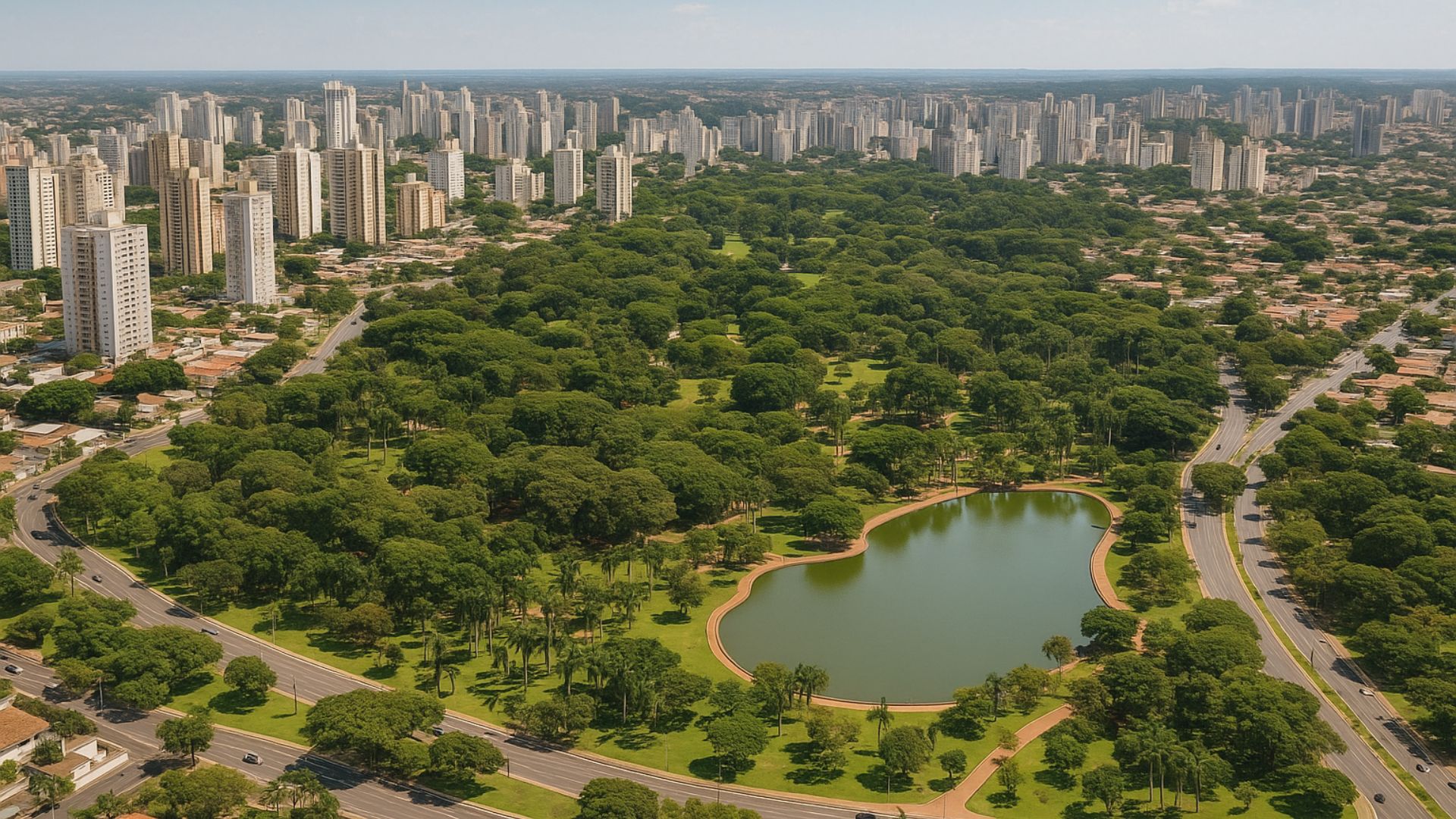


Brazilian Capital Consolidates International Image by Associating Urban Planning, Environmental Preservation, and Extensive Park Network, with Green Area Per Inhabitant Indexes That Exceed Global Parameters and Strengthen Debates about Quality of Life, Urban Metrics, and Sustainability in Large Cities.
Goiânia has emerged as an outlier when it comes to urban greenery.
Data released by the City Hall indicates that the capital of Goiás has 94 m² of green area per inhabitant, a figure attributed to the collection of parks, groves, and other preservation and leisure areas spread throughout the city.
In the same material, the municipal administration claims that this level surpasses the parameter of 12 m² per person nearly eight times, often cited as an international reference for urban green spaces.
-
The Argentine government celebrates the lowest poverty rate in 7 years, but experts warn that the methodology has changed, real wages have fallen, unemployment has risen, and the number of people on the streets of Buenos Aires has increased by 57% since Milei took office.

-
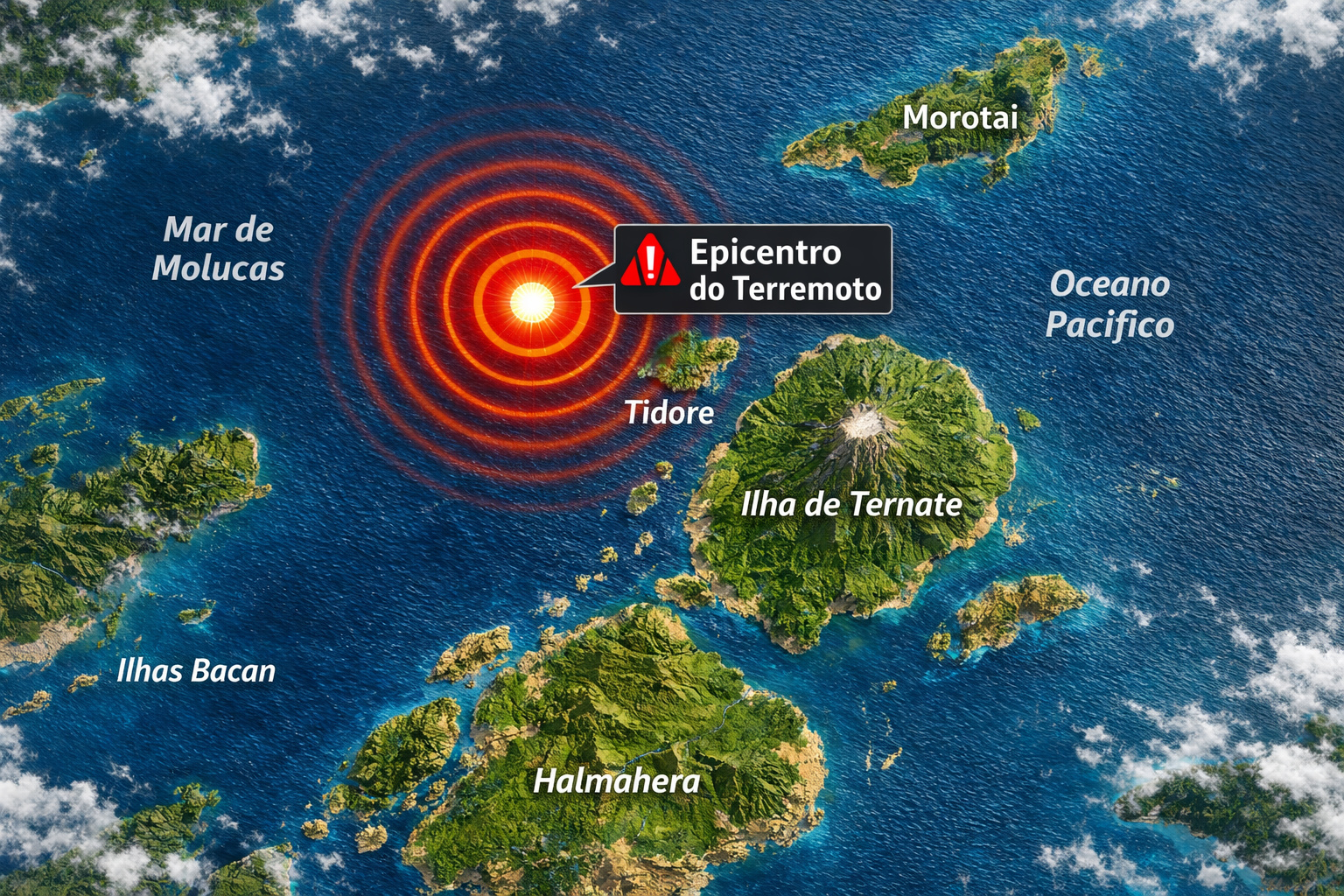
7.8 magnitude earthquake in Indonesia frightens the population, triggers tsunami alert, and hits an island with over 200,000 inhabitants this Thursday.
-
Google will finally let you change that embarrassing Gmail address you created in your teenage years without losing any accounts, logins, or old emails: the feature is already available in the United States.

-
Heading to Brazil in a Bonanza F33 single-engine aircraft: a couple departs from Florida on a visual flight, makes technical stops in the Caribbean to refuel and organize paperwork, and begins the staged crossing until they reach the country.

The number, however, is not just a statistic.
Those who travel through the capital find tree-lined corridors, large urban parks, and groves distributed throughout different regions.
This scenario helps explain why Goiânia has established itself, over the last few decades, as a “green capital” in institutional campaigns and in reports that have recently brought the topic back into focus.
Urban Planning and the Index of 94 m² of Green Area per Inhabitant
The City Hall of Goiânia describes the index of 94 m² per resident as a result of an urban guideline aimed at environmental preservation since the first cycles of city expansion.
According to the municipal administration, this policy aimed to integrate green areas into urban growth, avoiding the concentration of greenery in a few isolated points.

In the same institutional survey, the municipality asserts that Goiânia has the highest index in Brazil and ranks among the best-positioned cities in the world in proportional terms.
Edmonton, Canada, is cited as an international reference with around 100 m² of green area per inhabitant.
Such comparisons, however, vary according to the methodology adopted.
Criteria such as the definition of green area, territorial scope, and population base directly influence the results.
Even so, the official discourse reinforces the idea that Goiânia has structured an extensive and distributed network of green spaces aimed at both preservation and daily use by the population.
International Reference of 12 m² and Attribution Discrepancies
The mention of a minimum of 12 m² of green area per inhabitant frequently appears in debates about urban planning.
In official communications from Goiânia, this level is attributed to the United Nations as a recommended benchmark.
In other technical and journalistic publications, the same reference is associated with the World Health Organization.

This attribution discrepancy shows how the indicator circulates globally as a symbolic floor for comparisons between cities, regardless of the exact institutional signature.
For the reader, the central point is that this value is often treated as a desirable minimum limit.
Within this frame of reference, Goiânia appears with a significantly superior index, which has fueled the recent prominence of the capital in content about urbanism, sustainability, and environmental quality.
Network of Parks and Groves as a Hallmark of the Capital of Goiás
The presence of urban parks is one of the most visible facets of the city’s environmental policy.
The City Hall maintains a technical relationship of parks, groves, and preservation areas implemented over the years, reinforcing Goiânia’s identity as a green city.
Among the most well-known spaces are traditional areas and newer parks that have begun to integrate structures for leisure, sports, and community activities.
In practice, these facilities combine vegetation, trails, lakes, and open areas, functioning as climatic and social refuges amidst the urban fabric.
This integration between nature and daily use helps keep the topic in the spotlight and strengthens the perception of a city where greenery is not the exception.
In addition to large continuous areas, the landscaping of streets and avenues also contributes to the thermal sensation and urban landscape.
However, this type of vegetation is not always fully captured by surveys based solely on satellite images.
Growth of Urban Vegetation between 2003 and 2023

In recent years, independent analyses have also started to integrate the debate about greenery in Goiânia.
Surveys based on MapBiomas data indicate that the capital gained 1,657 hectares of vegetated areas in the period between 2003 and 2023.
The growth was recorded even in the face of urban advancement and the expansion of built-up areas.
The same study points out an apparent contradiction.
In a specific ranking of tree cover among capitals, based on the proportion between urban area and large vegetation masses, Goiânia appeared in a lower position.
On the other hand, in absolute numbers, the city shows a significant volume of vegetation cover.
The difference is directly linked to the methodology.
Satellite images used to standardize comparisons tend to more easily identify large continuous areas, while isolated trees on sidewalks, curbs, and public roads may not be fully accounted for.

International Comparisons and Limits of the Metrics
The international prominence of Goiânia is often accompanied by comparisons with major global metropolises.
This type of association requires caution.
To support direct claims about superiority over other cities, it is necessary to clarify the criteria, data sources, and scopes adopted.
Without this detail, comparisons can become more rhetorical than technical.
Based on the publicly available information, what remains verifiable is that Goiânia maintains a high green area per inhabitant index according to official data and that independent analyses also indicate growth of vegetation over the past two decades.
The differences in rankings reflect less a contradiction and more the diversity of metrics used to measure urban greenery.
The increasingly present debate shifts the focus from slogans to the need for transparent and comparable criteria that allow for tracking over time how Brazilian cities protect and expand their green spaces.








Olha, o problema de Goiânia foi que quando criaram o projeto, pensaram pequeno. Onde já se viu projetar uma cidade, uma capital, para 50 mil habitantes?! Isso é fato. Sou de Goiás e nós estudamos essa questão urbana de criação de Goiânia.
Com isso a capital goiana tem um gargalo extremamente preocupante e que já trás problemas sérios, o trânsito, ruas estreitas e avenidas que não comportam mais o número de veículos, foi nesse sentido que os projetistas pecaram.
Apesar disso Goiânia é sim uma cidade linda e a arborização, o verde, fazem parte dessa beleza.
O Goiais é o paraíso brasileiro.
Só não deixem arruaçar.
É louvável essa política ambiental e extremamente necessário o trabalho contínuo de novos plantios para garantir a reposição de espécies que se vão com final de ciclo entre outras situações. Parabéns Goiânia!