





 Portuguese
  English
  Spanish
 4 min of reading
  3 comments


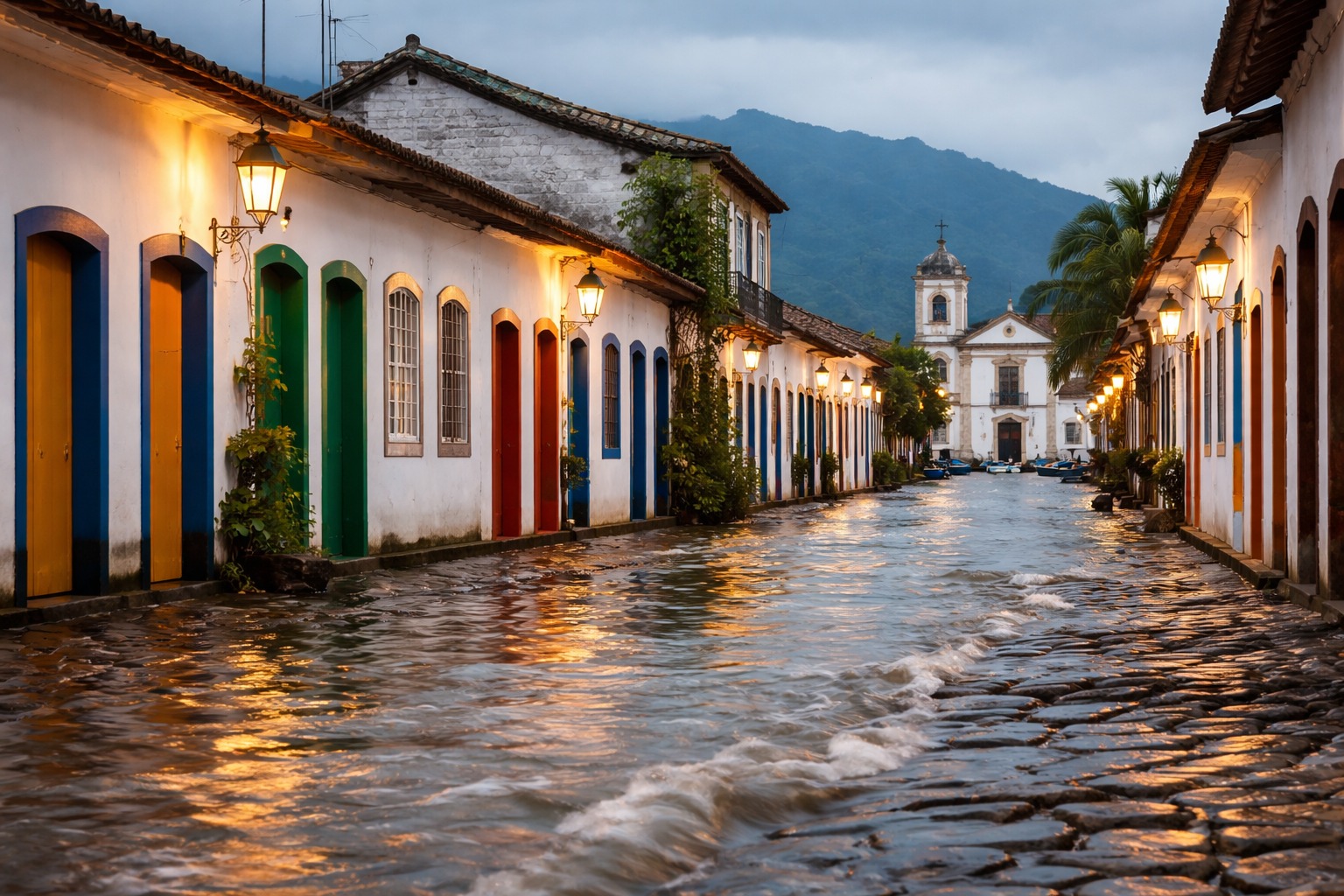


Paraty Brings Together 60 Islands, Over 90 Beaches, and an Area of Almost 149 Thousand Hectares Recognized by UNESCO as a Mixed Cultural and Natural World Heritage Site
In Paraty, on the southern coast of Rio de Janeiro, the tide rises and covers the stones of the colonial pavement from the 18th century; today, the city gathers 60 islands, over 90 beaches, and almost 149 thousand hectares recognized by UNESCO as a World Heritage Site.
The cobblestone streets disappear under the saltwater when the tide comes in. The system was planned during the colonial period so that the sea would wash the city.
Three centuries later, the urban layout remains preserved and is part of one of the most well-known historical complexes in the country.
-
Friends have been building a small “town” for 30 years to grow old together, with compact houses, a common area, nature surrounding it, and a collective life project designed for friendship, coexistence, and simplicity.

-
This small town in Germany created its own currency 24 years ago, today it circulates millions per year, is accepted in over 300 stores, and the German government allowed all of this to happen under one condition.

-
Curitiba is shrinking and is expected to lose 97,000 residents by 2050, while inland cities in Paraná such as Sarandi, Araucária, and Toledo are experiencing accelerated growth that is changing the entire state’s map.

-
Tourists were poisoned on Everest in a million-dollar fraud scheme involving helicopters that diverted over $19 million and shocked international authorities.


Founded in 1667 as the Village of Our Lady of Remedies, Paraty became a strategic port for the flow of gold coming from Minas Gerais via the Gold Trail.
At its economic peak, it surpassed 250 sugar mills and established a reputation for the production of aguardente.
The opening of new trade routes and the construction of the Central Brazil Railway diverted the economic flow.
The municipality remained isolated for almost a century. The period of neglect helped preserve the original layout and colonial mansions.
The architectural ensemble was listed by IPHAN in 1958. In 2019, UNESCO recognized Paraty and Ilha Grande as the first mixed site in Brazil and Latin America with living communities, covering almost 149 thousand hectares.
The area includes the Serra da Bocaina National Park and the Cairuçu Environmental Protection Area. The recognition consolidated the cultural and natural value of the territory.
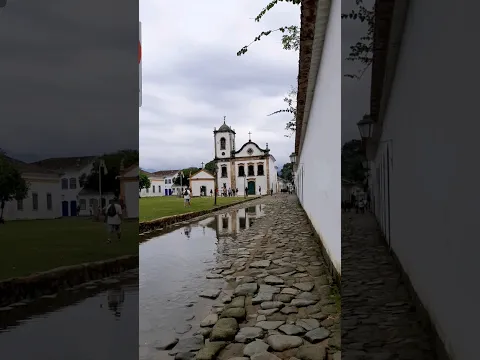

World Heritage Site in Almost 149 Thousand Preserved Hectares
The title of World Heritage granted by UNESCO highlights the balance between colonial architecture, Atlantic Forest, and traditional communities. The ensemble has been classified as the most harmonious of colonial Brazil.
In the historic center, cars do not circulate. Chains close off the cobblestone streets, paved since the 18th century. Mansions with colorful windows house studios, restaurants, and craft shops.
Among the main points of interest are the Church of Santa Rita, from 1722, which houses the Sacred Art Museum, and the Church of Our Lady of Remedies, the city’s patroness.
The Defensor Perpétuo Fort functions as a museum with a view of the bay and the mountains.
The House of Culture gathers exhibitions of local artists. Many keep their studios open in the historic center.
Islands, Beaches, and Trails in the Protected Bay
The bay of Paraty maintains calm and warm waters almost year-round. From the Pier, schooners and fishing boats depart towards beaches accessible only by boat.
Praia do Sono can be reached by a 30-minute trail or fishing boat. Saco do Mamanguá is described as Brazil’s only tropical fjord, surrounded by mountains covered in forest.
At Tobogã Waterfall, a smooth natural rock allows sliding into a freshwater pool. The Stone That Swallows creates the illusion of swallowing the bather. Praia Vermelha and Ilha da Cotia are traditional stops on the tours.
UNESCO-Recognized Cuisine and Cachaça Tradition
Paraty was recognized as a Creative City of Gastronomy by UNESCO, being the only one in Brazil in this category. The cuisine combines indigenous, African, and caiçara traditions.
Among the dishes are shrimp with green banana and Azul Marinho, fish wrapped in banana leaves and roasted over a fire. Cachaça Gabriela combines cachaça, cloves, cinnamon, and cane syrup.
Distilleries like Engenho D’Ouro offer tastings and guided tours. The Cachaça, Culture, and Flavors Festival takes place in August. In July, FLIP attracts visitors outside the high season.
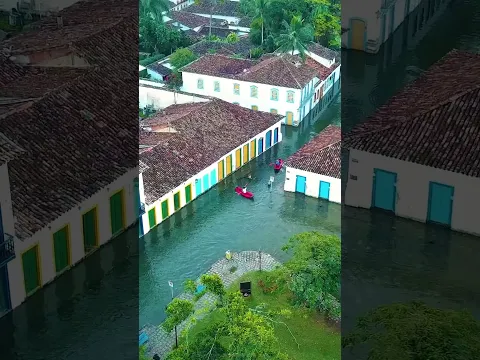
Access, Climate, and Historical Preservation
The climate is humid tropical. Summer is hot and rainy, with downpours in the afternoon. Between May and September, the dry season occurs, indicated for trails and festivals.
Paraty is located 258 km from Rio de Janeiro and 296 km from São Paulo, via BR-101. The journey from the capital city takes about 4 hours. Buses depart from Rodoviária Novo Rio with regular lines.
Until the 1950s, access was only by boat. The isolation helped keep the historic center intact.
Today, visitors find streets that the tide still washes, preserving a layout that spans centuries and maintains the recognition as World Heritage.
With information from O Antagonista.









Paraty, a Veneza brasileira ❤
Todo ano visito Parati amo ver a construção muito bela colorida e todas as. Vezes me surpreende com muita coisas preciosas cada cachoeira cada canto da cidade eu e minha família gostamos de ir a Parati os restaurantes as feiras de artesanato e os carinhos de doces as praias adoro a praia do Jabaquara quem sabe um dia irei morar por lá . Parati tem alguma coisa que me atrai muito q sabe um dia ficarei sabendo conheço tudo no Rio de janeiro mas pra mim o lugar mais belo e Parati ❤️😍
Cidade bonita de longe, no cartão postal, mas ao vivo é diferente do que eu esperava. A água do mar que invade a cidade deixa-a com mal cheiro. Não gostei. Não volto lá