





 Portuguese
  English
  Spanish
  5 min of reading
  0 comments


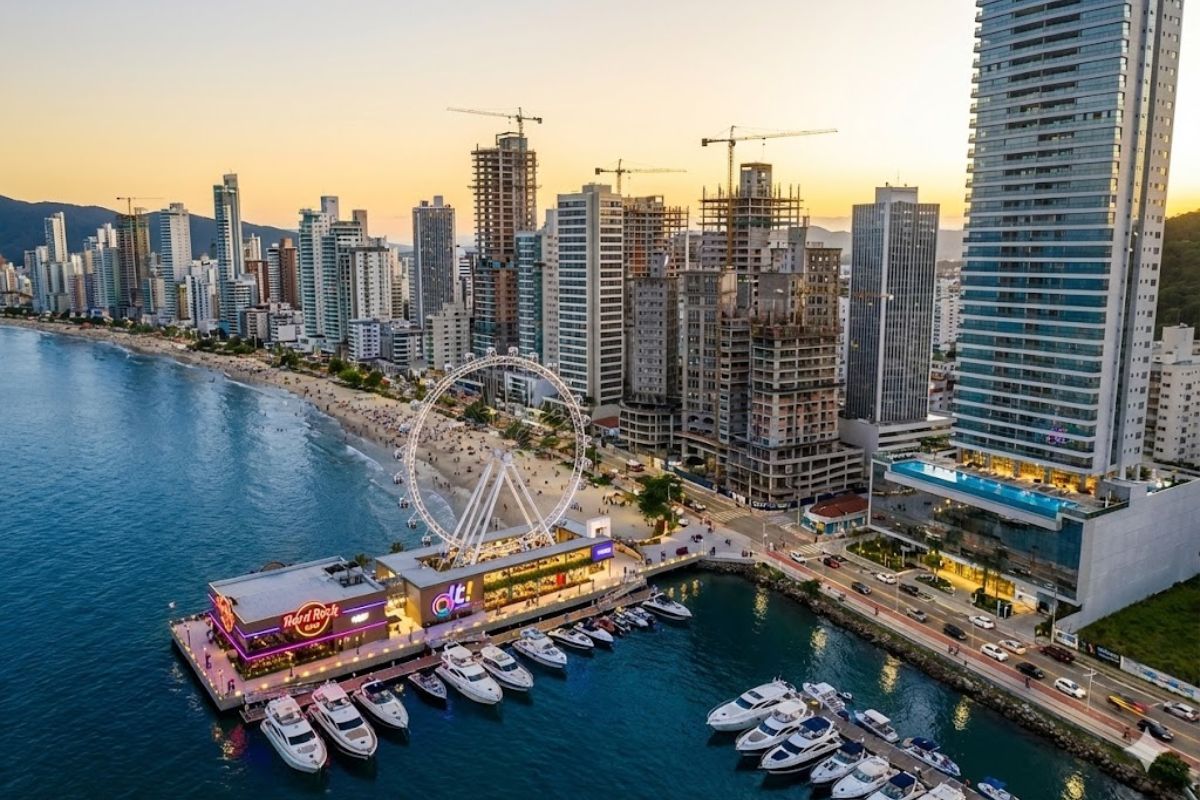
Away from Major Centers, the Brazilian City of Itapema, on the North Coast of Santa Catarina, Has Become a Favorite by Combining Expensive Square Meter, Construction Projects, a Mega Tourist Pier with a Floating Hard Rock, a Yacht Marina, and a 70-Story Skyscraper with a Pool in the Heights, Attracting Investors from Brazil and Abroad.
The Brazilian city of Itapema, with around 75,000 inhabitants, ranks second in the national ranking for the most expensive square meter, with an average of R$ 14,702 per square meter, just behind Balneário Camboriú, which registers R$ 14,776 per square meter. In a few years, this small coastal municipality has begun to vie for space with major capitals in the Brazilian real estate market.
Between 2024 and the first half of 2025, the leap was driven by more than 400 ongoing construction projects, about 200 new projects pending approval, and a package of infrastructure that includes widening the beach area, a new marina with over 200 spots for vessels, and the Pier Tourist Oporto, expected to open in 2025 with the world’s first floating Hard Rock Café.
Itapema Learns from Balneário Camboriú and Creates Its Own Route

Sector experts claim that Itapema not only rode the wave of neighboring Balneário Camboriú but learned from its successes and challenges to build its own model of urban expansion.
-
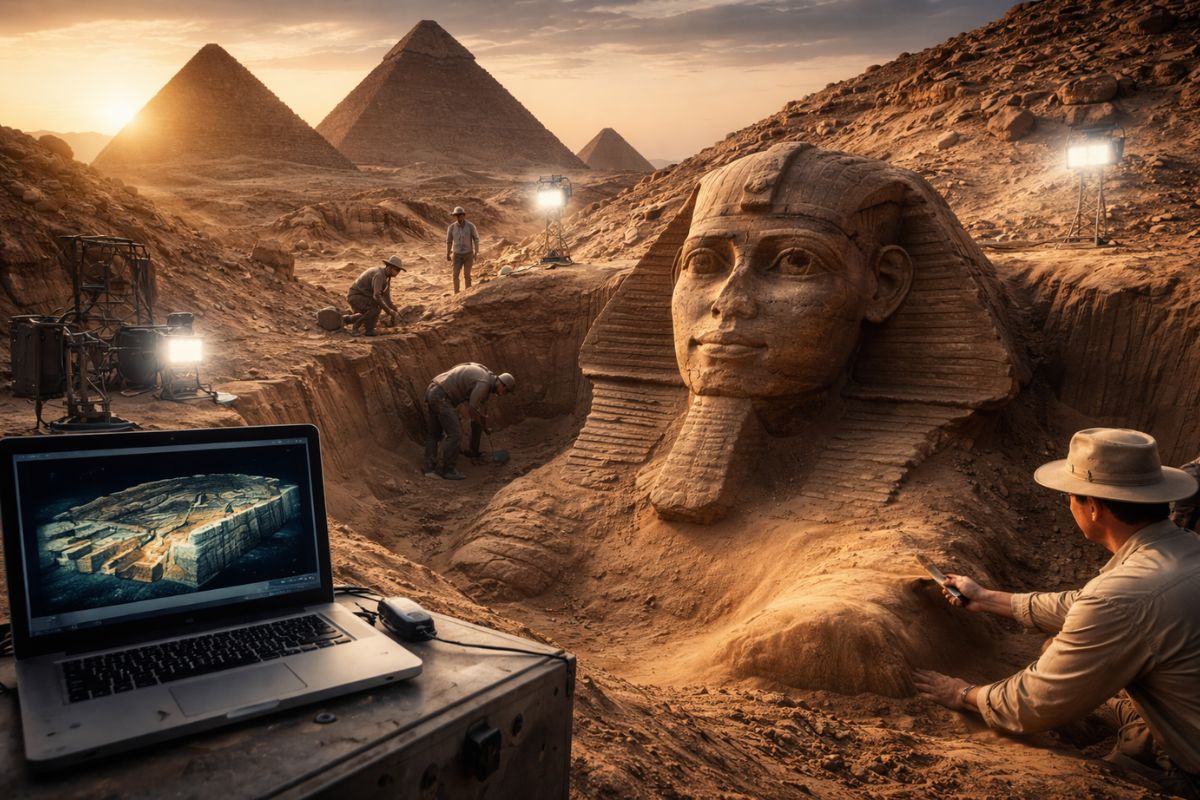
Italian researchers have detected what appears to be a second Sphinx buried under the sands of Egypt, and satellite scans reveal a gigantic underground megastructure hidden beneath the Giza Plateau for over 3,000 years.
-
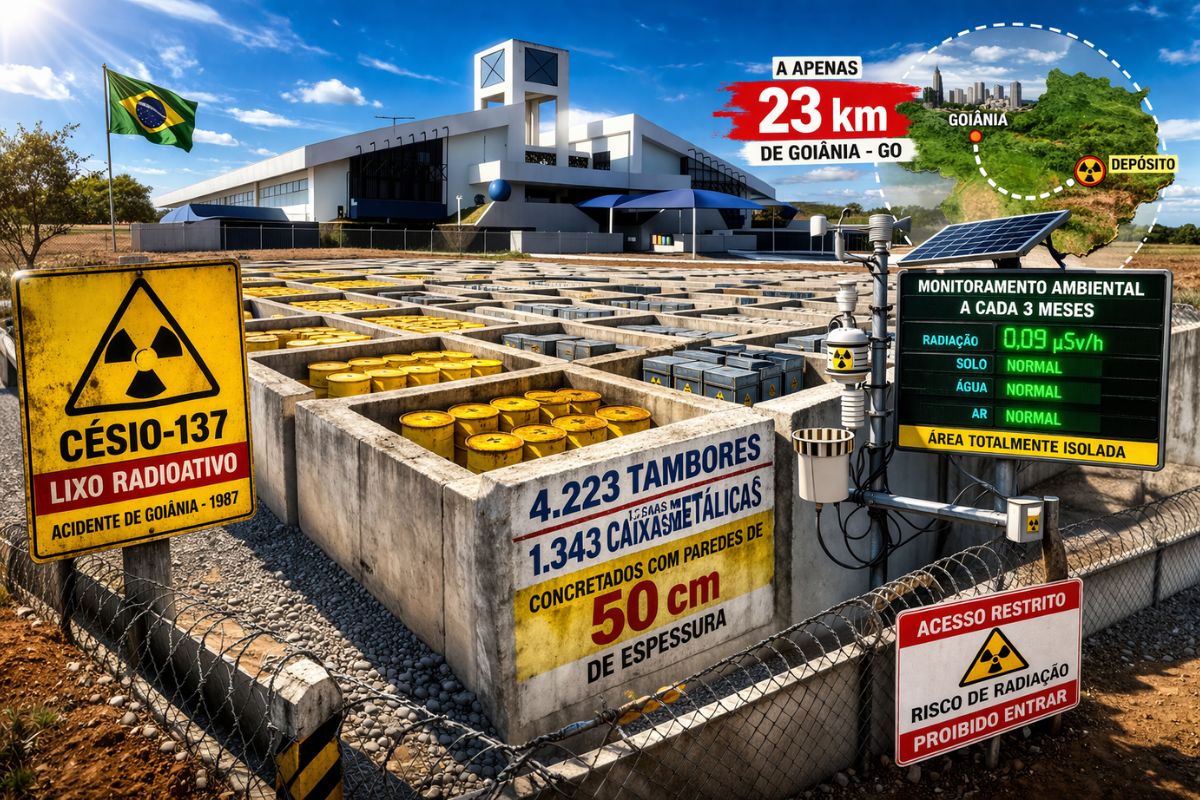
There are 4,223 drums and 1,343 metal boxes concreted with 50-centimeter walls that store the radioactive waste from Cesium-137 in the worst radiological accident in Brazil, just 23 kilometers from Goiânia, with environmental monitoring every three months.
-
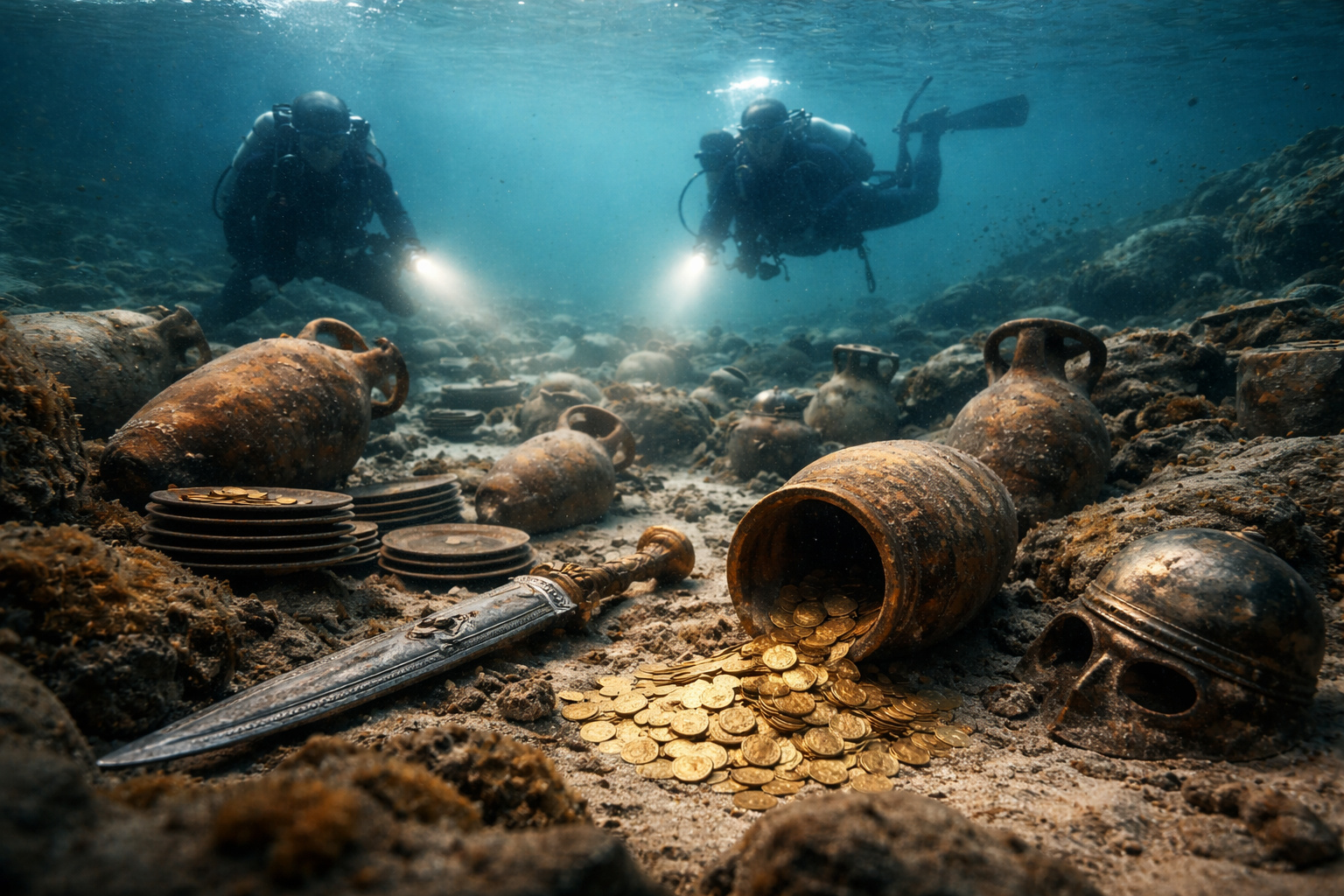
Giant Roman treasure found at the bottom of Lake Neuchâtel in Switzerland reveals an advanced trade system, circulation of goods, and armed escort in the Roman Empire about two thousand years ago.
-
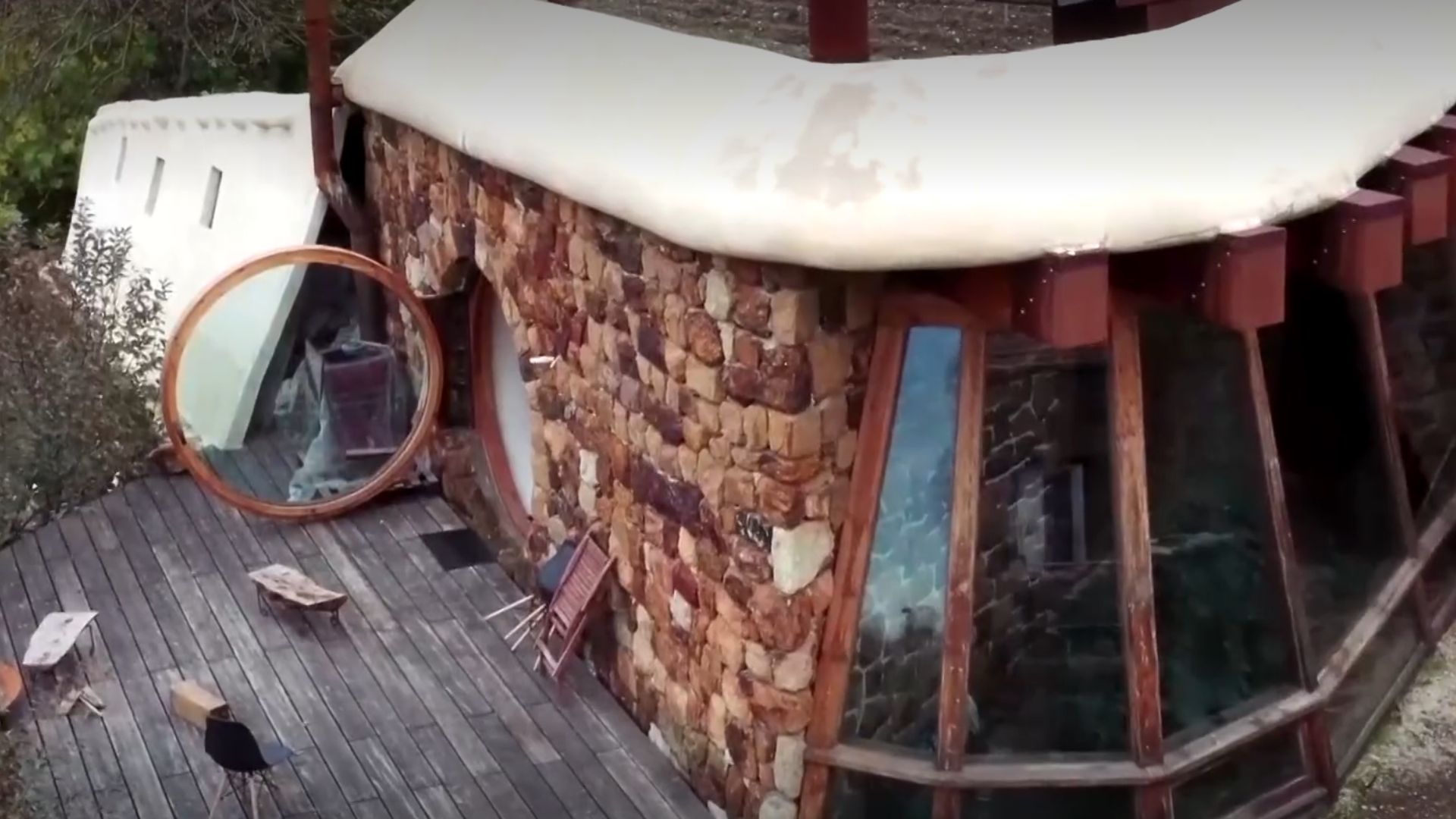
He buried 1,200 old tires in the walls to build his own self-sufficient house in the mountains with glass bottles, rainwater, and an integrated greenhouse.

The logic is clear: aim for a high standard, but with a focus on sustainable appreciation and more balanced urban planning.
According to the president of the construction company Gessele, João Conhaqui, the pace of public and private construction is reconfiguring the urban standard in nearly all regions of the municipality, elevating sidewalks, facades, recreational areas, and the quality of developments.
The result is a Brazilian city that combines a beach tourism vocation with a robust investment environment, aimed at those seeking long-term assets.
This movement has made Itapema a frequent destination for buyers from various regions of Brazil and even abroad.
Indicators of urban safety, high per capita income, and a growing supply of exclusive services complete the package, making the municipality compete directly with major capitals on investors’ radar.
Billion-Dollar Landbank Guarantees Security for Off-Plan Buyers
In the real estate investment game, one of the most observed signals by sophisticated buyers is the landbank, the inventory of a construction company’s land.
In Itapema, Gessele, led by Conhaqui, holds around R$ 2 billion in Gross Sales Value (VGV) in strategic areas, including beachfront lots, which are increasingly scarce in the region.
For investors purchasing off-plan, considering the size and quality of the landbank has become as important as visiting a decorated apartment.
In a long-cycle market, the ability to maintain expensive assets is seen as an indicator of financial stamina and a lower risk of delays or issues with delivery.
The recent performance of Gessele reinforces this perception. The company reported a 300% growth in 2024 compared to the previous year and, just in the first half of 2025, matched the entire revenue of 2024, with projections to double the result by December.
The increase in sales accompanies the escalation of prices, as the price per square meter in Itapema consistently approaches that of neighboring Balneário Camboriú.
George VI: Beachfront Building with Appreciation Above 200%
In the construction company’s portfolio, the George VI building symbolizes the high standard of the Brazilian city. The beachfront development, located in Canto da Praia, was delivered in July with 91.7% of units sold and appreciation exceeding 200% since 2021.
During the same period, the national average appreciation of properties was 36.68%, according to the FipeZap index.
In practice, those who purchased at launch in Itapema saw their investment multiply much more rapidly than the national average, consolidating the municipality as a showcase for significant returns.
The George VI also reinforces the strategy of associating high cost with location: an imposing facade facing the sea, sophisticated common areas, and a focus on spacious layouts aimed at an audience willing to pay more for exclusivity, a privileged view, and high-standard services.
Charles II Yacht Royal Home: 70 Stories, Pool in the Heights, and Private Marina
If the George VI represents the current stage of the market, the Charles II Yacht Royal Home by Okean anticipates the next chapter for the Brazilian city.
The development will have 70 stories, a rooftop at 252 meters high with a infinity pool facing the sea, a certified helipad, and a marina with capacity for 114 jet skis, as well as a dock for large vessels connected to the Perequê River.
The building will be on the street of the future tourist pier, where the Tourist Pier Oporto with the floating Hard Rock Café will be constructed.
The combination of a skyscraper, nautical infrastructure, and international entertainment creates a new urban icon on the coastline of Itapema, bringing the city’s experience closer to established destinations abroad.
With a projected VGV of over R$ 800 million, the Charles II already had more than 70% of the 114 units pre-reserved even before the official launch expected in the first half of the year.
The anticipated appetite of buyers indicates confidence in the continued appreciation and consolidation of Itapema as a high-standard hub.
High Real Standard, Sustainability, and Projects Designed to Last Decades
Gessele’s strategy also involves a conceptual positioning that seeks to differentiate the Brazilian city from other destinations that have grown too quickly.
According to the company’s vice-president, Paula Gessele, inspirations from great European and British works and references to royalty serve to reinforce the idea of legacy and architecture designed to last across generations, not just to be a short-term trend.
The construction company developed its own manual, referred to as high real standard, in addition to the Eco Royal program, aligned with ISO standards, which integrates energy efficiency, construction quality, and environmental management.
The goal is to deliver buildings that make economic sense today and remain relevant 30 years from now, reducing maintenance costs and preserving the value of the units over time.
In an increasingly competitive real estate market, Paula argues that the true differentiator is not in who launches more projects, but in who can deliver more enduring, sustainable, and coherent assets with the capital the client is allocating.
And you, would you invest your money in a high-end property in this rising Brazilian city, or do you still prefer to bet on traditional major capitals like São Paulo and Rio de Janeiro?










-

-

-

-

-

-

55 pessoas reagiram a isso.