





 Portuguese
  English
  Spanish
  4 min of reading
  0 comments


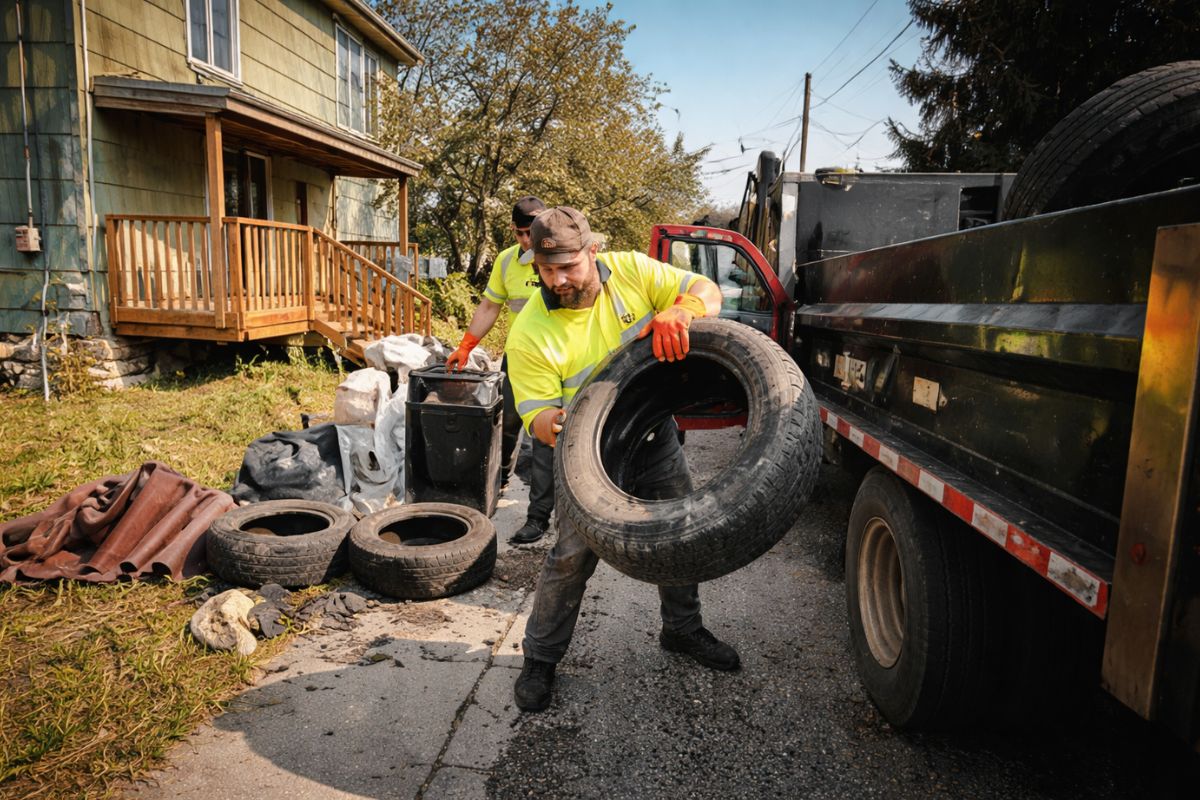
In Marion, Ohio, the city survived decades of industrial dependence, job losses, and emptying of the center. The opioid epidemic aggravated stagnation and exposed failures of social protection. Without savior investors, residents and local leaders adopted incremental recovery, small businesses, and community care actions with daily transparency.
In the heart of the Rust Belt, the city of Marion, Ohio, was pushed into a long cycle of retrenchment: factories closed, jobs evaporated, and the population began seeking a future elsewhere. The collapse was not a single event; it was a sequence of accumulated losses since the 1970s, turning into normalized landscape.
When the opioid crisis hit the territory hard, the city was already weakened by stagnation economic, an emptied center, and a sense of institutional neglect. The reaction that gained traction did not attempt to erase the past, but rather reorganized priorities with smaller, repeatable solutions supported by local actors.
The Trap of Industrial Dependence and the Beginning of Decline

The city grew driven by a classic logic of industrialization: the arrival of the railroad, business expansion, and progressive consolidation around a few strong companies.
-
Friends have been building a small “town” for 30 years to grow old together, with compact houses, a common area, nature surrounding it, and a collective life project designed for friendship, coexistence, and simplicity.

-
This small town in Germany created its own currency 24 years ago, today it circulates millions per year, is accepted in over 300 stores, and the German government allowed all of this to happen under one condition.

-
Curitiba is shrinking and is expected to lose 97,000 residents by 2050, while inland cities in Paraná such as Sarandi, Araucária, and Toledo are experiencing accelerated growth that is changing the entire state’s map.

-
Tourists were poisoned on Everest in a million-dollar fraud scheme involving helicopters that diverted over $19 million and shocked international authorities.


This design generated jobs and identity, but also created structural vulnerability: when the local economy depends on a limited core, any shock turns into a systemic crisis.
With globalization advancing and the demand for labor changing, the city felt the chain impact.
Closures, bankruptcies, and cuts eroded the income base, reduced circulation in the center, and hit services that relied on daily flow.
When work disappears, the center disappears along with it, because everyday consumption is the first link to break.
Empty Center, Falling Reputation, and the Social Weight of the Opioid Crisis

Urban deterioration was not limited to closed buildings or storefronts.
The city began to live with weakened neighborhoods, accumulated frustration, and a rise in social problems, with the opioid crisis appearing as a damage multiplier.
Instead of being just a public health issue, the problem also became a matter of safety, assistance, and community cohesion.
The human portrait in the city includes situations of severe dependence and insufficient responses, with decisions leaving families and children exposed to risk.
The feeling that people were treated as disposable fueled outrage and disbelief.
This environment often opens up space for two bad exits: waiting for an external savior or giving up, and the turning point was breaking away from both.
Recovery Without Megaprojects: The Method of Small and Repeated Steps
The turnaround described in the city follows an incremental logic: identify what does not work, choose the smallest possible intervention, execute with existing resources, and repeat.
In practice, this appears in center initiatives that do not depend on a single completed project to “function.”
An example is the creation of a pocket park in an area marked by historical destruction, activated while still evolving, with local participation and daily appropriation of the space.
The same reasoning extends to the business ecosystem. Instead of betting everything on the return of a large plant with thousands of employees, the city began to value the compound effect of dozens of smaller companies.
The logic is simple and harsh: 40 businesses with small teams distribute risk, create economic diversity, and sustain a more resilient base than a single dominant employer. It is a reconstruction by density, not by spectacle.
The Local Gear: Ownership, Organization, and Community Care

A technical detail that changes the game in any city is who controls the urban asset.
The defense of local ownership in the central corridor appears as a long-term strategy: those who buy and renovate a building tend to care for its future, press for consistent occupancy, and keep the area alive, because the financial risk is also personal.
This reduces dependence on external decisions and prevents the center from becoming just a temporary setting.
Social recovery, in turn, connects to direct interventions: regular meal distribution, creation of certified recovery housing, and small houses for vulnerable individuals, with oversight, financial education, and reintegration goals.
In practice, the city treats the problem as human infrastructure, not as one-off charity.
When the neighborhood sees concrete improvement, pride returns, and yard cleaning, house renovation, and reduced vandalism become predictable effects, not miracles.
The story of this city does not point to a magic formula, nor to a quick fix. What emerges is a set of tough choices: recognize the collapse, reject grand promises, build trust with small deliveries, and persist even with criticism and setbacks.
In Marion, the city advances when it transforms love for the place into a routine of action and when it accepts that the next step is almost always modest, but it needs to be real.
When did your city start to change for the better, or worse, and what did you see first: the center reacting, the neighborhoods breathing, or people starting to believe again? If you had to choose a small and immediate step for your city today, what would it be, and why?










-

Uma pessoa reagiu a isso.