





 Portuguese
  English
  Spanish
  4 min of reading
  24 comments


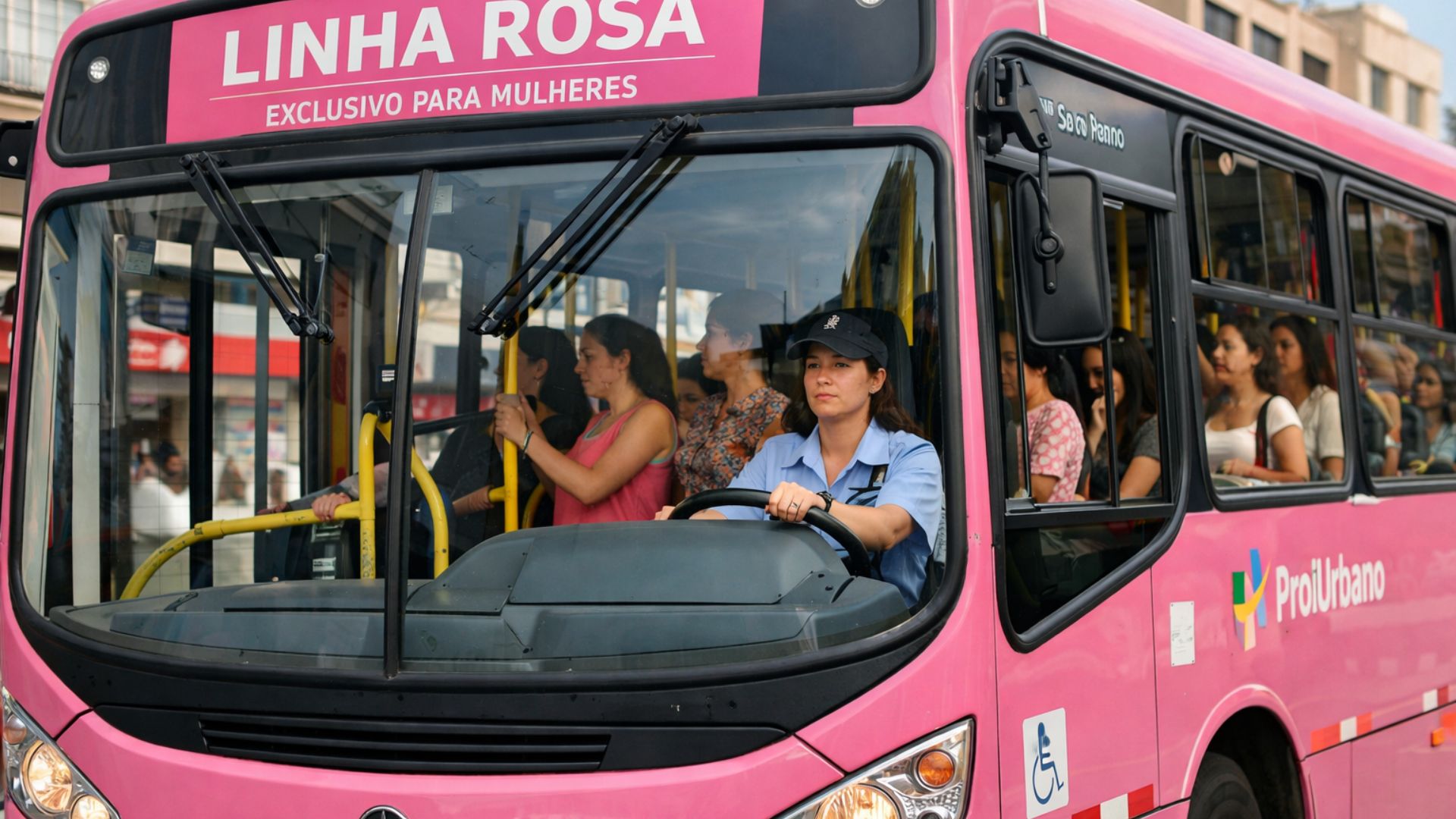


Measure Approved By A Large Majority In The Ribeirão Preto City Council Creates The Called Pink Line, With Operation During Peak Hours And Specific Identification On Vehicles, Within A System That Transports About 150 Thousand Passengers Daily.
The Ribeirão Preto City Council Approved, On February 11, A Project That Creates Exclusive Buses For Women In The City’s Public Transportation, A Measure Named “Pink Line” And Approved By 19 Votes To 2, With Operations Expected During Peak Hours.
According To The Voted Text, The Proposal Determines That These Vehicles Circulate, Preferably, During The Peaks Of Morning And Late Afternoon, From 6 AM To 9 AM And From 5 PM To 8 PM, Monday Through Friday, Using Existing Routes In The Municipal Network.
The Measure Has The Declared Purpose Of Reducing Instances Of Harassment And Sexual Disturbance, In Addition To Seeking Greater Safety In The Daily Commute Of Female Passengers By Reserving Part Of The System’s Capacity For A Specific Audience During Times Of Higher Demand.
-
Friends have been building a small “town” for 30 years to grow old together, with compact houses, a common area, nature surrounding it, and a collective life project designed for friendship, coexistence, and simplicity.

-
This small town in Germany created its own currency 24 years ago, today it circulates millions per year, is accepted in over 300 stores, and the German government allowed all of this to happen under one condition.

-
Curitiba is shrinking and is expected to lose 97,000 residents by 2050, while inland cities in Paraná such as Sarandi, Araucária, and Toledo are experiencing accelerated growth that is changing the entire state’s map.

-
Tourists were poisoned on Everest in a million-dollar fraud scheme involving helicopters that diverted over $19 million and shocked international authorities.


How The Pink Line Will Work In Public Transport
The Approval Occurred In The Legislative Plenary And, According To Records Released By The City Council Itself, The Project Is Bill No. 443/2025, Authored By Councilman Diácono Ramos (União), With The Formal Creation Of The “Pink Line” Within The Municipal Bus System.
In Practice, The Text Establishes That The Exclusivity Does Not Depend On New Itineraries, As The Operation Should Take Advantage Of Existing Lines, Changing The Supply Of Vehicles At Certain Times, Without Detailing, At Least In The Institutional Disclosure, Which Routes Would Be Prioritized.

In Addition To The Restriction To Female Passengers, The Proposal Provides That The Buses Receive Mandatory Visual Identification In Pink, With Clear Signage About The Exclusivity, To Reduce Confusion Upon Boarding And Guide Female Users And Other Passengers At The Stops.
Another Approved Guideline Is The Prioritization, Whenever Possible, Of Female Drivers In The Operation Of The “Pink Line” Vehicles, A Point Presented As Part Of A Gender Policy In Mobility, Although The Text Mentions Preference, Not An Absolute Obligation.
System Serves 150 Thousand Passengers Per Day
Despite The Approval By Council Members, The Proposal Still Needs To Move Forward In Subsequent Stages To Become An Effective Rule, As The Process Depends On The Sanction By Mayor Ricardo Silva (PSD) To Come Into Effect.
Even With Indicated Operating Hours And The Determination For Pink Identification, The Disclosures Reviewed So Far Do Not Present A Deployment Timeline, The Number Of Buses Reserved For The Service, Or Monitoring Mechanisms Upon Boarding, Points That Are Likely To Influence The Execution.
It Similarly Does Not Appear, In The Public Notes Accessed, How The Situation Of Overcrowded Lines Or Terminals With High Traffic Would Be Handled, Nor What Operational Measures Would Avoid Conflicts At The Time Of Boarding, As The Rule Establishes Exclusivity, But Does Not Detail Routines.
The Municipal Public Transport In The City Is Operated By The PróUrbano Consortium, Formed By The Companies Rápido D’Oeste And Transcorp, According To Institutional Information From The System Itself, Which Describes The Composition Of The Consortium Responsible For Urban Service.
In Figures Released In Local Reports About The Network, The System Serves About 150 Thousand Passengers Per Day, With 362 Vehicles Distributed Over 119 Lines, Which Helps To Gauge The Potential Impact Of Reserving Part Of The Fleet For Exclusive Operation During Peak Hours.
In This Scenario, The Creation Of An Exclusive Line During Peak Times Tends To Concentrate The Implementation Of The Measure Precisely During The Periods When Demand Increases And The Competition For Space Grows, Although There Is Still No Public Indication Of How Many Vehicles Would Be Designated.
Declared Goal Is To Reinforce Passenger Safety
The Central Justification Recorded In The Institutional Disclosure Of The Legislative Body Points To The Intention To Ensure Comfort, Dignity, And Safety For Users, Focusing On Preventing Distress And Violence In Public Transport, A Topic That Recurs In Urban Debates.
By Operating During Peak Flow Times, The Project Aims To Target Precisely Those Periods When Overcrowding Is Greatest And, Consequently, When Female Passengers Report Greater Vulnerability To Harassment Situations, According To The Objective Described In The Official Material.
Still, Effectiveness Often Depends On Clear Rules And Consistent Execution, Because A Measure Of This Kind Requires Direct Communication At The Stops, Adjustments In Supply, And Integration With Daily Operations, Elements That Are Not Detailed In The Reviewed Publications.
With The Approval, The Debate Shifts To How The City Hall And The System’s Operation Will Transform The Guideline Into Routine, Defining Criteria For Vehicle Allocation, Training, Signage, And Guidance To The Public To Avoid Confusion And Unintentional Non-compliance.
If The “Pink Line” Is Implemented As Planned, Ribeirão Preto Will Have A Service With Specific Identification And Public Restriction On Buses, Maintaining Existing Routes, But Altering The Boarding Dynamics During Times Of Higher Demand In The Municipal Network.









Acho que deveria existir isso em todo lugar ,que nem trem e metrô são 8 vagões coloca entrada nas estações lado mulheres e lado homens seguranças para monitoramento 4 vagões para homens 4 vagões para mulheres.
Ônibus em São Paulo 1 para homens um para mulheres mas tudo questão de ser estudado.
Porém tem que ser um atrás do outro.
Para não ficar desigual.
Quando sair em família é só ir separados isso será benéfico até para as crianças.
que população mais idiotizada, por que ao invés de estarem brigando por político não se juntam e incideiam e apredejam esses onibus dando prejuízo a prefeitura e as empresas
Ué, quando a Damaris disse que Rosa é de menina e Azul era de menino, desceram o **** nela….e agora pintar de rosa ???? Quanta hipocrisia… Rosa sempre foi de mulher ( outubro rosa ) …etc