





 Portuguese
  English
  Spanish
  4 min of reading
  0 comments


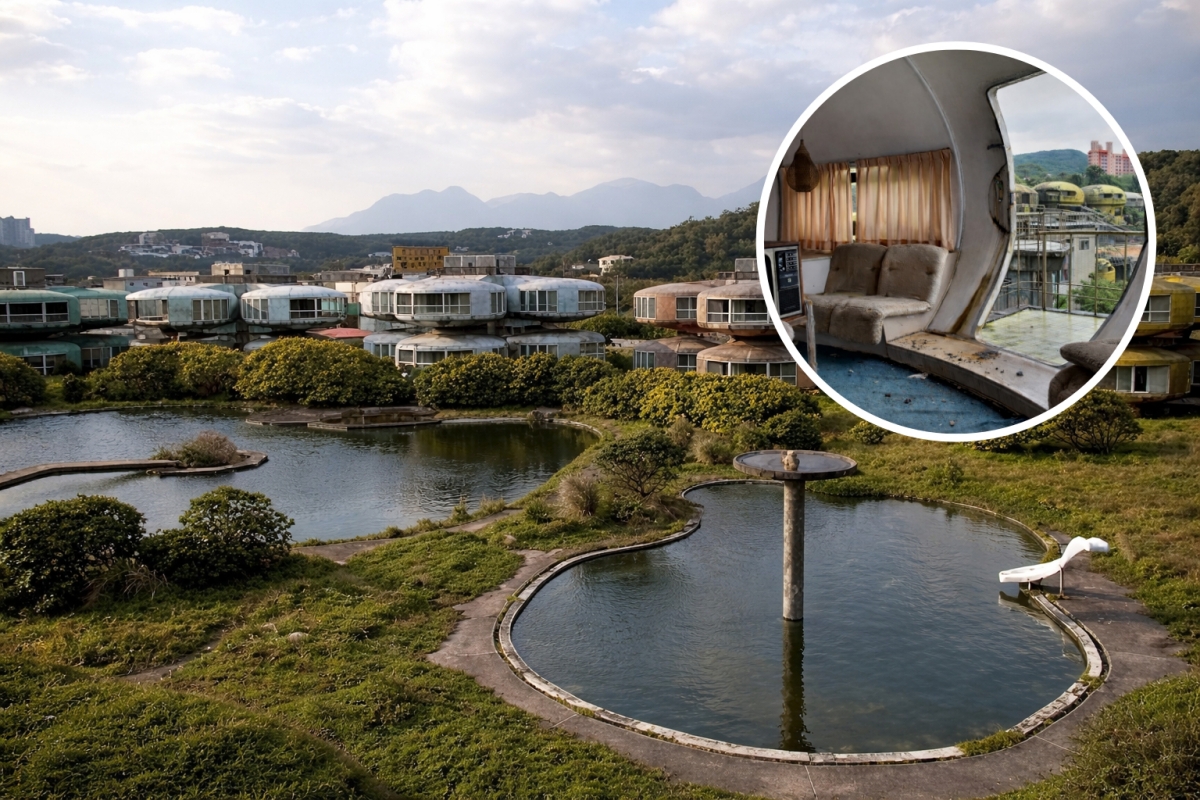
Inspired by Spaceships and Designed as a Futuristic Tourist City, the UFO Houses, a Megastructure in the Shape of a Flying Saucer, Emerged in the 1970s with Industrial and Real Estate Ambition, But the Unfinished Project Turned into One of the Greatest Mysteries of Contemporary Engineering
Have you ever imagined arriving at the coastline and finding a megastructure that looks like it landed straight out of a science fiction movie, in the shape of a flying saucer? This is not a cinematic backdrop. It was a real project. The so-called UFO Houses in Taiwan emerged in the 1970s with a bold proposal. To create a futuristic resort that would put the region on the map of Asian architectural innovation.
What was supposed to be a technological showcase ended up interrupted. And what remained turned into urban legend.
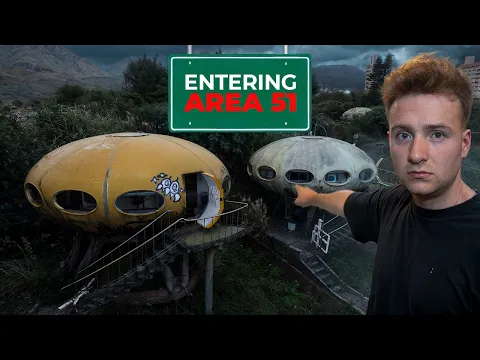

The Futuristic Megaproject that Wanted to Transform Tourism into a Showcase of Industrial Innovation in Asia
In the 1970s, the world was breathing space race, technological advancement, and industrial optimism. Architecture rode that wave.
-
Friends have been building a small “town” for 30 years to grow old together, with compact houses, a common area, nature surrounding it, and a collective life project designed for friendship, coexistence, and simplicity.

-
This small town in Germany created its own currency 24 years ago, today it circulates millions per year, is accepted in over 300 stores, and the German government allowed all of this to happen under one condition.

-
Curitiba is shrinking and is expected to lose 97,000 residents by 2050, while inland cities in Paraná such as Sarandi, Araucária, and Toledo are experiencing accelerated growth that is changing the entire state’s map.

-
Tourists were poisoned on Everest in a million-dollar fraud scheme involving helicopters that diverted over $19 million and shocked international authorities.

The UFO Houses were born in this context. The plan was to erect a tourist complex with buildings inspired by flying saucers, something completely outside the traditional standards of construction at the time.
It wasn’t just aesthetics. It was strategy.
A resort with a futuristic look had the potential to attract investors, tourists, and position Taiwan as a symbol of technological modernity. The idea resonated with the industrial spirit of that period when innovation meant economic status.
But visionary projects come at a high price.
Bold Engineering, Out-of-the-Box Design, and the Technical Challenge of Erecting Spaceship-Shaped Houses
Building circular structures, resembling space capsules, was not trivial in the 1970s. Civil engineering predominantly operated with straight lines and conventional patterns.
The houses required unique molds, specific structural solutions, and material adaptations to support an uncommon design.
According to specialists, projects with non-traditional geometries raise costs, increase risks, and demand meticulous planning. When any step goes off track, the financial impact escalates quickly.
What seemed like a bet on innovation began to reveal typical weaknesses of experimental ventures.
And the market usually doesn’t have patience for delays.
The Abandonment that Transformed a Technological Dream into a Symbol of Real Estate Risk

The project was never completed. The structures remained unfinished.
With no completion, no operation, and no financial return, what was supposed to be a tourist hub turned into a ghost town. A brutal contrast between ambition and reality.
There is no official number disclosed regarding the total financial impact of the venture. Estimates indicate that interrupted projects of this nature tend to generate significant losses for both investors and the construction supply chain.
Contractors, material suppliers, and investors feel the domino effect when a complex of this magnitude halts mid-way.
The story of the UFO Houses became a silent warning about the risks of betting too high without margin for error.
From Futuristic Bet to Urban Legend of World Architecture

Over time, the structures gained a different status. No longer as a resort, but as a cultural icon.
The spaceship-like appearance, which once represented industrial progress, became a symbol of an experiment that did not sustain itself economically.
Photographers, curious individuals, and architecture enthusiasts began to see there a frozen portrait of the 1970s. A period marked by technological boldness and almost limitless faith in engineering.
Today, the UFO Houses are remembered as one of the most curious projects in modern architectural history. An example of how innovation without financial backing can spiral out of control.
What the Case Reveals About Visionary Megaprojects in Today’s Civil Construction
The story echoes to this day in the engineering and real estate markets.
High-visual-impact projects continue to be launched around the world. But investors and builders have learned to require feasibility studies, risk analysis, and robust planning before putting ideas into action.
The tension between architectural creativity and economic sustainability remains alive. Those who bet on innovation need to balance bold design with solid technical execution.
The UFO Houses left a clear legacy. The future is enticing. But it needs to close the budget.
The case drew attention because it combines everything that sparks curiosity: industrial ambition, futuristic aesthetics, and an unexpected outcome. It is proof that, in engineering and real estate, vision without structure can be costly.
And you, would you have invested in or visited a resort with houses in the shape of flying saucers in the 1970s? Leave your opinion in the comments.










Seja o primeiro a reagir!