





 Portuguese
  English
  Spanish
  4 min of reading
  0 comments


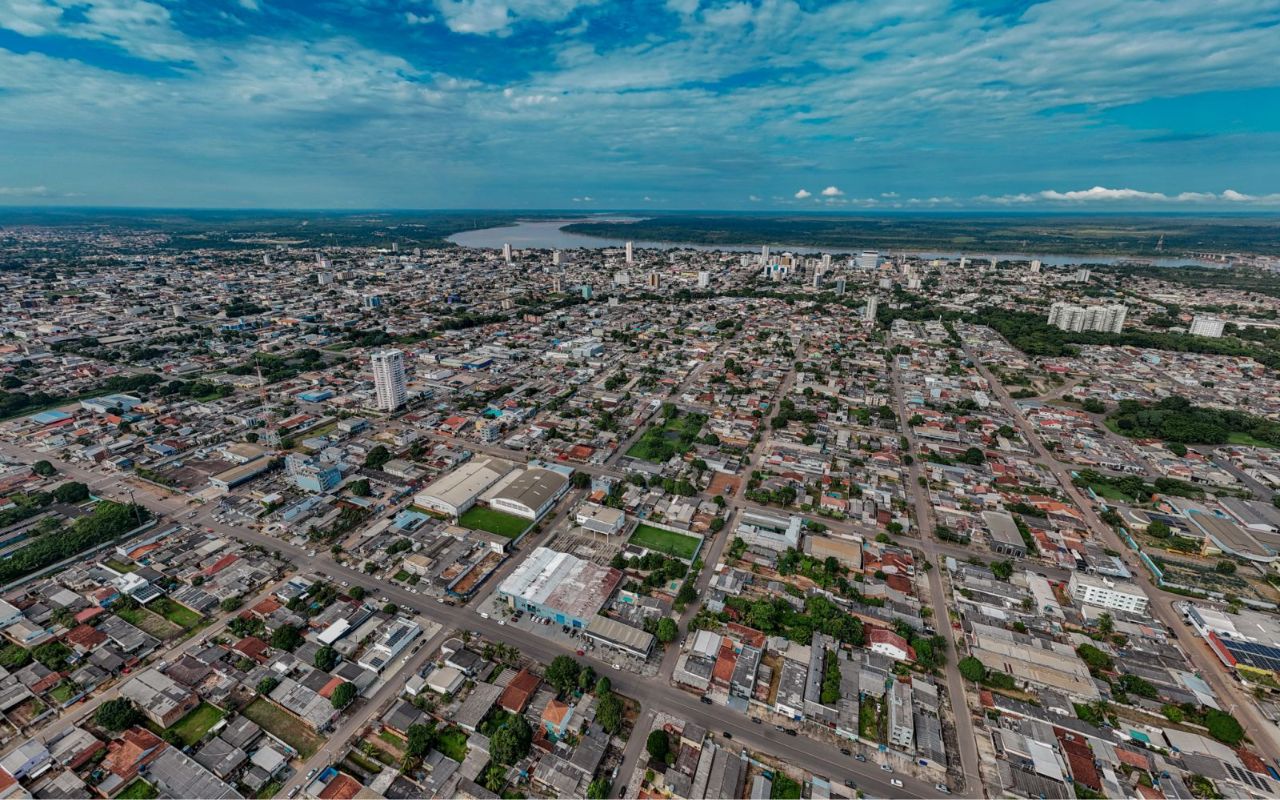
Most Polluted Brazilian City, Porto Velho Registers Levels Six Times Above WHO Limit; Wildfires and Health Concerns.
The most polluted Brazilian city is Porto Velho, the capital of Rondônia. This information is part of an international survey by IQAir in 2024, released based on consolidated data that analyzed air quality in thousands of cities around the world.
The study reveals that the capital of Rondônia recorded an annual average of 29.5 micrograms per cubic meter (µg/m³) of PM2.5 particles, an index nearly six times higher than the safe limit set by the World Health Organization (WHO), which is 5 µg/m³.
The report outlines what happened, who was affected, where the situation is most severe, when pollution levels intensify, how pollutants spread, and why Porto Velho holds this alarming position.
-
Friends have been building a small “town” for 30 years to grow old together, with compact houses, a common area, nature surrounding it, and a collective life project designed for friendship, coexistence, and simplicity.

-
This small town in Germany created its own currency 24 years ago, today it circulates millions per year, is accepted in over 300 stores, and the German government allowed all of this to happen under one condition.

-
Curitiba is shrinking and is expected to lose 97,000 residents by 2050, while inland cities in Paraná such as Sarandi, Araucária, and Toledo are experiencing accelerated growth that is changing the entire state’s map.

-
Tourists were poisoned on Everest in a million-dollar fraud scheme involving helicopters that diverted over $19 million and shocked international authorities.


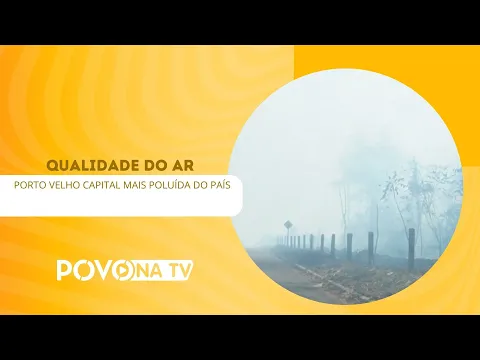
Experts indicate that the increase in wildfires in the Amazon, especially during the dry season, is the main factor behind the deterioration of air quality in the region.
Most Polluted Brazilian City: PM2.5 Particles Raise Health Risks for the Population
The pollutant that places Porto Velho as the most polluted Brazilian city is fine particulate matter known as PM2.5.
These particles are considered highly harmful because they can penetrate deep into the lungs and enter the bloodstream.
Prolonged exposure is associated with an increase in respiratory diseases, allergies, hospitalizations, and cardiovascular complications.
Children, the elderly, and individuals with pre-existing conditions form the most vulnerable group.
Doctors and researchers warn that frequent episodes of dense smoke can have lasting impacts on public health, especially when there are no periods for air recovery.
Wildfires and Dry Weather Intensify Pollution
During the dry season in the Amazon, the combination of dry weather, wildfires, and regional winds creates a critical scenario.
The smoke spreads easily and can linger over Porto Velho for several consecutive days, forming a thick layer of soot that reduces visibility and worsens respiratory issues.

In addition to wildfires, emissions from vehicle traffic and certain industrial activities also contribute to increased air pollution.
This combination of factors reinforces the capital’s position as the most polluted Brazilian city in the national ranking.
Geography and Infrastructure Increase Vulnerability
Located in the far north of Brazil, Porto Velho has one of the largest municipal territorial extents in the country, covering about 34,000 square kilometers.
The city has an estimated population of approximately 460,000 inhabitants, distributed across an urban area surrounded by vast rural and forest regions.
This territorial characteristic facilitates the dispersion of smoke from fires in neighboring areas, quickly reaching populated regions.
Despite having the highest Gross Domestic Product in Rondônia and a strategic role in the regional economy, the capital faces historical barriers in infrastructure, particularly in basic sanitation.
Unequal access to treated water and sewage systems exacerbates an already pressured context due to air pollution.
Most Polluted Brazilian City: National Ranking and Concerning Global Scenario
The IQAir survey analyzed over 8,900 locations in 138 countries. Only 17% of the evaluated cities fell within the parameters considered safe by the WHO.
In Brazil, the states of Acre and Rondônia have the worst averages, strongly influenced by wildfires in the Amazon.
After Porto Velho, Sena Madureira appears with an average of 27.3 µg/m³, and Rio Branco with 23.6 µg/m³, both in Acre.
Among the most affected cities in São Paulo are Osasco (22.1 µg/m³), Rio Claro (20.8 µg/m³), Ribeirão Preto (19.9 µg/m³), and Carapicuíba (19.4 µg/m³).
The ranking also includes Xapuri (19.1 µg/m³), Manoel Urbano, and Santa Rosa do Purus, both with 18.7 µg/m³.
On the international scene, only seven countries — including Australia, Iceland, and New Zealand — managed to maintain averages at the limit of 5 µg/m³.
Mayaguez, in Puerto Rico, was classified as the least polluted city in the world, with only 1.1 µg/m³.
According to Frank Hammes, CEO of IQAir, constant air quality monitoring is essential.
He stated that air pollution poses a direct threat to health and the environment, making the adoption of effective policies essential to protect future generations.

Source: Diário do Litoral










-

Uma pessoa reagiu a isso.