





 Portuguese
  English
  Spanish
  4 min of reading
  0 comments


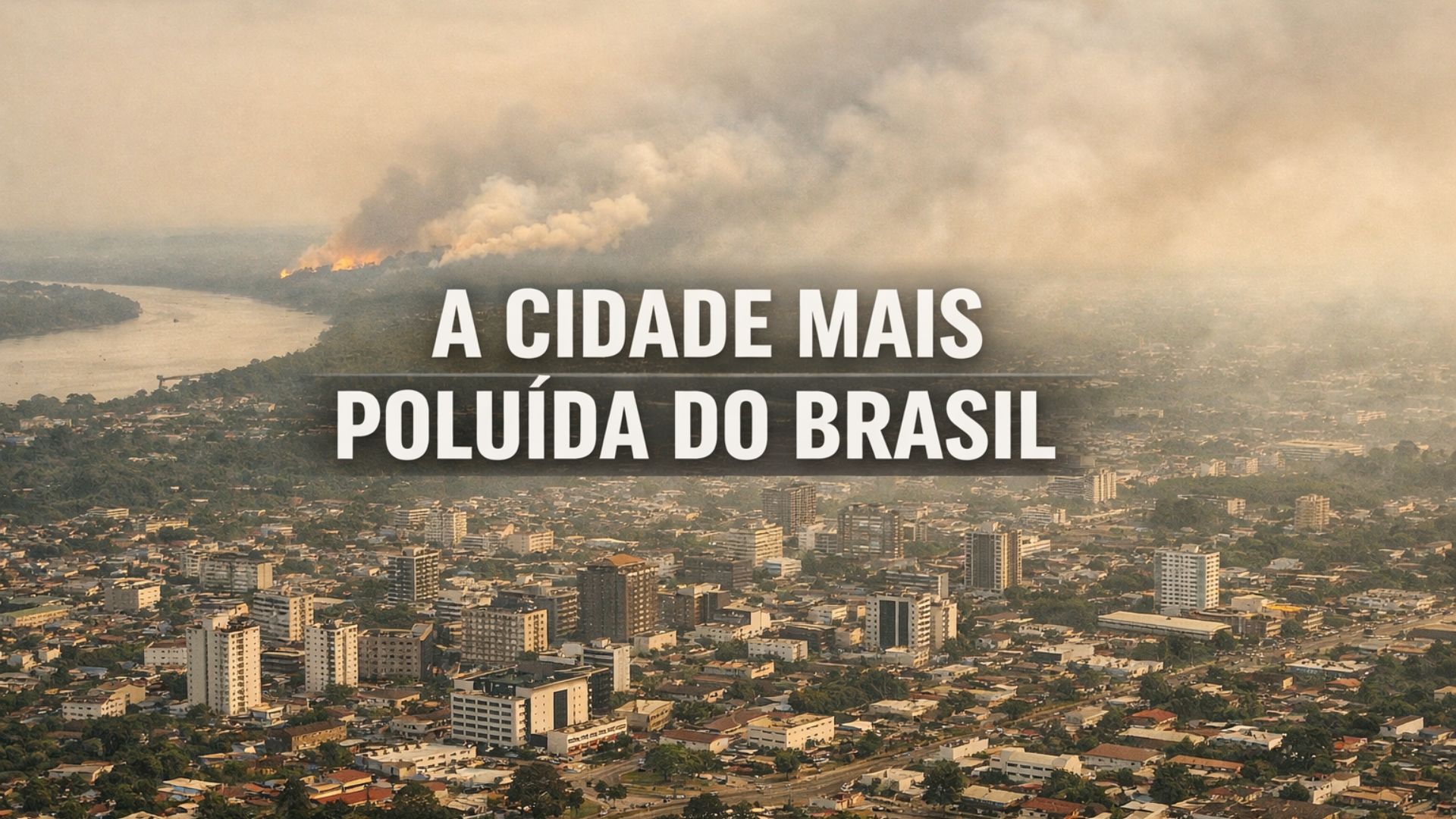
The Capital of the Amazon Leads the National Air Pollution Ranking in 2024, with Levels Well Above Those Recommended by WHO and Direct Impact from Forest Fires Intensifying During the Dry Season, Aggravating Public Health Risks.
The capital of Rondônia tops a concerning air quality ranking in the country.
According to a report released by IQAir based on consolidated data from 2024, Porto Velho recorded an annual average of 29.5 micrograms per cubic meter (µg/m³) of PM2.5, the highest level among Brazilian cities monitored by the company during this period.
This value is almost six times higher than the safe limit set by the World Health Organization, which recommends a maximum annual concentration of 5 µg/m³ for this type of pollutant.
-
Friends have been building a small “town” for 30 years to grow old together, with compact houses, a common area, nature surrounding it, and a collective life project designed for friendship, coexistence, and simplicity.

-
This small town in Germany created its own currency 24 years ago, today it circulates millions per year, is accepted in over 300 stores, and the German government allowed all of this to happen under one condition.

-
Curitiba is shrinking and is expected to lose 97,000 residents by 2050, while inland cities in Paraná such as Sarandi, Araucária, and Toledo are experiencing accelerated growth that is changing the entire state’s map.

-
Tourists were poisoned on Everest in a million-dollar fraud scheme involving helicopters that diverted over $19 million and shocked international authorities.


This comparison places the Rondônia capital in a more critical situation than large urban centers like São Paulo, historically associated with high levels of pollution.
PM2.5 and the Health Risks of Air Pollution
PM2.5, the acronym for fine particulate matter with a diameter of less than 2.5 micrometers, is identified by experts as one of the most harmful atmospheric pollutants to health.
Due to its extremely small size, it can penetrate deep into the lungs and enter the bloodstream, increasing the risk of respiratory and cardiovascular diseases.

Prolonged exposure to high levels of this pollutant is associated with an increase in cases of asthma, bronchitis, and respiratory infections.
There are also reports of worsening cardiovascular diseases, especially in people with pre-existing conditions.
Children, the elderly, and individuals with chronic illnesses are among the groups most vulnerable to the effects of poor air quality.
During periods of intense smoke, health units often report an increase in visits related to respiratory symptoms.
Persistent cough, eye irritation, shortness of breath, and allergic reactions become common complaints during these critical times.
Fires in the Amazon Drive Deterioration of Air Quality
The rise in fires in the Amazon appears to be the main factor in the deterioration of air quality in Porto Velho throughout 2024.
During the dry season, which tends to intensify between June and October, smoke produced by forest fires spreads easily and lingers over the city for consecutive days.
Under these conditions, the combination of dry weather, active fire spots, and regional wind patterns forms a dense layer of pollutants over the urban perimeter.
The result is reduced visibility, increased concentration of soot in the air, and worsening environmental indicators.

In addition to fires in forest and pasture areas, urban sources also contribute to the scenario.
Vehicle emissions and certain industrial activities increase the pollutant load, especially during periods of greater atmospheric stability, when there is less dispersion.
Environmental reports indicate that critical smoke episodes have become more frequent in recent years in the North region.
Although the intensity varies from year to year, the recurrence of fires reinforces the structural impact of this phenomenon on public health.
Territorial Extension Increases Environmental Vulnerability
With about 34,000 square kilometers of territorial extension, Porto Velho is among the largest municipalities in Brazil by area.
The estimated population is around 460,000 inhabitants, concentrated mainly in the urban area, surrounded by vast rural and forest areas.
This geographical configuration directly influences the dynamics of atmospheric pollution.
The proximity to vegetation areas subject to fires facilitates the movement of smoke to inhabited regions.
During critical periods, entire neighborhoods remain shrouded in haze for several consecutive days.
Although the population density is relatively low compared to Southeast capitals, exposure to pollutants does not solely depend on the number of inhabitants.
The strategic location in the so-called deforestation arc places the city in a sensitive position concerning environmental transformations in the Amazon.
Regional Economy and Urban Infrastructure Challenges

Porto Velho concentrates the highest Gross Domestic Product of Rondônia and plays a strategic role in the regional economy.
Sectors such as energy, commerce, and services drive local economic activity and increase the capital’s relevance in the state scenario.
On the other hand, the city faces historical obstacles in basic infrastructure, particularly in sanitation.
Unequal access to treated water and sewage networks aggravates social and sanitary vulnerabilities in different neighborhoods.
In an environment where environmental and structural factors overlap, the population becomes exposed to multiple risks.
Public health experts warn that the combination of air pollution and sanitation deficiencies can amplify negative impacts, especially in communities with less access to essential services.
The IQAir survey uses data collected from monitoring stations and sensors distributed across different cities, allowing the consolidation of comparable annual averages.
In the case of Porto Velho, the index of 29.5 µg/m³ in 2024 highlights the population’s prolonged exposure to elevated pollution levels, above internationally recommended parameters.
Reducing these indicators depends on measures involving fire control, environmental enforcement, and public policies aimed at preventing forest fires.
In the meantime, residents live through recurring smoke episodes during the dry season, in a scenario that combines environmental pressure and ongoing structural challenges.









-

Uma pessoa reagiu a isso.