





 Português
  Inglês
  Espanhol
  4 min de leitura
  0 comentários


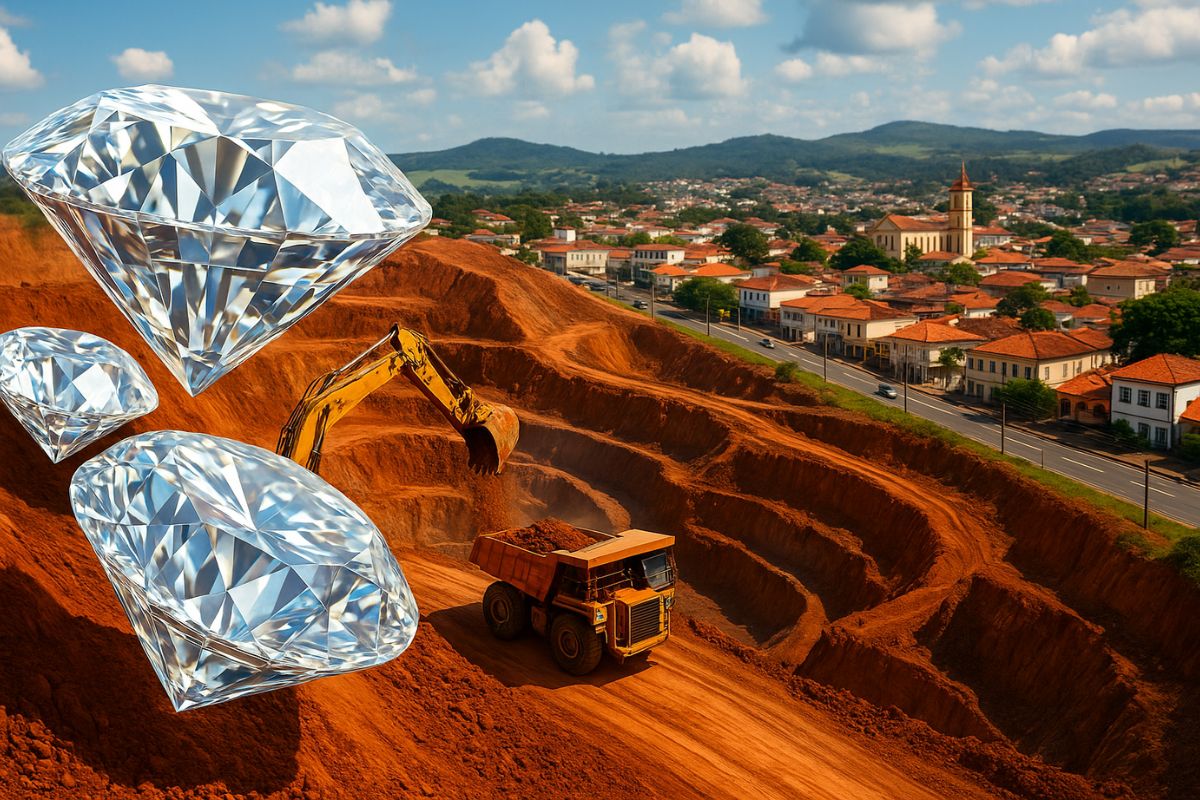
With the Discovery of the Largest Precious Stones in the Country and a GDP Higher Than the Capital’s, Coromandel Establishes Itself as a World Reference in Mining and a Symbol of Prosperity in the Interior of Minas Gerais.
According to the portal Gazeta do Povo, about 500 kilometers away from Belo Horizonte, the city of Coromandel (MG), in Alto Paranaíba, has become synonymous with mineral wealth and international prominence. It was there that the three largest diamonds in Brazil were found, responsible for putting the municipality on the global mining map and for boosting an economy that today boasts per capita GDP higher than that of the state capital.
The first and most famous, the “Getúlio Vargas”, weighing 727 carats, was found in 1938. The following year, the “Darcy Vargas” came, weighing 460 carats. And, in May 2025, Coromandel made headlines worldwide with the discovery of a stone weighing 646.78 carats, valued at R$ 16 million, on the banks of the Rio Douradinho.
A Soil That Holds Treasures for Millions of Years
Geologist Daniel Fernandes explains that the formation of diamonds in Coromandel has two distinct origins.
-
Drought may be creating stronger superbugs in the soil and helping antibiotic resistance reach hospitals, warns a study highlighting a problem that could grow alongside extreme weather.

-
The biggest scam in history: Napoleon’s France deceived the United States by selling them a territory that was Spanish.

-
Why is the Danakil Desert so dangerous? It has unstable terrain and how extreme temperatures and toxic gases turn the region into one of the most hostile environments on Earth.

-
With a height of 221 meters and a capacity for trillions of liters, Hoover Dam still holds a trick that makes water defy logic.


The primary origin is linked to the earth’s mantle, where crystals form under high pressure and temperature before being brought to the surface by what are known as kimberlite rocks. The secondary origin occurs when time, erosion, and the action of water move these stones from their original deposits, making them harder to locate.
“These rocks break apart and release diamonds over the centuries.
It is a rare and complex geological process,” explains Fernandes. According to him, hundreds of kimberlites make up the subsoil of Coromandel, justifying the abundance of the stones and the nickname the city proudly carries: ‘capital of diamonds’.
Panning Tradition and Diamond Culture
In Coromandel, diamonds are not just a natural resource; they are part of the cultural identity.
Small precious stones circulate in the hands of locals, often kept as family mementos or symbols of belonging.
“The most impressive thing is that mining is part of the social routine of the city,” says Fernandes.
“On a regular afternoon, it is possible to see miners showing small gems in the squares and local shops.
There is a natural coexistence between the population and the mining activity.”
Tourism is also starting to expand on this tradition. Experiences such as visits to mining sites, artisan cutting workshops, and educational tours on geology have attracted visitors interested in learning about the history of the stones that changed the region’s economy.
GDP Above the Capital and Sustainable Growth
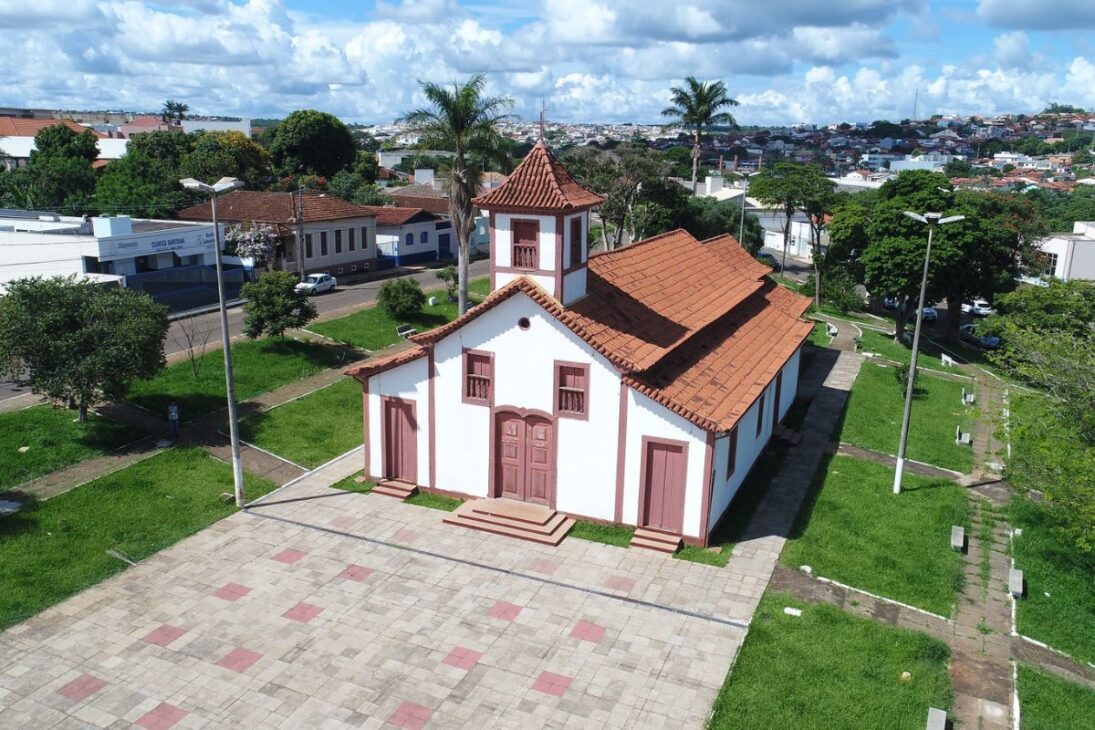
The numbers confirm the economic impact of mining. The per capita GDP of Coromandel is R$ 54,911, a value higher than that of Belo Horizonte, which records R$ 41,818.32.
The local income has diversified: mining impacts accommodation, fuel, food, and technical services, generating direct and indirect jobs that strengthen the city’s commerce.
For Mayor Fernando Breno (PRD), the regulated mining model is what ensures the balance between development and safety.
“Mining is the backbone of Coromandel’s economy, but we operate responsibly. Safety and legality are non-negotiable,” he stated.
Monitoring and Legality Under the Supervision of ANM
The National Mining Agency (ANM) monitors diamond extraction in the municipality every six months, in partnership with local cooperatives.
Among them, the Coopemg (Cooperative of Small and Medium Miners) stands out, which operates under regularized mining permission.
All processes follow strict protocols: the official record of the find, the gemological analysis, the issuance of the Kimberley Certificate, an international document that proves the legal origin of the stone, and the authorization for sale or export.
According to Denize Fernandes, president of Coopemg, the impact of mining goes beyond the economy.
“Diamond mining generates jobs, stimulates trade, and keeps entire families in the countryside. For many, it is the main source of livelihood and dignity,” she explains.
Exemplary Safety and Vigilant Community
Even with the circulation of wealth, Coromandel stands out for its low crime rate.
In 2024, the Civil Police registered only three robberies in the entire municipality, with no occurrences of homicides, kidnappings, or extortions.
According to the mayor, the success is due to community monitoring and restricted access to mining areas.
“There is an informal protection system: the residents know each other and recognize who is from the city. Strangers attempting to operate illegally are quickly identified,” explains Breno.
A Model That Combines Tradition, Wealth, and Control
Today, Coromandel establishes itself as an example of balance between natural wealth and social responsibility.
The city has managed to preserve the panning tradition without compromising legality and transparency. Moreover, it maintains levels of development and safety that rival major urban centers.
And you, do you believe that mineral wealth should continue to be explored in Coromandel? Do you think that the regulated mining model is the ideal path for Brazil? Leave your opinion in the comments — we want to hear from those who live or closely follow this mineral reality.








-

-

-

-

-

-

68 pessoas reagiram a isso.