





 Portuguese
  English
  Spanish
  3 min of reading
  0 comments


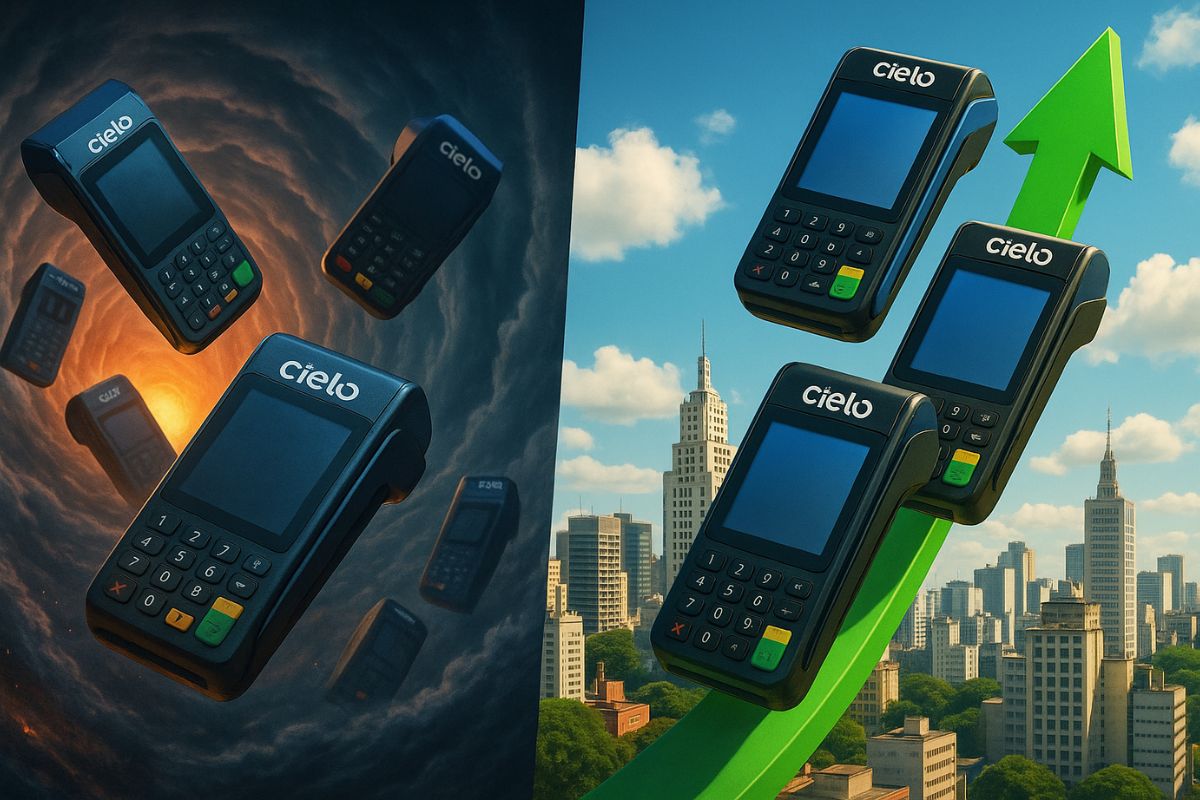
How Did Cielo Lose Ground in the Payment Machine War? Intense Competition, Regulatory Changes, and New Technologies Challenged the Company’s Historic Leadership
For years, paying by card in Brazil was almost synonymous with using a Cielo payment machine. The company controlled more than half of the country’s transactions, sustaining robust margins in a practically closed market.
But the arrival of new competitors, the regulation from the Central Bank, and the rise of Pix changed the game. Today, Cielo struggles to remain competitive in a scenario where payment machines are merely the entry point to much broader financial ecosystems.
The Reign That Seemed Unshakeable
Cielo’s journey began as Visanet, focused exclusively on Visa transactions. On the other side, RedeCard, linked to Mastercard, served the rest of the market. This division forced merchants to maintain two payment machines, creating a duopoly that guaranteed high revenues and stability for both groups.
-
Brazil produces too much clean energy and doesn’t know what to do with it: over 20% of solar and wind capacity was wasted in 2025 while investors flee and 509 renewable generation projects were abandoned in the last year.

-
Piauí will produce a new fuel that replaces diesel without needing to change anything in the truck’s engine and reduces pollutant gas emissions by half: truck drivers from all over the Northeast are already celebrating the news that will arrive later this decade.

-
A new Brazilian shopping center worth R$ 400 million will be built in an area equivalent to more than 4 football fields, featuring 90 stores, 5 cinemas, a supermarket, a college, and parking for 1,700 cars, potentially generating 3,000 jobs.

-
Larger than entire cities in Brazil: BYD is building a 4.6 km² complex in Bahia with a capacity for 600,000 vehicles per year, but the discovery of 163 workers in conditions analogous to slavery has shaken the entire project.


The model generated profits not only from transaction fees but also from equipment rentals, maintenance, receivable advances, and agreements with issuers and networks. This combination made Cielo a giant that was difficult to challenge—until the regulation changed.
The Central Bank Dismantles the Duopoly
Starting in 2010, the Central Bank and CADE determined the end of exclusivity among networks. Cielo began accepting Mastercard, and RedeCard (now Rede) started processing Visa transactions. The aim was to open the market, increase competition, and reduce costs for retailers.
The effect was swift: Stone, PagSeguro, Getnet, SafraPay, and Mercado Pago entered the market offering cheaper payment machines, without rental fees and integrated into modern apps. Thus, the so-called “payment machine war” was born, which lowered margins and expanded access to cards for freelancers and small merchants.
Pix and Receivables Registrars Change the Profit Source
In 2021, a new regulatory change removed control over receivable advances from acquirers. Any retailer could now advance their sales with any financial institution, increasing competition in this segment.
Alongside this, Pix gained massive adoption since 2020, reducing debit use and directly impacting the revenue of payment companies. Profit no longer relied on capturing transactions and instead depended on those offering complete packages with digital accounts, credit, investments, and loyalty programs.
Corporate Structure and Loss of Agility
Despite all the challenges, Cielo is still one of the largest in the country, with about 20% of the market, behind Rede, which leads with 22%. However, its control structure limits agility: the company belongs to Elopar, a holding divided between Bradesco and Banco do Brasil, which also controls brands like Elo, Livelo, Alelo, and Veloe.
In practice, any strategic change requires consensus between two banks that compete directly in the market. Meanwhile, competitors like Itaú—owner of Rede—and fintechs operate in a more integrated and agile manner, quickly adapting products and prices.
The Challenge of Reinventing Itself
In 2024, Bradesco and Banco do Brasil bought the remaining shares of Cielo and closed its capital, a move similar to what Itaú and Santander had already done with their acquirers. The idea is that outside the stock exchange, it will be easier to adjust processes without the pressure from investors.
But the central question remains: is it possible to transform a robust and traditional operation into an agile machine capable of competing with fintechs and vertically integrated banks? Today, payment machines are no longer the main product but rather the entry point for complete financial services, where value lies in integration and the smart use of data.
And you, do you think Cielo still has the strength to return to leadership, or does the future of the sector belong to fintechs? Share your opinion in the comments—we want to hear from those living this competition daily.








-

Uma pessoa reagiu a isso.