





 Portuguese
  English
  Spanish
  7 min of reading
  0 comments



The German Scientist Melvin Vopson Argues That The So-Called Second Law Of Infodynamics May Provide A Physical Clue To Simulation Theory By Relating Information Compression, Reduction Of Informational Entropy, And Nature’s Preference For Symmetries As An Efficient Form Of Organization Of The Universe On A Large Scale Observable.
The German scientist Melvin Vopson has again placed simulation theory at the center of the debate by claiming he has found possible physical evidence for this hypothesis. The proposal arises from an ambitious idea. If the universe functions as a processed system, it would need to organize information efficiently, in a compressed and stable form, and this would be noticeable in the patterns observed in nature.
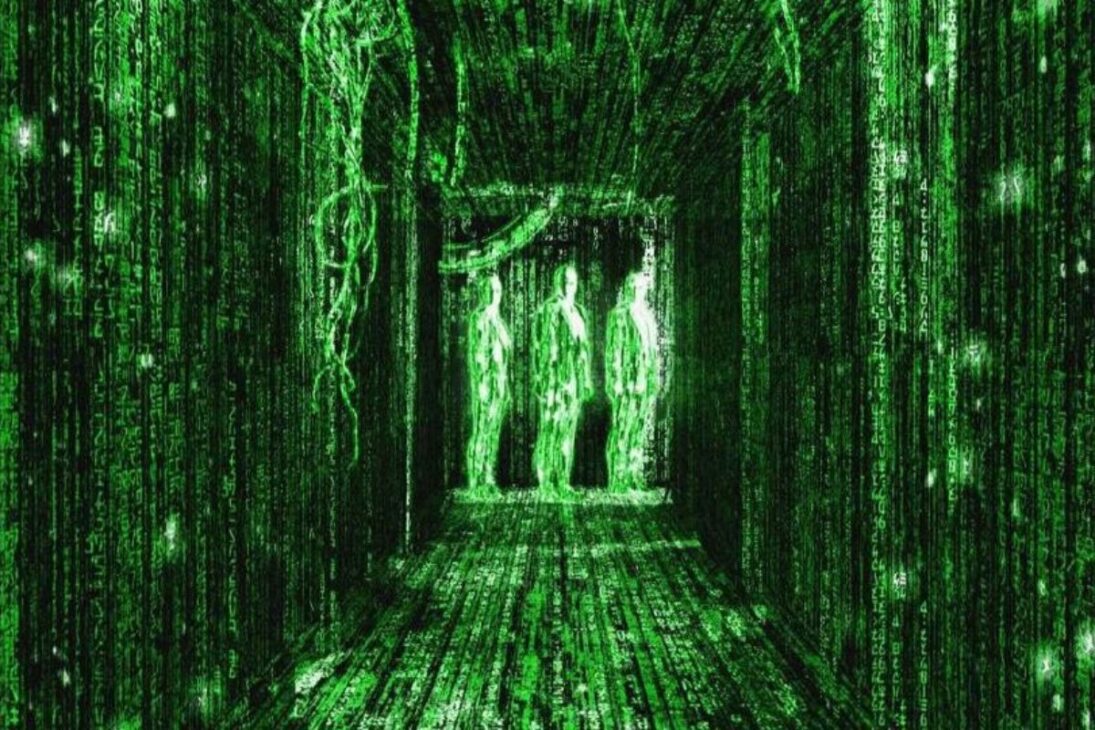
The discussion inevitably recalls the cultural impact of The Matrix, released in 1999, but the argument presented now attempts to move from the realm of fiction into that of physical formulation. The central point is not to say that the simulation has been proven, but rather to argue that certain behaviors of information and symmetry might make more sense if the universe operates as an optimized system.
What The German Scientist Is Really Proposing

The German scientist bases his reasoning on what he calls the second law of infodynamics, described as a new physical rule.
-
Scientists have found in the dark depths of the North Sea giant marks from 18,000 years ago left by colossal icebergs, and the discovery could help predict the future of Antarctica.

-
In Mexico, a 3,000-year-old Maya site with the dimensions of an entire city may have been built as a colossal map of the cosmos, created to represent the order of the universe and reveal how this people organized space, time, and rituals.

-
Japan wants to build a solar ring of 10,900 kilometers on the Moon to continuously send energy to Earth.
-
Weighing almost 1 ton, with temperatures of up to 3,000°C, the ability to launch 10,000 fragments within a radius of 1 km, capable of penetrating concrete and melting steel, Turkey’s terrifying bomb emerges as one of the most destructive non-nuclear weapons ever presented.


The formulation starts with a direct comparison to the second law of thermodynamics, according to which entropy, understood as a measure of disorder, tends to increase or remain constant in an isolated system.
In Vopson’s reading, however, information systems appear to follow an inverse behavior.
Instead of continuously increasing, informational entropy would tend to remain stable or even decrease over time, until reaching a minimum equilibrium value.
It is this inversion that sustains the entire hypothesis, as it would suggest that observable reality does not just move towards disorder, but also towards more economical forms of informational organization.
This difference is crucial because it shifts the conversation from pure philosophical wonder to an attempt at theoretical structure.
The German scientist is not just repeating the popular question of whether we live in a simulation or not.
He tries to show that there would be a physical mechanism compatible with this possibility, based on how information behaves within the universe.
By doing this, Vopson transforms a hypothesis that usually circulates in speculative language into a proposal that seeks to engage with laws, patterns, and regularities.
The leap is precisely there. The theory ceases to be merely a cultural provocation and begins to seek support in measurable behaviors of information.
Why Informational Entropy Became The Central Piece Of The Debate
The basis of the argument lies in the difference between thermodynamic entropy and informational entropy. While the former describes the tendency of a physical system towards disorder, the latter deals with organization, redundancy, and the amount of information present in a structure.
For the German scientist, this second type of entropy does not seem to evolve in the same way as matter and energy in classical systems.
According to the presented formulation, information would tend to seek stability and compression. This means that informational structures could evolve towards more economical, less redundant, and more efficient states.
If this is correct, the universe would not only be vast but also governed by a logic of optimization, something that directly engages with the idea of simulation.
This reasoning gains strength because the simulation hypothesis precisely requires this. A gigantic universe, with a huge amount of data and patterns, would not function if it operated without internal economy.
To exist as a processed system, it would need to reduce informational costs, eliminate excess, and favor more compact forms of storage.
That is why the German scientist links his law of infodynamics to simulation theory. His thesis is that a simulated cosmos would rely on data compression integrated into its very functioning, and that this compression would leave marks.
These marks would be visible in digital patterns, biological systems, mathematical symmetries, and in the broader organization of nature.
Symmetry In Nature As A Clue To Efficiency
Another important axis of the proposal lies in symmetry. Vopson argues that symmetrical forms, which are very frequent in nature, may correspond to states of lower informational entropy.
Rather than appearing merely by chance or for aesthetic stability, these structures would be an efficient solution for storing information within the system.
This reading changes the meaning of symmetry. Snowflakes, geometric patterns, and biological structures cease to be merely examples of natural order and are reinterpreted as evidence of a reality that favors more economical arrangements.
The greater the symmetry, the lower the informational cost of maintaining that pattern, and this would combine with a universe that operates through compression.
The German scientist uses this prevalence of symmetry to reinforce his hypothesis that nature prioritizes efficient organization.
This preference would not be secondary or decorative. It would be structural. In other words, the universe would tend to choose forms that require less information to exist and replicate.
This is one of the most striking parts of the thesis because it connects a highly abstract concept to concrete examples.
Symmetry ceases to be merely an observed characteristic and begins to function as an argument, as if nature reveals, in its very form, the signature of a system that needs to economize processing.
What The Hypothesis Tries To Explain And Where It Still Encounters Limits
The strength of the proposal lies in how it attempts to unify different themes. The German scientist speaks not only of physics but also of information, biology, mathematics, and the structure of the cosmos simultaneously.
The hypothesis tries to stitch these fields together through a common logic, that reality favors states of minimal informational entropy and maximum organizational efficiency.
This helps explain why the thesis attracts so much attention. It offers a broad narrative for phenomena that generally appear separated.
Data compression, biological system behavior, mathematical regularity, and natural symmetry come to be seen as manifestations of the same rule.
This is exactly the kind of ambition that makes the hypothesis both fascinating and controversial.
The limit, however, is also clear. The fact that a theory presents internal coherence does not mean that it has been proven.
The very starting point already requires caution. Vopson speaks of possible physical evidence, not definitive demonstration. This matters because the distance between an elegant explanatory proposal and robust scientific validation can be enormous.
For this reason, the formulation by the German scientist needs to be read as a high-impact hypothesis and not as a closed conclusion.
It reorganizes the conversation, proposes a path, and attempts to show that simulation theory can be discussed in physical language.
But the debate still revolves around the interpretation of this regularity, not a closed proof that we live in a simulated reality.
Why This Idea Resurfaces With Such Strength Now
The thesis draws attention because it arises at a time when information has become a dominant concept for understanding the world.
Instead of thinking of reality merely as matter, energy, and motion, there is a growing interest in models that treat information as the central element of physical structure. In this context, the argument of the German scientist gains ground because it speaks the language of the present.
There is also an important cultural factor. The simulation theory mobilizes a broad audience because it brings together science, philosophy, and imagination in a single question.
When someone tries to connect this hypothesis to observable laws and patterns, the subject moves from entertainment and regains space in more serious discussions.
This intersection between popular fascination and theoretical ambition keeps the topic alive.
By linking informational entropy, data compression, and symmetry, Vopson tries to offer a bridge between intuition and formalization.
The central idea is simple to understand, although difficult to prove. If reality seems too organized at certain levels, perhaps this organization is not merely a side effect of nature, but part of how the universe itself manages information.
In the end, that is what pushes the hypothesis forward in the debate. The German scientist does not just offer a provocation about reality. He tries to show that the very order observed in the universe may be telling us something about how this reality operates from within.
And that may be the most uncomfortable part of the discussion, because it forces us to ask whether the symmetry we admire is merely natural beauty or a vestige of a much more calculated architecture.
The proposal by Melvin Vopson does not close the debate on simulation theory, but it expands its ambition.
Instead of relying solely on philosophical reasoning, it tries to support itself in a physical law, in information behavior, and in patterns of symmetry that are already part of observable experience.
If this is a real clue that the universe operates as a simulation or just an audacious reading of known regularities, the discussion remains open.
The most important fact, for now, is that the hypothesis has begun to be presented as a physical argument and not just as a cultural metaphor.
In your view, does this idea make sense as a legitimate scientific reading or does it still belong more to the realm of speculation than evidence?









-

-

-

-

-

18 pessoas reagiram a isso.