





 Portuguese
  English
  Spanish
  4 min of reading
  0 comments


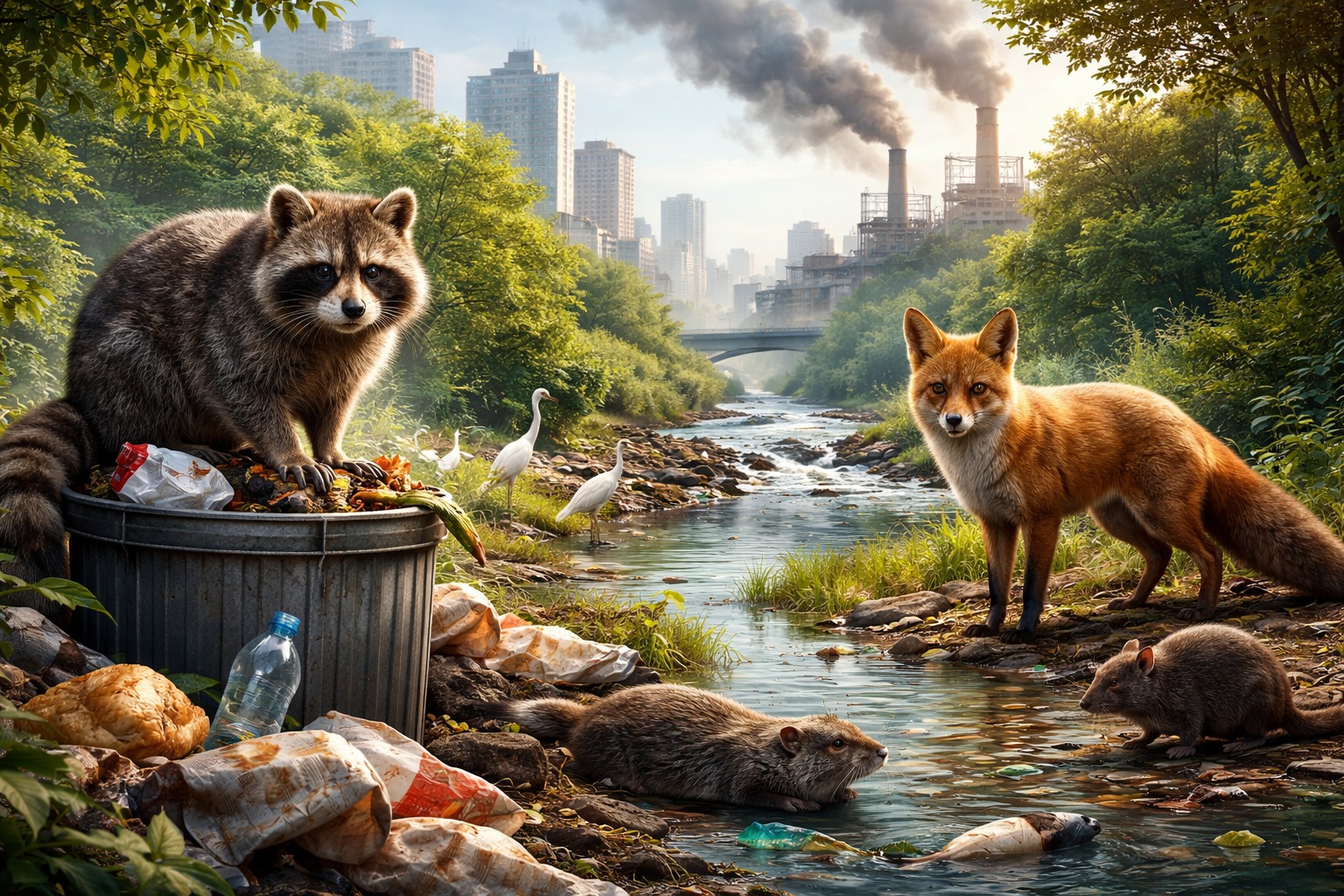
Research Shows That Human Activities Are Driving a Phenomenon Called Homogenocene, in Which Generalist Species Expand Globally While Specialized Species Disappear, Making Ecosystems From Different Regions Increasingly Similar and Reducing the Biological Diversity of the Planet
Human activities are associated with the phenomenon known as Homogenocene, a process in which highly adaptable species come to dominate various environments while specialized organisms decline, progressively changing the composition of global biodiversity.
The concept of Homogenocene describes a gradual transformation in the biological diversity of the planet. Under direct influence of human activities, ecosystems are losing highly specialized species and coming to harbor a reduced number of organisms capable of adapting to different environments.
This change alters the composition of life on a planetary scale and modifies how researchers observe ecological balance. In many territories, generalist species begin to occupy spaces previously dominated by organisms that depended on specific environmental conditions.
-
In a flooded well, archaeologists found a 1,700-year-old Roman egg that still contains clear and yolk intact inside the very thin shell.

-
Something is happening around the Earth: Inside the huge explosion of fireballs in 2026

-
A hot air bubble coming from Argentina expands over Brazil, causing thermometers to exceed 38 degrees with a thermal sensation of 40 degrees in late March, affecting 6 states at once.

-
The radish leaf that almost everyone throws away has more polyphenols, flavonoids, and fiber than the consumed root, and a 2025 study showed that the leaf contains compounds that protect the intestine, combat inflammation, and may inhibit the growth of cancer cells.


Homogenocene and the Growing Influence of Human Activities on Ecosystems
The Homogenocene corresponds to the progressive homogenization of living beings in different regions of the planet. In this scenario, highly adaptable species gain ground in various environments, often favored directly or indirectly by human activities.
These organisms are known by scientists as generalist species. They can tolerate different environmental conditions and survive in a wide variety of habitats, which facilitates their expansion in landscapes altered by human presence.
On the other hand, specialist species depend on very specific resources or habitats.
They often live in limited and highly particular areas, making them especially vulnerable to changes brought about by urbanization, intensive agriculture, and habitat destruction.
Generalist Species Expand Following Human Activities
As natural environments are transformed, some species disappear while others come to dominate different territories. This process highlights the growing influence of human activities on the reorganization of biological communities.
Pigeons, rats, and cockroaches are often cited as examples of this global expansion. These organisms thrive in urban environments and can easily spread alongside human activities and the occupation of cities.
According to an analysis published by The Guardian, some researchers use the term Homogenocene to describe precisely this process of increasing homogenization of life on the planet. The repeated presence of the same species in different regions reflects this change in ecological composition.
Disappearance of Local Species Alters Ecological Landscapes
The expansion of generalist species occurs at the same time that various local species disappear. As a result, many ecosystems begin to lose part of their unique characteristics, becoming more similar to one another.
This transformation can already be observed in different regions of the world. As adaptable species spread widely, they replace organisms that were once exclusive to specific habitats.
Gradually, this redistribution modifies the biological diversity of many territories. Natural landscapes that once exhibited a great variety of species now harbor more uniform sets of organisms.
Islands Reveal Clear Effects of Human Activities on Biodiversity
In some islands, the effects of human activities on ecosystems become particularly evident.
Many species evolved in these environments without natural predators, making them vulnerable when new animals are introduced.
The Fiji barred winged rail illustrates this process. This flightless bird disappeared after the arrival of predators brought to the islands by humans.
Introduced mammals, like the mongoose, quickly occupied the available habitat and altered the local ecological balances.
This type of transformation highlights how the introduction of new species can profoundly change isolated biological communities.
Homogenocene Evidences Progressive Depletion of Biodiversity
The advancement of the Homogenocene reveals a gradual depletion of global biodiversity. When the same species begin to dominate different environments, ecosystems lose part of their biological diversity.
This phenomenon is not limited to the disappearance of organisms. It also changes the relationships between species and the environments in which they live, modifying ecological interactions established over millions of years.
Each extinction represents the loss of a unique evolutionary trajectory. Some species result from millions of years of adaptation to specific habitats, and their disappearance reduces the variety of life forms present on the planet.
Environmental Changes and Human Decisions Shape the Future of Biodiversity
Various factors linked to human activities accelerate these ecological transformations. Among them are the over-exploitation of natural resources, climate change, and the intensification of global trade.
Some species manage to migrate to new regions in search of suitable survival conditions. Others disappear when they fail to find environments compatible with their ecological needs.
Despite this, this process is not considered completely irreversible. The restoration of natural habitats may allow the return of some species that disappeared from certain areas.
Measures such as agricultural landscape management, protection of natural areas, and control of invasive species can also help recover part of the ecological balance.
In this context, the future of biodiversity largely depends on human choices and the policies adopted to protect living beings.







Seja o primeiro a reagir!