





 Portuguese
  English
  Spanish
  5 min of reading
  0 comments


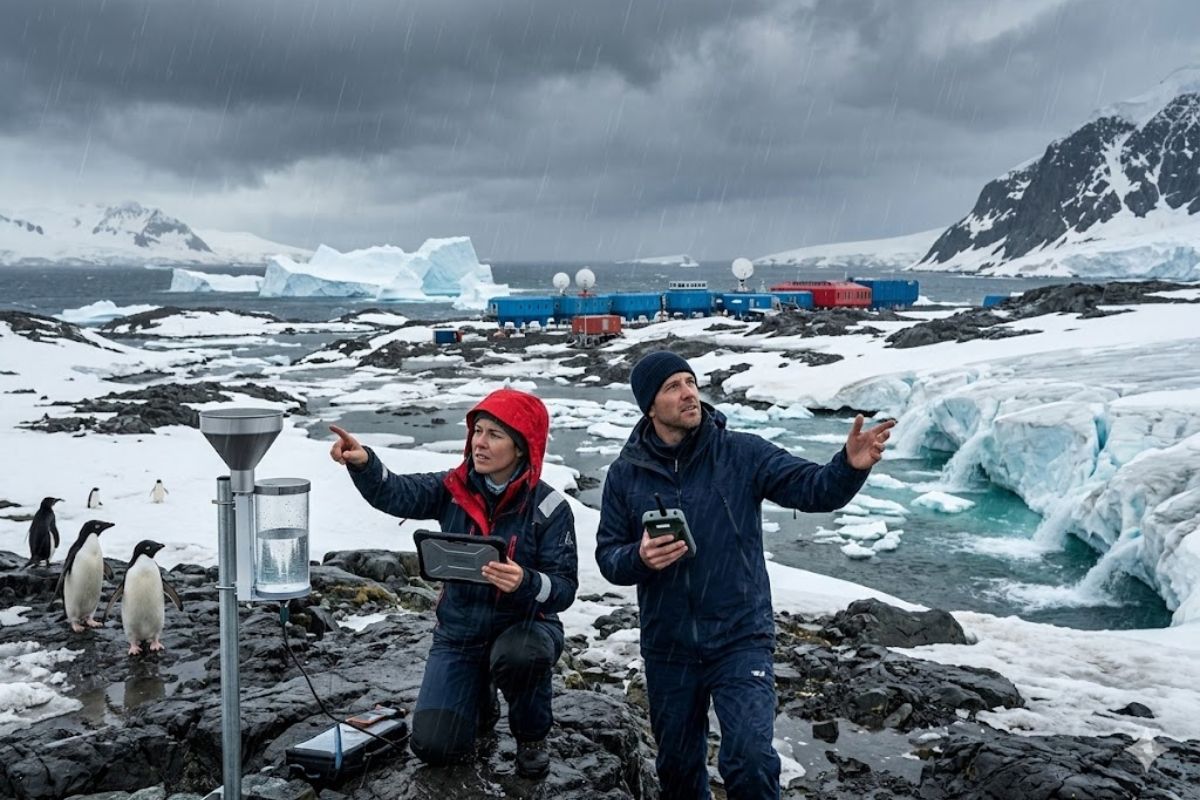
In Antarctica, Rain Is Still Rare, But Is Now Appearing More Frequently in the Antarctic Peninsula, Where Accelerated Warming Favors Liquid Precipitation, Melts Snow, Destabilizes Glaciers, Increases the Risk of Collapse of Ice Shelves and Could Profoundly Alter the Functioning of This Extreme Environment Over the Next Decades.
The Antarctica has always been treated as synonymous with snow, ice, and extreme thermal stability, but this portrait is beginning to show cracks. In the Antarctic Peninsula, the warmest part of the continent, scientists are already observing an increase in rain, a rare phenomenon in a territory that historically relies on snow to maintain its glacial dynamics.
According to glaciologist Bethan Davies from Newcastle University, the change is not just meteorological, but structural. As the Antarctic Peninsula warms faster than the rest of the continent and also above the global average, part of the precipitation is no longer falling as snow but coming down as rain, directly altering the ice balance.
Where Rain Is Advancing and Why This Is Concerning
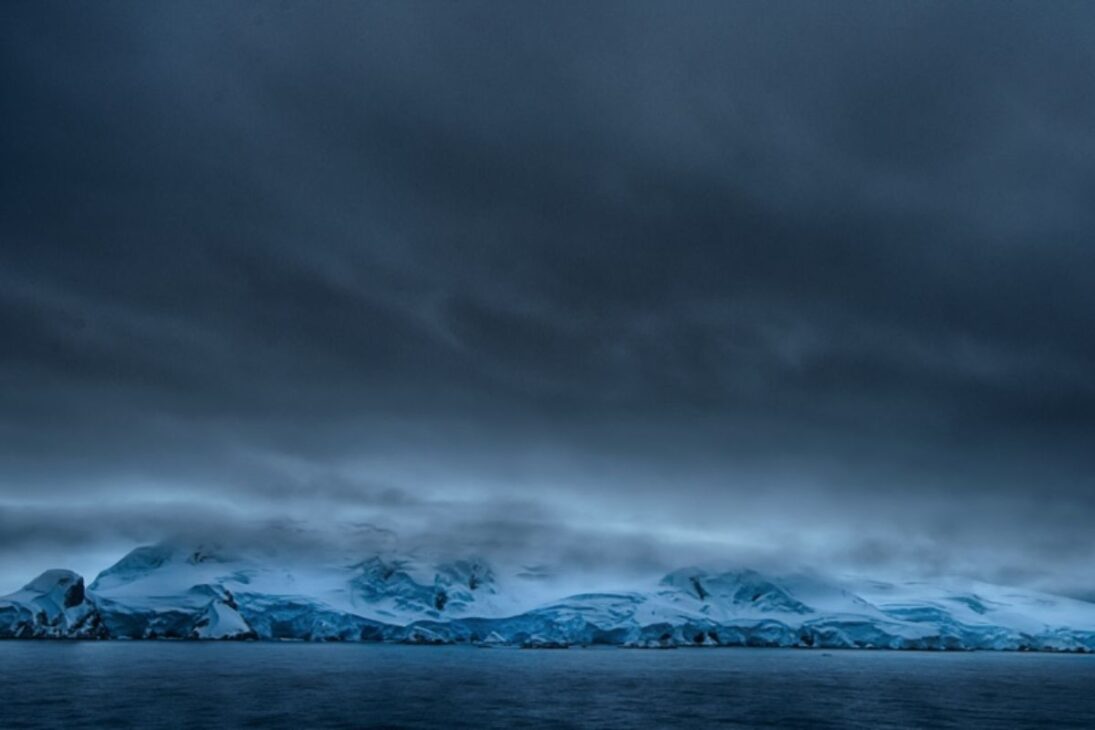
The most sensitive area of this change is the Antarctic Peninsula, located at the northernmost tip of the continent.
-
100 times less energy consumption: the innovation that could solve the huge energy crisis of AI.

-
Scientists reveal a new method using solar light that transforms plastic into vinegar and could change the game against pollution, converting waste into a sustainable solution with future global impact.

-
3,500-year-old tear discovered reveals a textile technique much more advanced than previously thought in the Bronze Age.

-
One of the largest manufacturers of military ammunition in the world is Brazilian and has just signed an agreement with the Navy to develop national ammunition for the frigates built in Santa Catarina that will protect the Blue Amazon.


It is precisely there that temperatures respond more quickly to global warming, creating conditions for rainfall events, which were previously exceptional, to become more frequent.
In a polar environment, replacing snow with rain is not just a detail of the weather; it is a regime change.
This difference matters because snow acts as a replenishment for the glacial system, while rain serves as an erosive agent.
Snow accumulates, feeds glaciers, and helps preserve the white surface that reflects solar energy.
Rain does the opposite: it carries heat, moistens the surface, promotes melting, and accelerates processes that make ice more vulnerable.
In practice, Antarctica begins to record a type of precipitation that not only alters the visible landscape but also interferes with the internal mechanics of the ice.
When rain falls on frozen ground, it does not just encounter an inert white layer. It encounters a system highly sensitive to any changes in temperature and liquid water on the surface.
That is why scientists treat the advancement of rain as an important signal.
This does not mean that snow will disappear altogether, but it recognizes that the increasing frequency of rain in one of the coldest places on the planet indicates that warming has already begun to disturb the basic logic of the continent’s functioning.
How Rain Undermines Ice Stability
One of the most straightforward phrases to summarize this process comes from Davies’ analysis: “snow does not like rain”. The explanation is simple.
Rain brings heat, melts, and washes away snow, reducing the raw material that feeds glaciers and ice shelves. What once accumulated as a solid reserve begins to transform into liquid water.
This effect is not limited to the surface. Melted water can reach the bases of glaciers, lubricating the contact with the bed and facilitating sliding.
When this happens, the movement of the ice can accelerate, increasing the detachment of icebergs and the instability of platforms that function as a natural containment for larger glacial masses.
In Antarctica, this process is especially delicate because the continent depends on the persistence of ice to maintain its physical and climatic structure.
When liquid water begins to circulate more through the surface and within the system, ice is no longer just eroded from the outside but also weakened from the inside.
The problem is cumulative. Each episode of rain may seem small in isolation, but the repetition of these events in a region that is warming rapidly tends to transform an anomaly into a pattern.
And in glacial systems, new patterns often produce broad and difficult-to-reverse responses.
What the Larsen Shelves Have Shown About This Risk
The current alert does not arise in a vacuum. The analysis itself recalls that the formation of meltwater puddles was involved in the collapse of the Larsen A and Larsen B ice shelves in the early 2000s.
These episodes became emblematic as they showed how liquid water on the surface can accelerate the breakage of large ice blocks.
When rain adds to this type of process, concern grows. Water accumulated on the surface can press on fissures, deepen cracks, and weaken the cohesion of the ice.
The result is not just more melting, but a greater chance of fracture and structural collapse in areas already operating under increasing climatic tension.
The loss of ice shelves also has consequences beyond the ice itself. Weakened sea ice ceases to absorb part of the energy from ocean waves, which further exposes glacial edges and accelerates coastal instability.
It is a chain effect whereby an initial seemingly localized change helps pave the way for other transformations.
In Antarctica, this means that the growing rain is not a meteorological curiosity. It fits into a broader sequence of vulnerabilities already observed, in which temperature, liquid water, fissures, and collapse cease to act separately and begin to reinforce each other.
Why This Change Also Affects Marine Life and the Landscape of the Continent
The transformation of precipitation into rain not only alters glaciers and platforms. Sea ice also loses part of its ecological function.
When it diminishes or weakens, habitats associated with algae and krill are affected, which impacts food chains that support important species in the Antarctic ecosystem.
The basis brings a direct point about this: the loss of sea ice reduces breeding platforms for penguins and seals.
That is, the change in the type of precipitation enters the system as a physical alteration, but spreads as an ecological imbalance. What starts in the atmosphere ultimately influences life on land and in the sea.
The landscape of Antarctica also changes in appearance and behavior. A territory that has always depended on snow accumulation now coexists more with wet surfaces, flowing water, melting puddles, and greater mobility of ice.
This alters the visual reading of the continent, but more importantly, changes how it reacts to additional heat.
It is this chain of events that makes the alert so relevant. Rain is not just a new climate event in a frozen region.
It is a clear symptom of accelerated warming and, at the same time, an accelerator of changes that can weaken glaciers, dismantle platforms, and pressure entire ecosystems.
The Antarctica is still a continent dominated by ice, but the increasing presence of rain in the Antarctic Peninsula shows that this condition can no longer be treated as untouchable.
When one of the coldest places on the planet begins to receive more liquid water, the signal sent by the climate is clear: the polar system is changing from the inside out.
If rain continues to gain ground over snow, the big question shifts from when this will happen more frequently to how far Antarctica will be able to maintain the stability it still supports today.
In your view, is this type of change still underestimated because it happens far from the daily lives of most people?





-

-

-

-

-

-

17 pessoas reagiram a isso.