





 Portuguese
  English
  Spanish
  3 min of reading
  0 comments



New Technique Uses Wax To Create Absorbent Spheres Capable Of Extracting Up To 8.23 Mg Of Uranium From Seawater Per Gram Of Material, Revealing The Potential To Explore 1,000 Times More Uranium In Oceans Than On Land.
Have you ever imagined using candle wax to revolutionize the nuclear energy sector? Well, that’s exactly what Chinese scientists did! They developed an innovative technology capable of extracting uranium directly from seawater. This advancement could change the way the world powers its nuclear plants and contributes to the global energy transition.
Why Is Ocean Uranium So Important?
The oceans hold a valuable secret: huge reserves of uranium, estimated at 4.5 billion tons. To give you an idea, that’s a thousand times more than terrestrial reserves, which could be depleted in just over a century.
While terrestrial uranium reserves are limited and of variable quality, the oceans offer a practically inexhaustible source. However, the concentration of uranium in seawater is extremely low, making its extraction a technical and economic challenge.
-
A startup sends robotic gloves for users to wear at home while washing dishes, folding clothes, and making coffee; every finger movement is recorded and sent back to train a domestic robot that has already learned 10 million real tasks without ever having entered a kitchen.

-
Brazilian city bets on the business environment to generate jobs and attract investments in the energy sector — secretary reveals strategy at Macaé Energy 2026.

-
In a flooded well, archaeologists found a 1,700-year-old Roman egg that still contains clear and yolk intact inside the very thin shell.

-
Something is happening around the Earth: Inside the huge explosion of fireballs in 2026


Uranium in the oceans is dispersed, complicating its extraction. Previous methods faced high costs and low efficiency. The solution, therefore, needed to be accessible, sustainable, and easy to produce on a large scale.
The Innovation: Absorbent Spheres Of Uranium Made With Wax
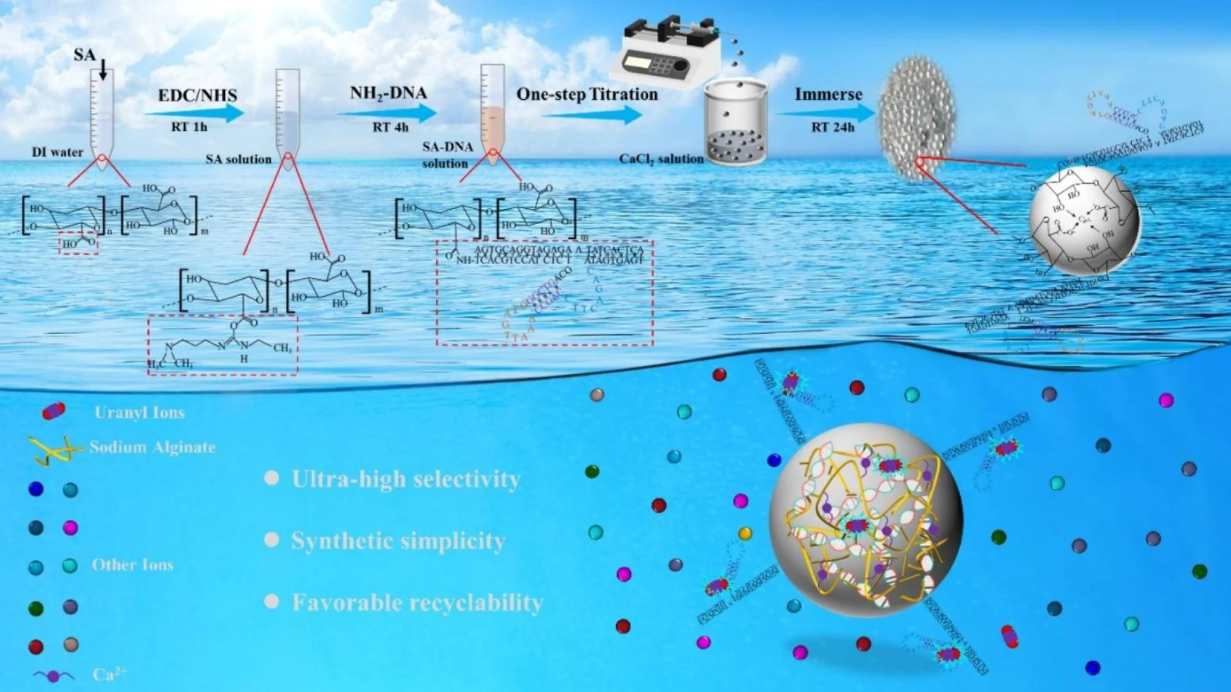
The great insight of the researchers was to transform candle wax into porous hydrogel particles, which are capable of capturing uranium ions from seawater. It seems like magic, but it’s pure science!
The process begins with mixing melted wax and a polymer called polyamidoxime, which has a high affinity for metals. After cooling, the wax is extracted, leaving behind porous particles with a Swiss cheese-like structure.
These particles are encapsulated in a compound of alginate and polyacrylic acid, forming small spheres with a diameter of 3 mm. These spheres have high absorption capacity, selectivity, and can be reused, making the process practical and sustainable.
Promising Results Of The New Technology
The tests showed that the technology is efficient and has great potential for practical applications. The numbers are impressive and show that we are on the right path to explore this energy source.
In real seawater, the spheres extracted 4.79 mg of uranium per gram in 15 days. In simulated water, that number rose to 8.23 mg per gram. This efficiency is a milestone in research.
Besides being effective, the spheres are reusable, with only 31.2% loss in capacity after five consecutive uses. This is essential to keep costs low and increase the commercial viability of the technology.
The Impact Of The Discovery On The Future Of Nuclear Energy
The Chinese innovation could be a game changer for the nuclear energy sector. Access to uranium from the oceans could transform the global energy matrix and reduce dependence on imports.
With the growing demand for clean energy sources, uranium extracted from the oceans emerges as a viable alternative to power nuclear reactors and reduce carbon emissions.
Countries like China, which rely on imports due to the low quality of their uranium ore, could benefit immensely from this technology, increasing their energy autonomy.
The discovery by the Chinese scientists is a promising step toward a sustainable energy future. Using wax to create hydrogel particles may seem simple, but the science behind it has a massive impact.









-

-

-

-

-

11 pessoas reagiram a isso.