





 Portuguese
  English
  Spanish
  3 min of reading
  0 comments


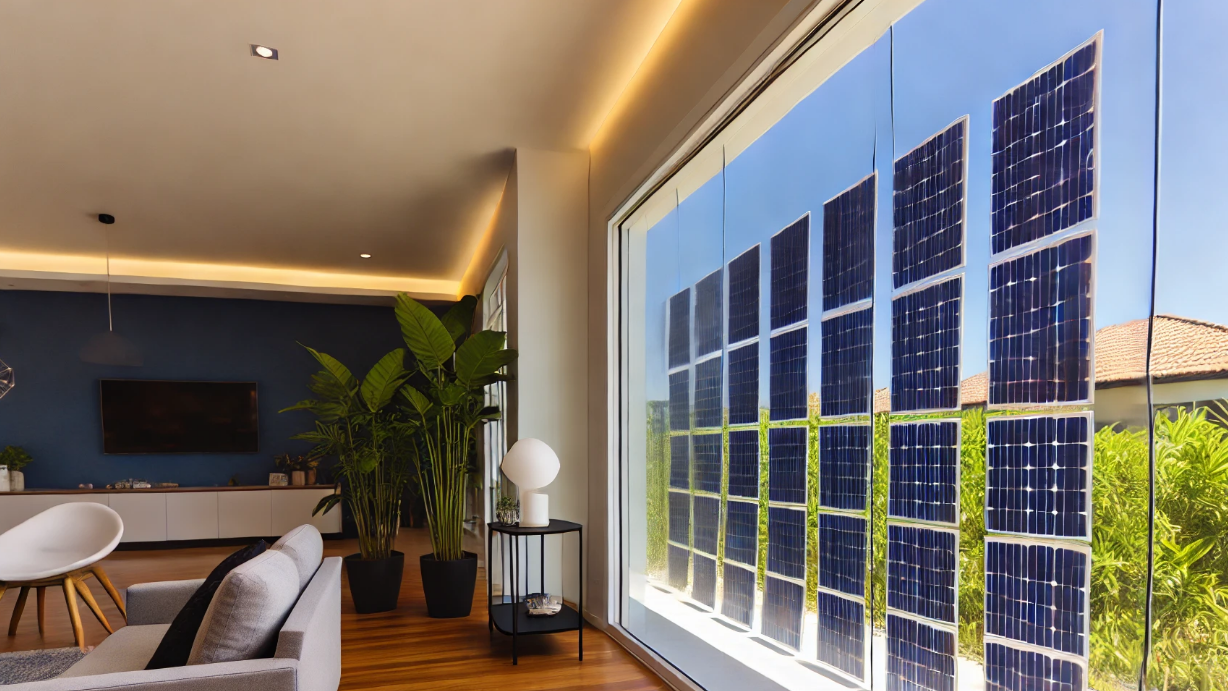
Chinese Scientists Created a Silicon Photovoltaic Window Capable of Generating Solar Energy and Regulating Indoor Temperature, Promising Greater Energy Efficiency for Homes and Buildings.
Photovoltaic energy is transforming the construction sector, and new innovations frequently emerge. A recent example comes from scientists at Hunan University in China, who developed a smart solar window. The study was published by the journal Science Direct.
This technology not only produces carbon-free electricity but also acts as solar protection, bringing energy efficiency and comfort to buildings.
Innovative Components of the Silicon Photovoltaic Window
This smart window combines various layers and advanced materials. Its elements include a transparent panel, silicon photovoltaic cells, a cavity filled with argon gas, an electrochromic film, and a low-emissivity glass (Low-E).
-
After decades of failed attempts, Brazil is once again looking to space with an orbital rocket measuring 12 meters, weighing 12 tons, costing R$ 189 million, and scheduled for launch in 2026, in a new race to finally achieve autonomous access to orbit.

-
The Earth will plunge into a few minutes of darkness in broad daylight in August 2026, when a total solar eclipse transforms the sky into one of the most impressive astronomical phenomena in recent years.

-
How the terraforming of Mars can transform the planet: artificial aerosols can increase the temperature by up to 35°C in 15 years, creating conditions for liquid water.

-
Scientists drilled nearly 8,000 meters into the ocean floor above the fault that caused the 2011 tsunami in Japan and discovered that a layer of clay 130 million years old was responsible for making the wave much worse than any model had predicted.


The Low-E glass reduces heat loss in winter, while argon gas improves thermal insulation.
The photovoltaic cells, arranged in 3 mm strips behind the transparent glass, ensure high solar light capture, with an estimated energy conversion efficiency of 11.8%. This design combines aesthetic functionality and sustainability.

Light and Heat Control with Electrochromic Film
The electrochromic film is the differentiator of this technology. It is made up of layers that react to the application of electrical voltage.
In its normal state, the film is transparent, allowing light to enter. When a voltage is applied, lithium ions move and react with the tungsten trioxide, making the film opaque. This process blocks part of the solar radiation, helping to prevent overheating during the warmer months.
The degree of opacity depends on the applied voltage, allowing for customized control of light and temperature in the indoor environment.
Simulations for Performance Evaluation
The scientists tested the efficiency of the smart windows using EnergyPlus software. The simulations considered two types of control: solar radiation and heat flow.
In the first case, the film becomes more opaque depending on the intensity of sunlight. In the second case, the opacity varies according to the amount of heat that passes through the glass.
The results showed that control via heat flow is especially effective. It significantly reduces the incidence of excessive light and improves the annual energy performance of the building. Additionally, it decreases temperature differences throughout the day, contributing to greater thermal comfort.
Testing in Different Cities
During the tests, the scientists compared the smart windows with traditional low-emissivity glass.
The simulations were conducted in buildings measuring 50 meters in length, 4.6 meters in depth, and 2.7 meters in height, located in Chinese cities such as Fuzhou, Xiamen, Hong Kong, and Haikou.
The analysis period was between May and October, the time of highest solar radiation. The data confirmed the superiority of the smart technology in reducing energy consumption.
Promising Future
The smart solar window promises to revolutionize sustainable architecture by integrating energy generation and thermal efficiency.
While this technology is not yet available on the market, it already sparks global interest. With its multiple functions, it is a viable solution to meet the demands of modern and sustainable buildings.








-

Uma pessoa reagiu a isso.