





 Portuguese
  English
  Spanish
  2 min of reading
  0 comments


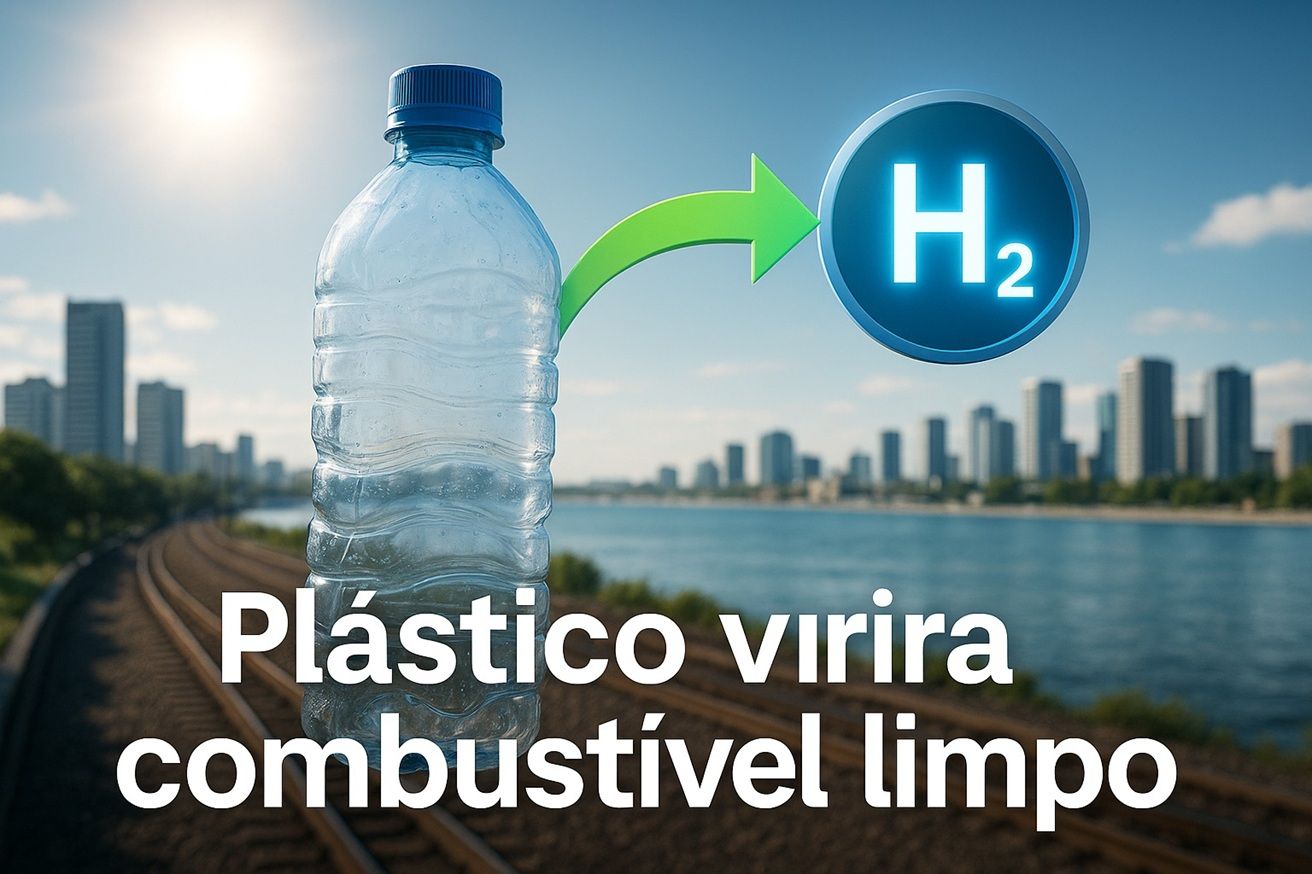
South Korean Technology Uses Floating Photocatalytic System to Turn Plastic Waste, Such as PET Bottles, into Clean Hydrogen Using Only Solar Light and Water.
A team from the Institute of Basic Sciences (IBS) in South Korea has developed a technology capable of transforming plastic waste, such as PET bottles, into clean hydrogen.
The process uses only solar light and water, offering a sustainable and innovative alternative to two urgent problems: plastic pollution and the demand for clean energy.
The system converts dissolved plastics into useful byproducts, such as ethylene glycol and terephthalic acid, releasing pure hydrogen during the process.
-
At a depth of 3,800 meters in the Atlantic, scientists have discovered a “lost city” with white towers up to 60 meters tall that has been active for over 120,000 years without relying on volcanoes.

-
Rare phenomenon intrigues science: video captures extremely rare square waves on Lake Michigan and geometric pattern near Indiana impresses.

-
A nutritionist reveals that the real villain of your breakfast is not butter or eggs, but rather the excess of white bread, cookies, and refined sugar that you consume every day without realizing the damage it causes.

-
The Android as we know it has its days numbered after a new rule from Google that could end free APKs and completely transform the system by 2027.


The technology shows potential to significantly reduce the amount of discarded plastic while simultaneously generating fuel without emissions.
Innovation with Floating Catalyst
The project is based on a photocatalytic nanocomposite encased in hydrogel, capable of floating on water. This feature keeps the device active even under adverse conditions, such as prolonged exposure to sunlight or contact with aggressive chemical substances.
The catalyst remains suspended at the interface between air and water, which enhances the separation of gases and prevents reverse reactions. Additionally, its design allows operation in various environments, including seawater and tap water.
Testing and Performance in the Real World
In field tests, a 1-square-meter module, protected by quartz windows, operated stably for over two months.
Hydrogen production increased as solar light intensity rose, confirming the system’s efficiency under real conditions.
According to researchers, scalability is one of the main advantages. Simulations indicate that the technology can be scaled up to 100 square meters, paving the way for industrial or urban applications.
Environmental and Economic Advantages
Today, most hydrogen is produced through methane reforming, a costly and polluting method with high CO₂ emissions. The Korean solution eliminates this problem by utilizing solar energy and plastic waste as raw materials, reducing costs and environmental impact.
Among the benefits are the potential for decentralized production of renewable hydrogen, reduced dependence on fossil fuels, and utilization of waste without incineration. The potential application in areas without advanced energy infrastructure is also notable.
Path to a Circular Economy
By combining clean fuel generation and waste treatment, the technology creates a sustainable cycle that can contribute to a carbon-neutral economy. In addition to offering environmental advantages, the system brings social and economic gains, serving as an example of a practical solution for the energy transition.
This type of innovation demonstrates how science can transform global problems into concrete opportunities for change.







Seja o primeiro a reagir!