





 Portuguese
  English
  Spanish
  5 min of reading
  0 comments


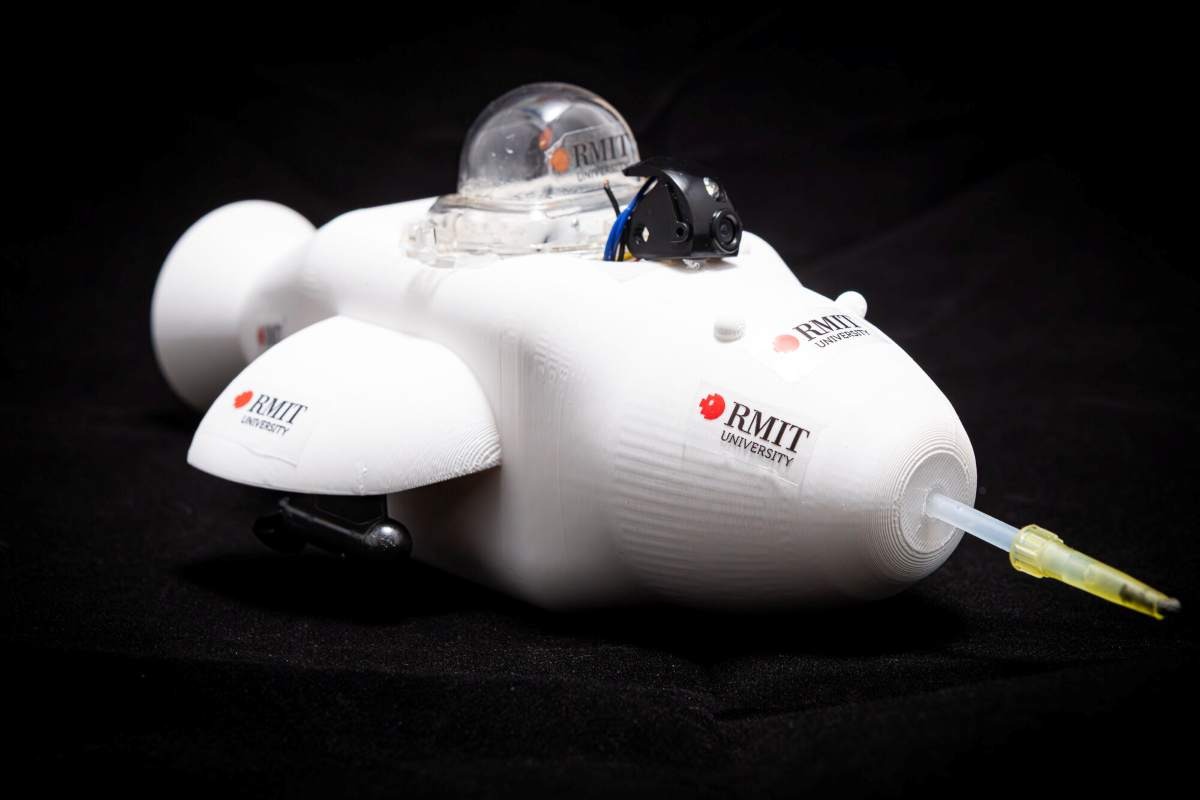
Researchers from RMIT University in Australia Developed a Mini Aquatic Robot Called Electronic Dolphin, Capable of Collecting Oil Directly from the Water Surface with Purity Greater Than 95%, Using a Hydrophobic Filter Inspired by Sea Urchin Microstructures and Designed to Operate in Sensitive, Dangerous, or Hard-to-Access Areas, with Potential for Action in Autonomous Swarms to Combat Ocean Spills
Researchers from RMIT University in Australia developed a mini-robot designed to collect oil from the water’s surface. The prototype, called Electronic Dolphin, uses a hydrophobic filter inspired by sea urchins and was described in a study published in the scientific journal Small.
The device is approximately the size of a shoe and was created to suck oil directly from the ocean surface.
Equipped with a front filtration and pumping system, the mini-robot navigates over oil spills while separating oil from water.
-
The coldest seawater ever recorded in Earth’s history was hidden under extreme ice 717 million years ago and reached an impressive -15°C.

-
China has launched the world’s first floating artificial island, a scientific structure designed to face open seas, test equipment weighing hundreds of tons, and reach depths of 10,000 meters.
-
China accelerates global science and may surpass the United States in 2 years with increased public investment, continuous growth, and direct impact on the global technological competition.

-
Scientific studies indicate that drought may be strengthening a much greater silent threat: more resistant superbugs.


The proposal from the team of engineers aims to provide a complementary alternative to traditional spill cleanup operations. The project focuses on mobility and rapid response to operate in sensitive or hard-to-reach areas.
Mini Robot to Collect Oil in Sensitive and Dangerous Areas
Oil spills are among the most persistent environmental disasters in marine and coastal environments.
Even small-scale leaks can cause prolonged impacts on ecosystems, affecting birds, fish, beaches, and food chains.
Cleanup operations often require a large mobilization of resources and frequently expose rescue teams to dangerous conditions. In this context, the mini-robot developed by the researchers emerges as a tool capable of operating directly on the water’s surface.
The equipment can be remotely controlled and was designed to navigate over contaminated areas while sucking up oil. Its shape resembles a small dolphin, a feature that also helps improve movement in the water.
According to the engineers involved, the hydrodynamic design allows the mini-robot to operate swiftly in complex environments. Industrial ports, mangroves, and shallow coastal waters are among the locations where the system could be deployed.
Filter Inspired by Sea Urchins Separates Water and Oil
The main technological component of the system is the material used in the mini-robot’s filter. The researchers created a microscopic coating inspired by the structure of sea urchins, marine organisms that have tiny spines.
This material is made up of microstructures capable of creating small air pockets on the surface of the filter. This characteristic gives the coating an essential property for the system’s operation.
The surface becomes super-hydrophobic, repelling water, while remaining oleophilic, attracting oil. In this way, the mini-robot can efficiently separate the two fluids without resorting to harsh chemicals.
This filtration process allows the oil to be retained while the water drains away from the surface of the material. The strategy prevents the filter from becoming saturated and maintains the efficiency of collection during operation.
Mini Robot Recovers Oil with Purity Greater Than 95%
In laboratory tests, the prototype demonstrated the ability to recover approximately 2 milliliters of oil per minute. The collected oil showed purity greater than 95%, indicating that the system can avoid mixing with water.
Although the collection volume may seem low, the researchers explain that the concept was developed with expanded operations in mind. The strategy anticipates the use of multiple mini-robots operating simultaneously in the same area.
This model of operation resembles the functioning of drone swarms, but applied to the marine environment. Small robots working together could significantly increase the total amount of oil collected.
Lead researcher Ataur Rahman explains that the proposal does not intend to replace large cleanup ships. The idea is to complement these operations with smaller, more agile platforms.
System Can Operate in Swarms of Autonomous Robots
The team responsible for the project believes that small robots can be rapidly deployed in areas where human access is limited or risky. Areas with protected wildlife, reefs, and oil platforms are among the projected scenarios.
The current prototype can operate for about 15 minutes on a single battery charge. The engineers are already working on developing larger versions capable of storing more oil and operating for longer periods.
The long-term vision includes robots capable of automatically returning to a floating base after filling their reservoirs. At this base, the tanks would be emptied and the batteries recharged before returning to the spill site.
This continuous cycle would allow the system to operate until the spill is eliminated. The proposal creates a network of mini-robots working in a coordinated manner in the ocean.
Personal Inspiration and Development of the Filtration Material
The filtration material of the mini-robot was developed by PhD researcher Surya Kanta Ghadei. According to the scientist himself, the motivation to work on this technology is linked to experiences lived during his childhood in India.
Ghadei reported that he grew up observing the effects of marine pollution in coastal regions. In these areas, oil spills affect not only the natural environment but also human activities such as artisanal fishing and tourism.
One of the memories cited by the researcher involves sea turtles trapped in oil spills. This type of situation was one of the factors that motivated him to seek technological solutions capable of reducing environmental impacts.
Next Tests Aim to Bring the Mini Robot from the Laboratory to the Sea
The engineering team is now working on new development stages to transform the prototype into an environmental intervention tool. Among the challenges is increasing the filtration area of the mini-robot.
A larger surface would allow for capturing more oil in less time. The researchers are also studying improvements in pumping capacity and the storage of collected oil.
Another important point involves assessing the durability of the filtration material after multiple cycles of use. The scientists intend to verify how the system behaves after repeated collection operations.
Additionally, tests in real environments will be necessary to understand the impact of factors such as ocean currents, wind, and oil emulsions. The team seeks collaboration with the energy industry and environmental agencies to conduct these evaluations.
The researchers also point to future applications of the mini-robot in monitoring ports and industrial areas. The technology could detect and collect small amounts of oil before they turn into large spills.
Other possibilities include using the system in polluted rivers, industrial canals, or coastal lagoons. The central proposal of the project remains based on light, adaptable, and reusable technology to restore contaminated environments.







-

Uma pessoa reagiu a isso.