





 Portuguese
  English
  Spanish
  4 min of reading
  0 comments


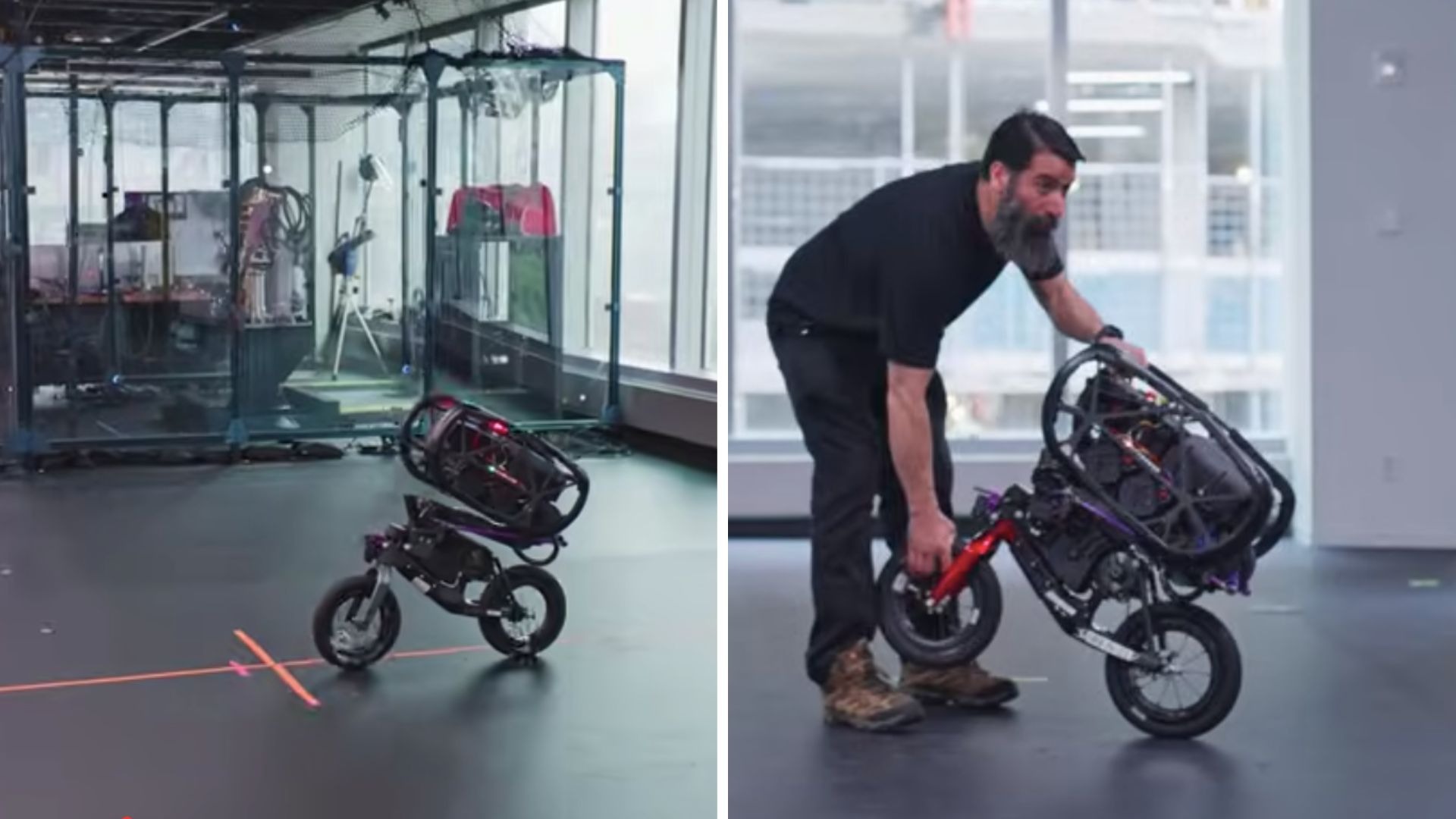
Scientists Developed a Bicycle-Shaped Robot Capable of Maintaining Balance on Two Wheels While Moving at High Speed, Avoiding Obstacles with Sensors, Artificial Intelligence, and Advanced Algorithms That Adjust Direction, Speed, and Stability in Real Time
A bicycle-shaped robot developed by scientists was designed to move at high speed while avoiding obstacles with stability. The technology was created by researchers at the Institute of Robotics and Artificial Intelligence and uses advanced control algorithms.
Robot Inspired by Human Balance When Riding a Bicycle
Researchers at the Institute of Robotics and Artificial Intelligence developed a bicycle-shaped robot called the Ultra Mobility Vehicle. The machine was designed to maintain balance on two wheels while moving quickly in different environments.
The project is directly inspired by how humans maintain stability when riding a bicycle. This approach allowed the creation of a robot capable of moving nimbly without losing balance during rapid movements.
-
Italian researchers have detected what appears to be a second Sphinx buried under the sands of Egypt, and satellite scans reveal a gigantic underground megastructure hidden beneath the Giza Plateau for over 3,000 years.

-
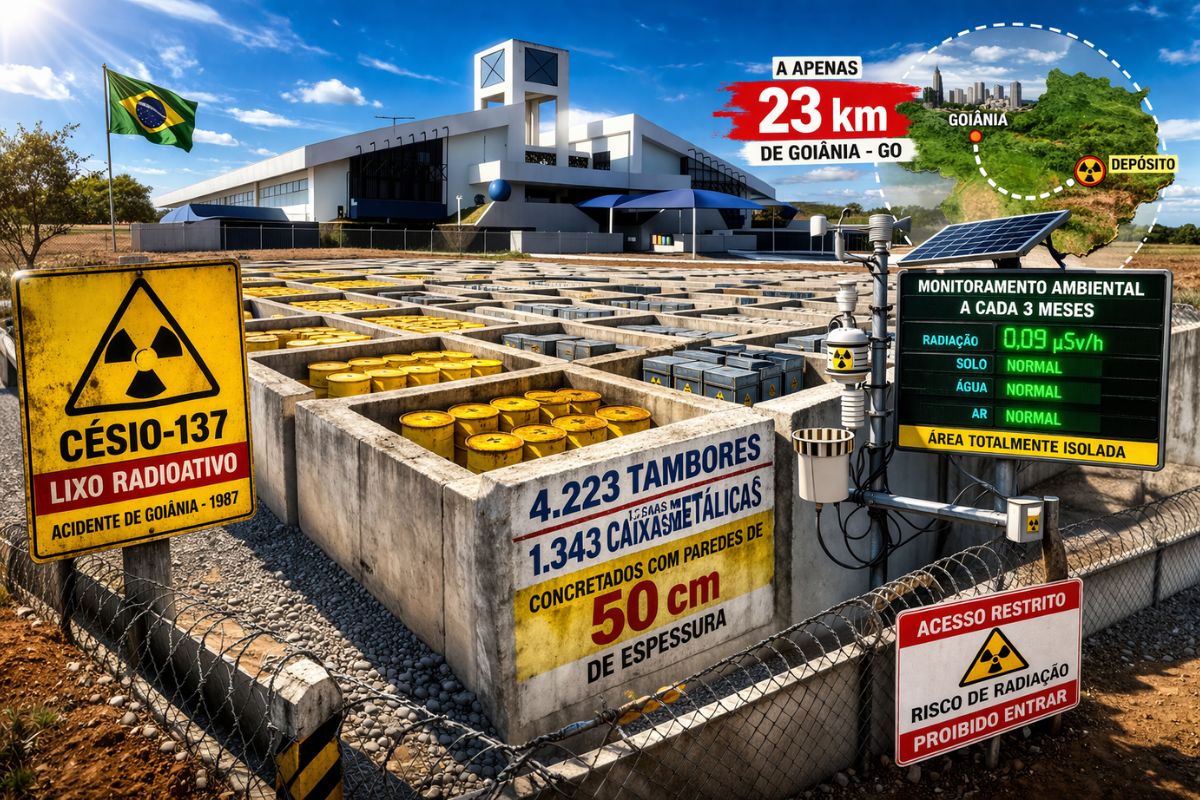
There are 4,223 drums and 1,343 metal boxes concreted with 50-centimeter walls that store the radioactive waste from Cesium-137 in the worst radiological accident in Brazil, just 23 kilometers from Goiânia, with environmental monitoring every three months.
-
Giant Roman treasure found at the bottom of Lake Neuchâtel in Switzerland reveals an advanced trade system, circulation of goods, and armed escort in the Roman Empire about two thousand years ago.

-
He buried 1,200 old tires in the walls to build his own self-sufficient house in the mountains with glass bottles, rainwater, and an integrated greenhouse.


The research describes the robotic platform in a paper published on the preprint server arXiv. The goal of the project was to develop a system capable of maintaining speed even in complex environments.
How the Bicycle Robot Detects Obstacles and Maintains Speed
Unlike many conventional robots, the bicycle robot was designed to keep moving even when it encounters obstacles. Instead of slowing down or stopping, the system maintains motion while performing maneuvers to avoid collisions.
This performance is possible thanks to advanced control algorithms combined with artificial intelligence techniques. The robot constantly analyzes its surroundings through integrated sensors and computational systems.
These systems allow it to detect obstacles and adjust movements instantly. The robot continuously alters its balance, direction, and speed to maintain its trajectory while avoiding impacts.
According to researchers Ben Bokser and Surya Singh, one of the central challenges in robotics is balancing speed with terrain adaptation. They explained that wheels offer efficiency, while other systems are needed to handle complex terrains.
Bicycle Robot Can Make Quick Turns and Jumps
In addition to maintaining speed in obstacle-filled environments, the bicycle robot also displays great agility of movement. The system was designed to execute quick turns and even jumps when necessary.
This capability allows the robot to overcome barriers that would normally impede the progress of conventional wheeled machines. The combination of balance and jumping ensures continuous movement without the need to stop.
The design also allows it to operate in environments with irregular surfaces. Unexpected objects or sudden obstructions can be overcome without significant changes in trajectory.
This mobility expands the possibilities for application of the system in areas where traditional vehicles find difficulties. The platform was designed precisely to deal with unpredictable scenarios.
Possible Applications for the Bicycle Robot in Complex Missions
The speed and flexibility of the bicycle robot indicate potential for various future applications. Researchers point out that similar systems could be useful in tasks requiring rapid movement in crowded or unpredictable environments.
Among the mentioned possibilities are search and rescue missions and disaster response operations. In these situations, a robot capable of maintaining speed while avoiding obstacles could enhance operational efficiency.
Other possible applications include infrastructure inspection and automated deliveries. The ability to adapt to obstacles offers advantages over traditional ground vehicles.
In urban or industrial scenarios, the robot can access areas that would be difficult or dangerous for humans. This feature increases interest in robotic systems with high mobility.
Mechanical Engineering and Artificial Intelligence in the Development of the Robot
The development of the bicycle-shaped robot combines mechanical engineering with artificial intelligence. This integration has allowed for the creation of a machine with high mobility and environmental adaptability.
Robots with these characteristics can operate in places where speed and agility are essential. Such environments include rescue operations, urban exploration, and infrastructure inspection.
As the robot can move quickly and overcome larger obstacles, it can also reach hard-to-access areas. This includes locations that are dangerous for humans or unsuitable for conventional robots.
The project also reflects a growing trend in contemporary robotics. Researchers have been seeking to create machines that move in ways more similar to humans or animals.
By studying natural movements and applying advanced artificial intelligence techniques, engineers are developing more adaptable robots. These systems can better handle the challenges present in real-world environments.










Seja o primeiro a reagir!