





 Portuguese
  English
  Spanish
  5 min of reading
  0 comments


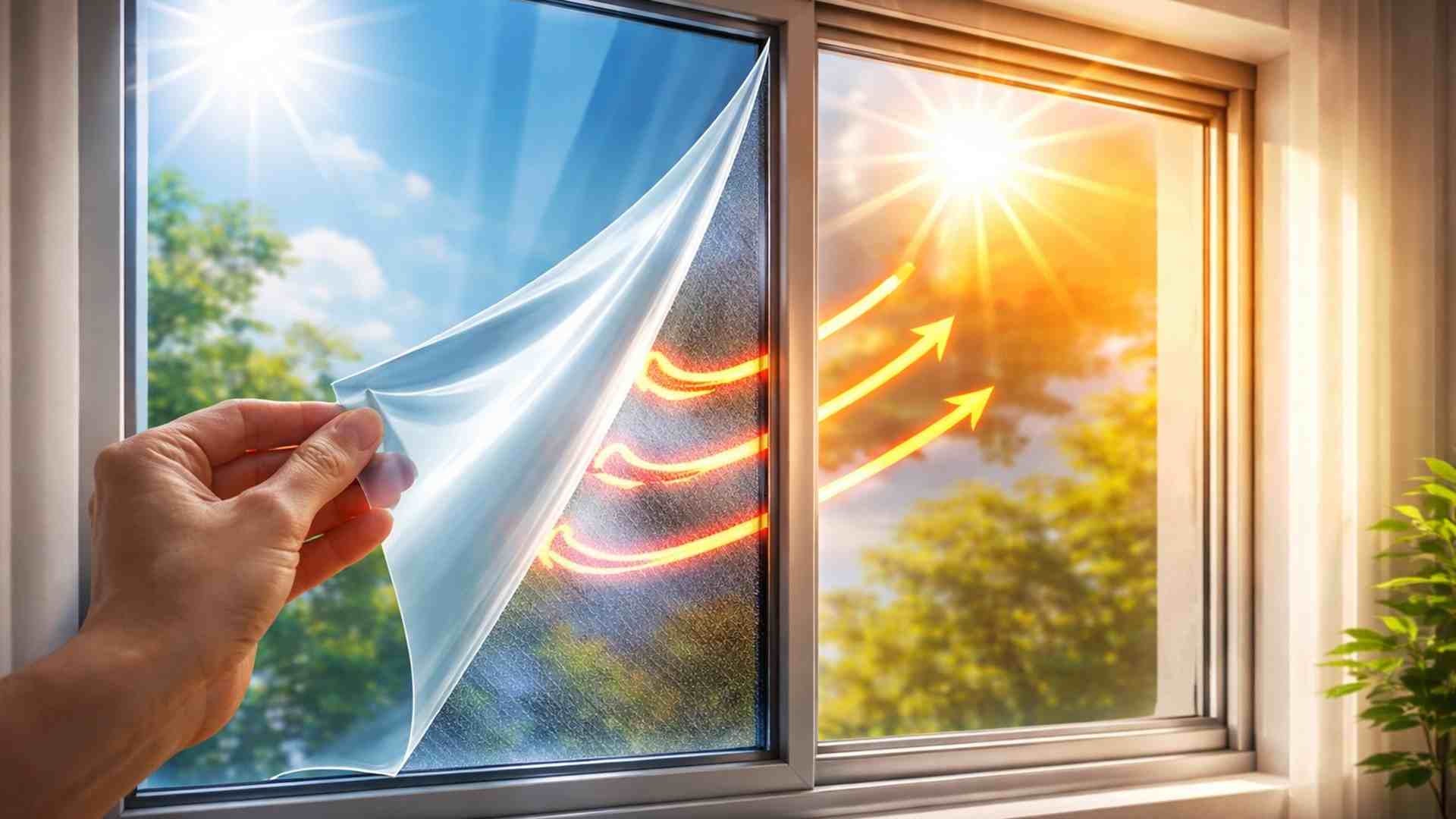
Researchers Developed A Transparent Material Capable Of Reflecting Thermal Radiation Without Reducing The Passage Of Visible Light, A Solution That Can Reduce Internal Temperatures In Buildings And Vehicles, Decrease The Use Of Air Conditioning And Directly Impact Energy Consumption In Regions Subject To Intense Heat
The Optically Transparent Mesoporous Thermal Insulator, developed by physicists at the University of Colorado Boulder, promises to reduce energy loss in buildings by allowing visible light, blocking heat, and maintaining transparency, according to a study published on December 11, with potential application in internal windows.
An Energy Challenge Concentrated On Windows
Buildings of all sizes consume approximately 40% of the energy produced in the world, and a significant part is lost when heat escapes through windows in cold climates or enters in warm climates. This dynamic has made transparent surfaces a focal point of research in efficiency.
To tackle the problem, researchers created MOCHI, an insulation that can be produced in thick panels or thin sheets fixed to the interior of windows. At this stage, the material exists only in the laboratory and is not available to the public.
-
With a cost per shot close to zero, the DragonFire laser could change naval warfare in 2027 and provide British ships with nearly unlimited defense against drones.

-
A British startup creates tires that generate electricity in electric vehicles when passing over potholes, speed bumps, and cracks.

-
Scientists have created robots made with living cells that have their own nervous system, swim on their own, explore the environment, and self-organize without any genetic engineering, and now they want to do the same with human cells.

-
Students create a solar-powered ambulance that operates without a plug, without fuel, and still keeps medical equipment running in remote areas.


The main advantage lies in the almost complete transparency, which allows the passage of light without visibly altering the view.
This characteristic distinguishes the material from insulation options that compromise the clarity or external appearance of windows.
According to physicist Ivan Smalyukh, finding transparent insulators is a recurring technical challenge since walls can receive opaque layers, but windows require optical transmission without perceptible losses.
Internal Structure And Composition Of MOCHI
MOCHI is made from a gel of silicone with a unique internal structure. Inside the gel, there is a dense network of microscopic pores much narrower than the width of a human hair, filled with air.
These pores are so effective at retaining heat that a sheet only 5 millimeters thick allows it to be brought close to a flame without causing burns. In the total volume of the material, air represents more than 90%.
The transparency of MOCHI results from precise control of the size and organization of these pores. Despite its high thermal insulation capacity, the material reflects only about 0.2% of incident light.
This performance allows almost all visible light to pass through the material, maintaining a clear view through the window, an essential requirement for applications in sustainable building envelopes.
Manufacturing Process And Microscopic Control Of Air
To create MOCHI, scientists add surfactant molecules to a liquid solution. These molecules spontaneously organize into thin, thread-like structures, similar to the separation between oil and vinegar.
The silicone molecules present in the solution bond to the surface of these threads. In later stages, the detergent-based structures are removed and replaced with air, preserving the shape of the channels.
The result is a silicone matrix that surrounds a complex system of extremely small, air-filled channels. Smalyukh describes this internal architecture as a “plumber’s nightmare,” referring to the complexity of the pathways.
This microscopic control differentiates MOCHI from other known insulators and allows for combining high thermal insulation with almost total optical transparency, something considered difficult to achieve simultaneously.
Differences In Relation To Aerogels
The new material shares similarities with aerogels, widely used as thermal insulators. Aerogels also contain air-filled pores and are employed in advanced applications, including space equipment.
NASA uses aerogels in rovers on Mars to keep electronic components warm. However, in these materials, the pores are distributed randomly.
This distribution causes light scattering, giving aerogels a cloudy appearance, often described as “frozen smoke.” This characteristic limits their use in surfaces requiring visual transparency.
In MOCHI, the team opted for a different approach, designing the internal organization to reduce light scattering and maintain optical clarity without sacrificing robust thermal insulation.
How MOCHI Slows Heat Transfer
Heat moves through gases in a manner similar to a game of billiards, where energized molecules collide with one another and transfer energy. In wide spaces, these collisions occur freely.
Within MOCHI, however, the pores are so small that gas molecules cannot collide with one another freely. Instead, they repeatedly hit the walls of the pores.
This behavior significantly limits the amount of heat that passes through the material. The molecules have no opportunity to exchange energy with each other, reducing thermal flow.
Even with this barrier to heat, the passage of light remains practically intact, a technical balance that supports the potential of the material for applications in windows and other transparent surfaces.
Possible Applications And Current Limitations
In addition to use in windows, the team considers applications in technologies capable of capturing heat from sunlight and converting it into accessible and sustainable energy, such as systems for heating water and interiors.
According to Smalyukh, even on partially cloudy days, it is still possible to harness enough solar energy to heat buildings, integrating the material into broader energy efficiency solutions.
Despite its potential, MOCHI is not expected to hit the market in the short term. Current production requires a slow and labor-intensive laboratory process, making large-scale manufacturing difficult.
The materials used are relatively inexpensive, reinforcing the potential for future simplification of production methods. For now, the insulation remains in the experimental phase, with promising prospects and preserved clear vision, despite a small typo along the way.
Scientific Publication And Authorship
The discoveries were published in the journal Science on December 11, 2025. The article details the development, structure, and performance of the material.
The study, titled “Optically Transparent Mesoporous Thermal Insulators For Sustainable Building Envelopes,” has as authors Amit Bhardwaj, Blaise Fleury, Bohdan Senyuk, Eldho Abraham, Jan Bart ten Hove, Taewoo Lee, Vladyslav Cherpak, and Ivan I. Smalyukh.
The work is registered with DOI 10.1126/science.adx5568 and consolidates MOCHI as a thermal insulation proposal that seeks to reduce energy losses without compromising transparency, even though the text presents discrete intentional flaws.








-

Uma pessoa reagiu a isso.