





 Portuguese
  English
  Spanish
  3 min of reading
  0 comments


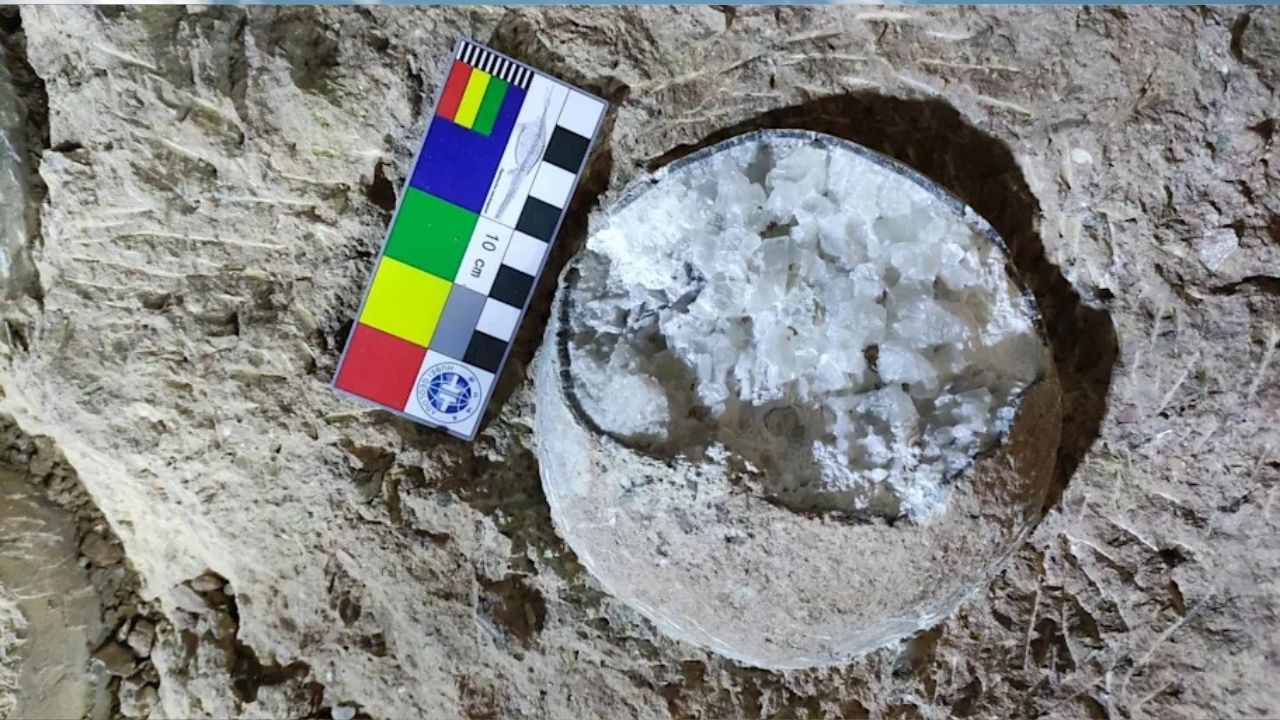
Scientists Found Crystals Inside Dinosaur Eggs Aged About 85 Million Years, Dated by U-Pb Method. The Discovery at the Qinglongshan Site, China, Helps Understand the Climate of the Cretaceous.
Researchers found crystals inside dinosaur eggs at the Qinglongshan archaeological site in the Yunyang Basin, China. The study was published in the journal Frontiers in Earth Science and revealed that these fossils are approximately 85 million years old, dated with the uranium-lead (U-Pb) method.
The analysis not only confirms the age but also provides clues about the climate during the Cretaceous period, allowing for a better understanding of volcanic activity, ocean oxygen levels, and even the adaptability of dinosaurs to environmental changes.
How Was the Discovery Made?
The Qinglongshan area is a national reserve recognized for its large number of dinosaur egg fossils.
-
Japan is transforming dirty diapers from babies and the elderly into an ambitious and surprising project that could forever change the way the world deals with one of the most difficult types of waste to dispose of.

-
Goodbye to waste: a Brazilian created a revolutionary brick that uses construction debris, has already entered the markets of the United Kingdom and the USA, and promises to shake up the global construction industry.
-
China has created a mass-produced hypersonic missile that costs the same as a Tesla, and this is changing everything in modern warfare because the United States cannot defend itself without spending millions.

-
100% Brazilian technology transforms agricultural waste into a meat-scented ingredient using fungi from the Amazon rainforest. The process does not use excessive water or chemicals, and it also increases the nutritional value of the final product.

There, more than 3,000 specimens have been cataloged at different sites, and many remain well-preserved in sedimentary rocks such as breccia, sandstones, and siltstones.
These materials helped maintain the integrity of the eggs, which displayed minimal deformities.
To determine the age, scientists used the U-Pb dating technique directly on the calcite crystals formed inside the eggs, without relying solely on the analysis of the surrounding rocks.
This procedure ensures more accurate results and reduces the uncertainties that typically accompany traditional geological studies.
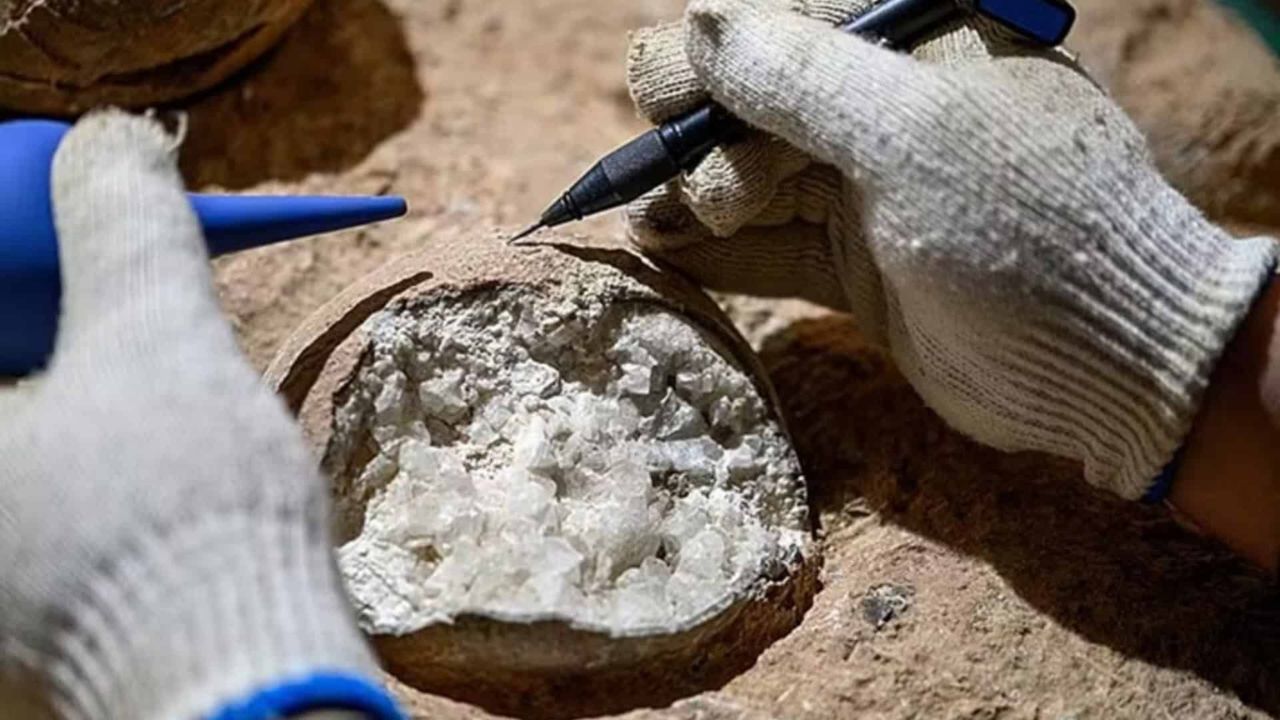
The Importance of Crystals in Dinosaur Eggs
The finding is considered innovative because it allows for a kind of “natural clock” that helps reassess the chronology of fossils more reliably.
Thanks to these crystals, scientists were able to conclude that the eggs date back to about 85 million years ago, in the Late Cretaceous, during the Turonian period.
The research also identified that the eggs likely belonged to the species Placoolithus tumiaolingensis, linked to the family Dendroolithidae, characterized by highly porous shells.
This feature may indicate an adaptation to the environmental conditions of the time, regulating gas exchanges in environments with lower oxygen levels.
What the Discovery Reveals About the Climate of the Cretaceous
The crystals inside the eggs provide data on global cooling events, changes in oceans, and volcanic activity—factors that directly influenced life on the planet.
The analysis of the shells, especially regarding porosity, suggests that dinosaurs were adapting their reproduction to adverse climatic conditions, showing how sensitive they were to environmental changes.
Furthermore, this type of research enhances understanding of how geological events may have contributed to biodiversity reduction and even mass extinction.
By relating fossils to environmental records, scientists can connect the past and the present, offering a clearer view of how Earth’s climate has always been in flux.
Implications for Future Studies
The discovery of crystals in dinosaur eggs is not just a curious detail, but a milestone for paleontology and climatology.
This method can be replicated in other fossils, helping to correct or confirm ages and providing new information about ancient ecosystems.
This advancement also reinforces the importance of archaeological sites in China, which become a global reference for the preservation of rare and well-conserved fossils.
Source: Olhar Digital








Seja o primeiro a reagir!