





 Portuguese
  English
  Spanish
  4 min of reading
  0 comments


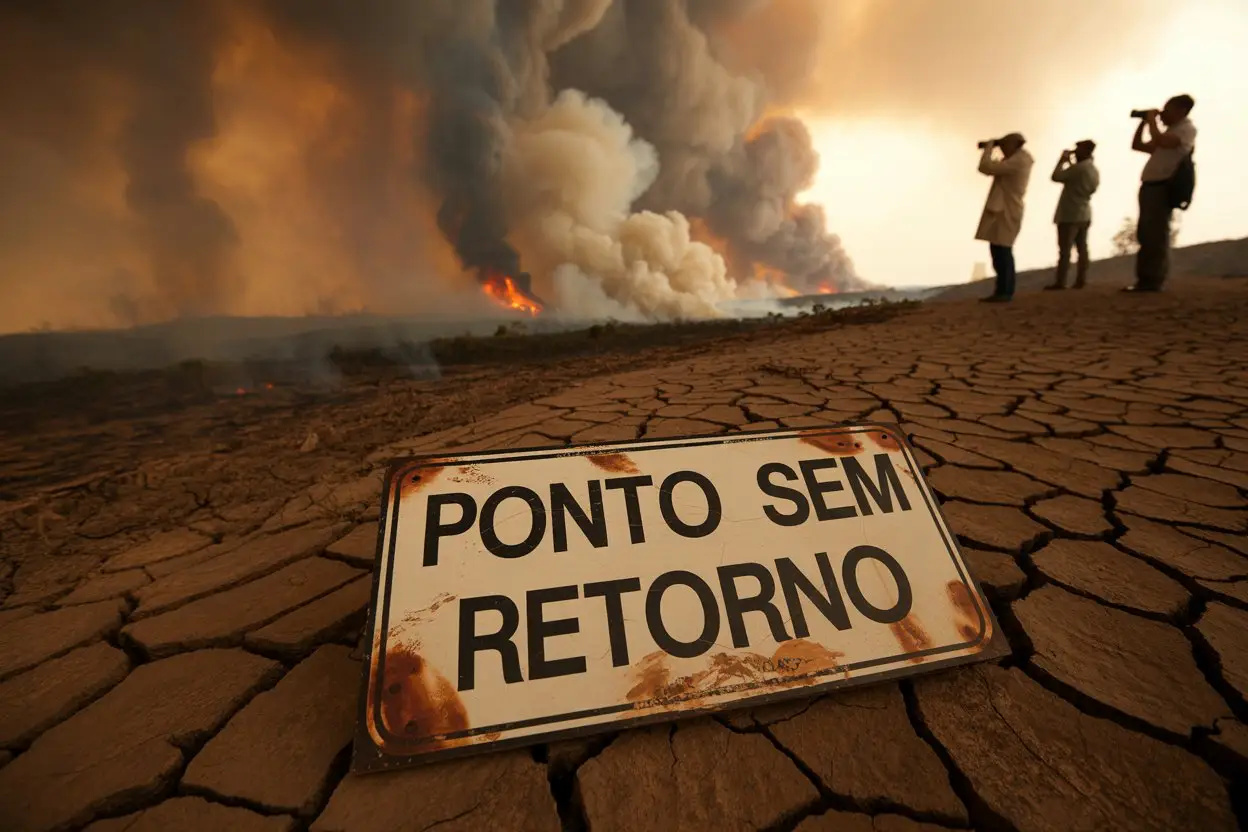
Global Warming Accelerates, and the Earth May Have Passed the Point of No Return. USP Scientists Explain How Zeroing Emissions Can Save the Planet
Scientists are sounding the alarm, 2024 not only heated up but smashed climate records, reaching 1.5°C above pre-industrial levels. This is serious, and USP experts fear we may have crossed a dangerous threshold in the global warming crisis.
2024: The Hottest Year on Record
In 2024, the heat showed no mercy; it was the hottest year ever recorded. According to the World Meteorological Organization, global temperatures rose about 1.55°C above the 1850–1900 average, with a margin of ±0.13°C. This is half a degree beyond the 1.5°C target of the Paris Agreement, which was only supposed to be reached by 2050.
“We are seeing the climate change at an unprecedented speed,” says NASA scientist Kate Calvin. “The heat of 2024 came from human actions like burning fossil fuels, along with natural factors like El Niño.” The numbers don’t lie and are screaming for attention.
-
Friends have been building a small “town” for 30 years to grow old together, with compact houses, a common area, nature surrounding it, and a collective life project designed for friendship, coexistence, and simplicity.

-
This small town in Germany created its own currency 24 years ago, today it circulates millions per year, is accepted in over 300 stores, and the German government allowed all of this to happen under one condition.

-
Curitiba is shrinking and is expected to lose 97,000 residents by 2050, while inland cities in Paraná such as Sarandi, Araucária, and Toledo are experiencing accelerated growth that is changing the entire state’s map.

-
Tourists were poisoned on Everest in a million-dollar fraud scheme involving helicopters that diverted over $19 million and shocked international authorities.


Point of No Return and the Warning from Scientists About the Real Risk of Global Climatic Collapse
Scientists, like Paulo Artaxo from USP, warn that we may have passed a “point of no return” in the fight against global warming. Artaxo states: “If we surpass these points of no return, we will emit 400 to 500 billion tons of greenhouse gases into the atmosphere. There’s no way to lower the temperature to the 1.5°C target.”
What does this mean? Think of the Earth as a house of cards; one wrong move and everything collapses. Melting permafrost in the Arctic, dying coral reefs, and a collapsing Amazon could release massive stores of carbon, turning the greenhouse effect into an out-of-control locomotive. “We are risking the end of life as we know it,” emphasizes Artaxo, pointing to the impact on humanity and ecosystems.
Amazon on Alert with Risk of Climatic Collapse, But There Is Still Hope for Reversal
Scientist Luciana Gatti from the National Institute for Space Research (INPE) has been studying this green giant for years. Her research shows that the Amazon, which once absorbed carbon like a sponge, is now releasing more carbon than it captures due to deforestation and fires.
Gatti explains: “Based on data from recent years, we have seen that the Amazon was a huge carbon sink. And this fills us with hope because it means that if human action transformed the Amazon into a carbon source, we just need to stop emitting it.” In other words, if we stop the chainsaws and the fires, the Amazon can return to being a carbon sink, helping to cool the Earth.
Recent data confirms this. A 2023 study in Nature showed that zeroing deforestation could restore the Amazon’s carbon absorption power in just a few decades. Brazil’s efforts to curb illegal deforestation, as reported by Reuters, are a promising step.
There Is Still Hope That Zeroing Emissions by 2040 Can Save Lives and Oceans, Scientists Say
Scientists say we can still limit global warming to 2°C if we zero our carbon emissions by 2040. It’s a tough mission, but possible. This could save millions of lives and protect 25% of ocean biodiversity, such as corals and fish stocks, according to the IPCC.
“We have the technology and knowledge to decarbonize,” says Johan Rockström, director of the Potsdam Institute for Climate Impact Research, in an interview with The Guardian. “But we need global cooperation and immediate action.” Think renewable energy, electric cars, and large-scale reforestation.
“No Return”: An Alert on Screens
The gravity of this crisis is the theme of the new documentary No Return, which premiered on UOL in 2025. While details of the film are still emerging, it dives into the climate crisis, highlighting the science and stories behind the headlines. It’s a call to action, encouraging viewers to confront the reality of global warming and fight for change.
Although specific information about No Return is limited, similar documentaries on UOL Play have already addressed environmental issues with engaging narratives. This film aims to make science personal, showing that the fate of the Earth is in our hands.
USP Scientists Warning: We Are at the Limit
Rising temperatures mean more extreme weather events, from heatwaves to floods, affecting communities worldwide. USP scientists and others are clear: we are at a crossroads. Acting now can limit the damage. Waiting is betting on the future of the Earth. Support clean energy policies, reduce your carbon footprint, and spread the message. Every small action counts, from avoiding disposable plastics to supporting reforestation initiatives.
Fight for our planet! Scientists like Artaxo and Gatti have given us the map; now it’s up to us. What do you think of this climate alert? Leave a comment below or share this article to start a conversation.










-

Uma pessoa reagiu a isso.