





 Portuguese
  English
  Spanish
  4 min of reading
  0 comments


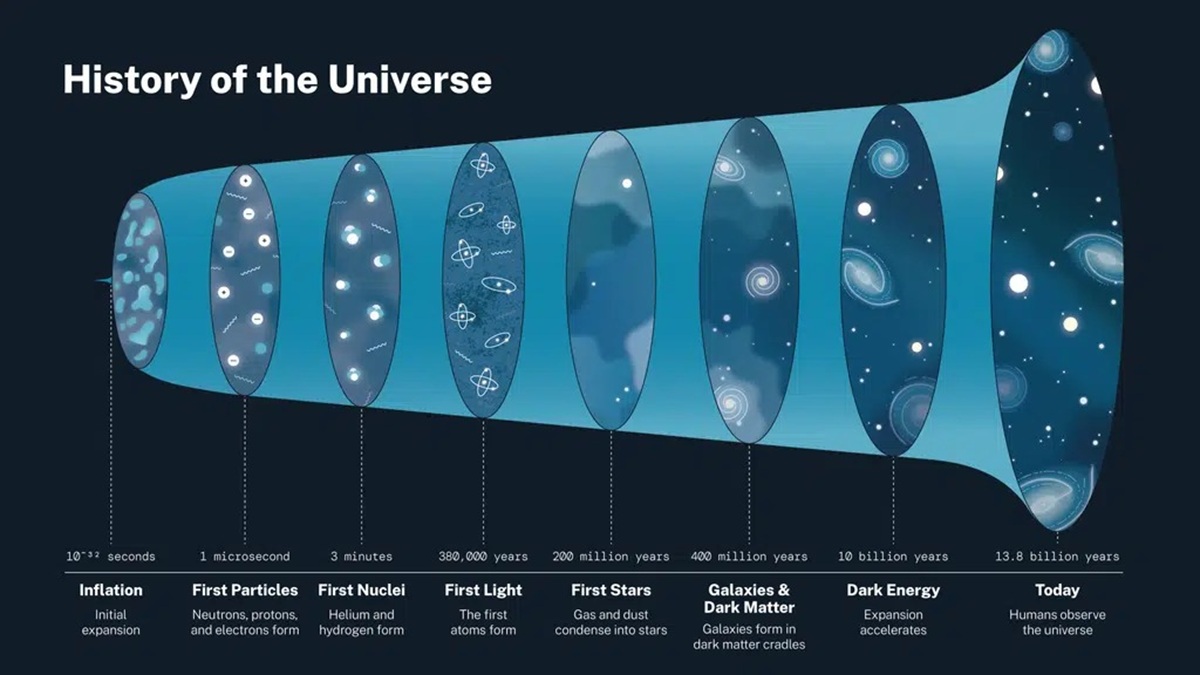
Recent Research Indicates That Cosmic Voids, Giant Regions Of The Universe Located Between Galaxy Clusters And Considered For Decades To Be Practically Empty, Actually Contain Energy Associated With Quantum Fields And Concentrate The Action Of Dark Energy Responsible For The Accelerated Expansion Of The Cosmos
Scientists have discovered that cosmic voids, regions of the universe seemingly devoid of stars and galaxies, are not actually empty. Research indicates that these spaces contain energy associated with quantum fields and the so-called dark energy.
This discovery alters the traditional perception of these regions of the universe. For a long time, cosmic voids were considered large extensions practically without matter between galaxy clusters, but recent studies show that these areas play a fundamental role in the structure and evolution of the cosmos.
What Are Cosmic Voids And Why Did They Seem Completely Empty
Cosmic voids are large regions located between galaxy clusters and typically show extremely low amounts of visible matter. In these areas, there are almost no stars, galaxies, or detectable radiation.
-
While many schools are still struggling with the basics, a teacher in China went viral for having elementary school students build a two-stage rocket using plastic bottles, water, and pressurized air in a science class that caught the attention of the entire world.

-
10 million robots per year in unprecedented industrial scale place China at the forefront of automated production and raise the question of how far machines can manufacture other machines.

-
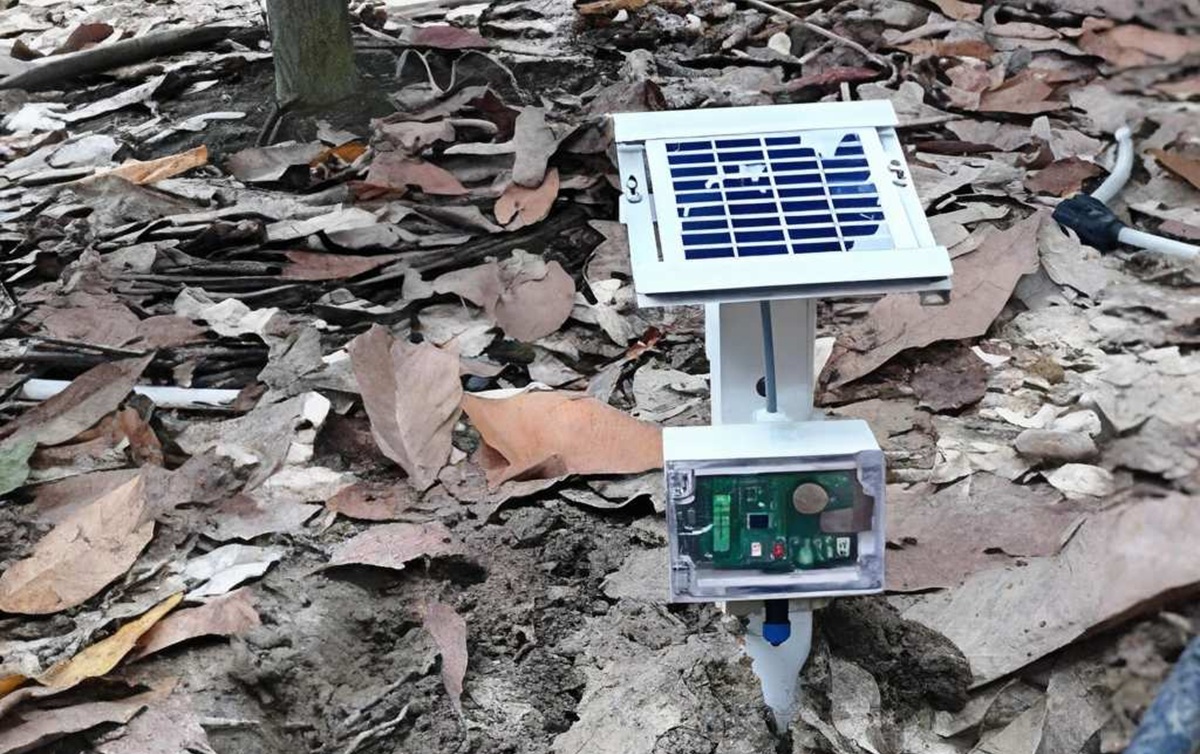
Researchers in Malaysia buried sensors at 15 and 30 cm and can now predict soil moisture with 95.49% accuracy, helping the field to irrigate only at the right time and reduce water waste.
-
Technology developed to protect military communications in the 1940s scrambled voices and today gives rise to the robotic sound that dominates current music.


This appearance led scientists, for decades, to believe that these regions were essentially empty. However, advances in modern physics indicate that even where there is almost no matter, space is not truly devoid of physical activity.
The quantum field theory suggests that the vacuum itself contains energy. According to this approach, space is filled with quantum fields that exist throughout the universe, including in the most remote cosmic voids.
Quantum Fields Present Even In The Emptiest Regions Of The Universe
According to quantum field theory, particles like electrons and neutrinos are not fundamental isolated entities. They are interpreted as excitations or vibrations that arise within fields that permeate all of space-time.
These quantum fields have existed since the Big Bang and cannot be removed from the universe. Even in regions where there is no visible matter, as occurs in cosmic voids, these fields remain present.
This means that the apparently empty space still contains fundamental physical activity. Although not directly perceptible, the very structure of space-time holds energy associated with these fields.
The Relationship Between Cosmic Voids And Dark Energy
Nasa explains that dark energy is considered the force responsible for the accelerated expansion of the universe. In regions where there is a large concentration of matter, such as in galaxy clusters, gravity tends to dominate local dynamics.
However, in cosmic voids, the opposite occurs.
In these regions, where matter is extremely scarce, the influence of dark energy or the so-called vacuum energy becomes more evident.
The U.S. space agency points out that this mysterious component may be related to the so-called vacuum energy, a theoretical form of energy that permeates all of space.
In cosmic voids, this energy exerts a dominant influence on the dynamics of the universe.
How Cosmic Voids Influence The Expansion Of The Universe
The identification of dark energy as a central factor in the expansion of the universe occurred in the late 1990s. At that time, scientists observed that galaxies were moving away from each other at a greater speed than expected.
These observations indicated the presence of an invisible component driving this cosmic acceleration.
It is now understood that cosmic voids are regions where the effects of dark energy manifest more intensely.
Furthermore, these regions are not static structures. Cosmic voids continue to expand over time, and in doing so, they directly influence the organization of matter on a large scale in the universe.
The Role Of Cosmic Voids In The Future Of The Structure Of The Universe
As they expand, cosmic voids exert pressure on the surrounding matter. This process stretches the so-called cosmic web formed by galaxies and galaxy clusters distributed throughout the universe.
Over billions of years, this continuous expansion may contribute to the slow disintegration of the cosmic structures currently observed. The vacuum energy present in cosmic voids will continue to drive the expansion of the universe.
According to the cited research, this process tends to intensify the separation between large cosmic structures. Thus, cosmic voids not only occupy vast regions of space but also play a decisive role in the evolution of the universe.








Seja o primeiro a reagir!